




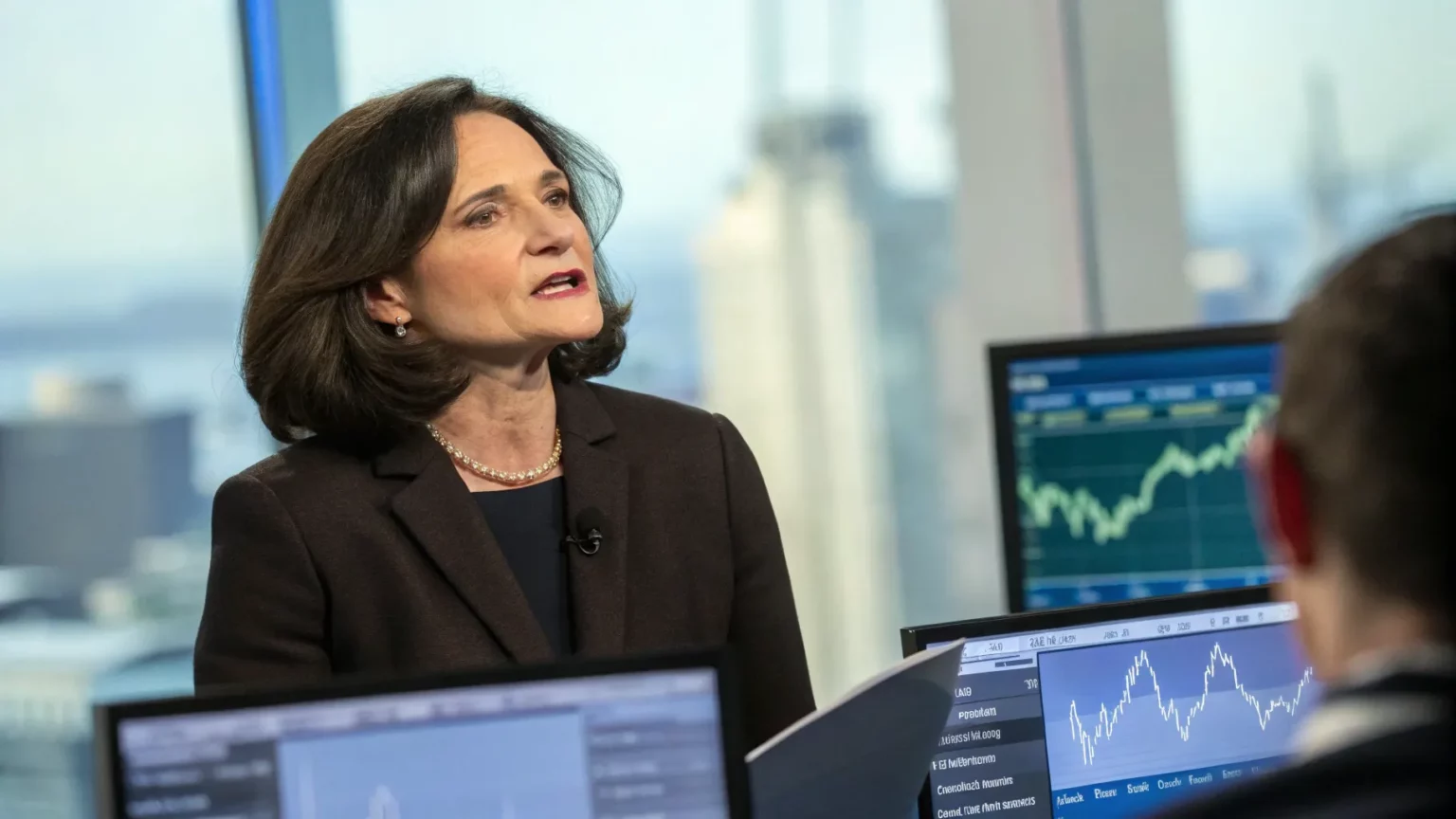
Independent Institute senior fellow Judy Shelton weighed in on U.S. monetary policy on the business program Making Money, urging a reexamination of how the Federal Reserve balances growth and inflation. Her remarks come as investors debate when interest rates might move and whether the economy can sustain expansion without reigniting price pressures.
Shelton, a longtime monetary economist and former nominee to the Federal Reserve Board, assessed the links between economic growth, price stability, and the central bank’s strategy. The discussion arrives as financial markets parse signals on inflation, jobs, and productivity, and as businesses plan for borrowing costs that remain elevated by recent standards.
Background: A Debate Shaped by Recent Inflation
The policy backdrop remains defined by the inflation surge that peaked in mid-2022 and then eased through 2023 and 2024. The Fed raised its benchmark rate sharply beginning in 2022, pushing the federal funds rate to the highest range in two decades by 2024.
Inflation moderated from a four-decade high above 9 percent in 2022 to near 3–4 percent during 2024. That improvement fueled talk of a “soft landing,” where inflation cools without a recession. Yet core price measures, housing costs, and services inflation have stayed sticky, complicating the path to the 2 percent target.
Shelton has frequently questioned whether the current approach relies too much on interest rate tools and not enough on supply-side improvements and productivity growth. Her perspective reflects a broader split among economists over how much growth threatens price stability when productivity is rising.
Growth Versus Inflation: Reassessing the Trade-Off
The central issue is whether faster growth automatically risks higher inflation. Traditional models tie low unemployment to rising prices. But the post-pandemic period has tested that link as goods prices fell while services stayed firm, and as labor participation and immigration changed labor supply.
Shelton’s critique centers on the idea that productive investment, stronger labor supply, and sound money can coexist. If supply expands with demand, she argues, price pressures can ease even during growth. That view contrasts with calls for keeping policy tight until inflation is firmly at target, even at the expense of slower output.
Several trends shape the argument:


- Productivity gains in logistics, energy, and information services may allow faster growth without persistent price spikes.
- Supply chains have healed, but services inflation and shelter costs remain elevated.
- Wage growth has cooled from 2022 highs, yet unit labor costs vary by sector.
What Shelton Advocates: Sound Money and Real-Side Reforms
Shelton has long emphasized “sound money” and rules-based policy to anchor expectations. While she has been skeptical of prolonged ultra-low rates, she also warns that monetary restraint alone cannot solve inflation that stems from constrained supply or policy frictions.
Areas she and like-minded economists often highlight include removing bottlenecks to construction, permitting for energy and infrastructure, and reducing regulatory uncertainty that chills capital spending. Such changes, they say, expand capacity and ease inflation without heavy reliance on high interest rates.
Other economists counter that policy must remain vigilant until inflation proves durably lower. They point to services prices, rent dynamics, and the risk that easing too soon could spark a second wave of inflation. For them, credibility hinges on returning to 2 percent and holding it.
Market and Policy Implications
For households, the debate shapes mortgage rates, credit card costs, and job prospects. For businesses, it affects hiring plans and investment timelines. If the Fed keeps rates high for longer, borrowing remains expensive, but inflation may settle faster. If productivity gains accelerate, there may be room to reduce rates without stoking prices.
Investors will study each inflation release for signs of broad disinflation outside volatile categories. They will also track indicators such as core services excluding housing, unit labor costs, and productivity growth. Fiscal policy and global energy prices remain wild cards that can change the inflation outlook quickly.
What to Watch Next
Upcoming inflation and employment reports will shape expectations for the next policy steps. Fed communications will signal how officials weigh the risks of persistent inflation against a slowing economy. Any evidence of stronger productivity or faster housing supply could support a gentler path for rates.
Shelton’s intervention highlights a key question: Can the U.S. sustain growth while restoring price stability through improved supply and clear monetary anchors? The answer will guide not only rate decisions, but also the policy mix across taxes, regulation, and investment incentives.
For now, the core divide remains. One side urges patience until price gains align with target. The other side sees room for growth if policy supports productivity and a stable currency. The balance struck in the months ahead will determine how the expansion evolves and how quickly inflation settles.