




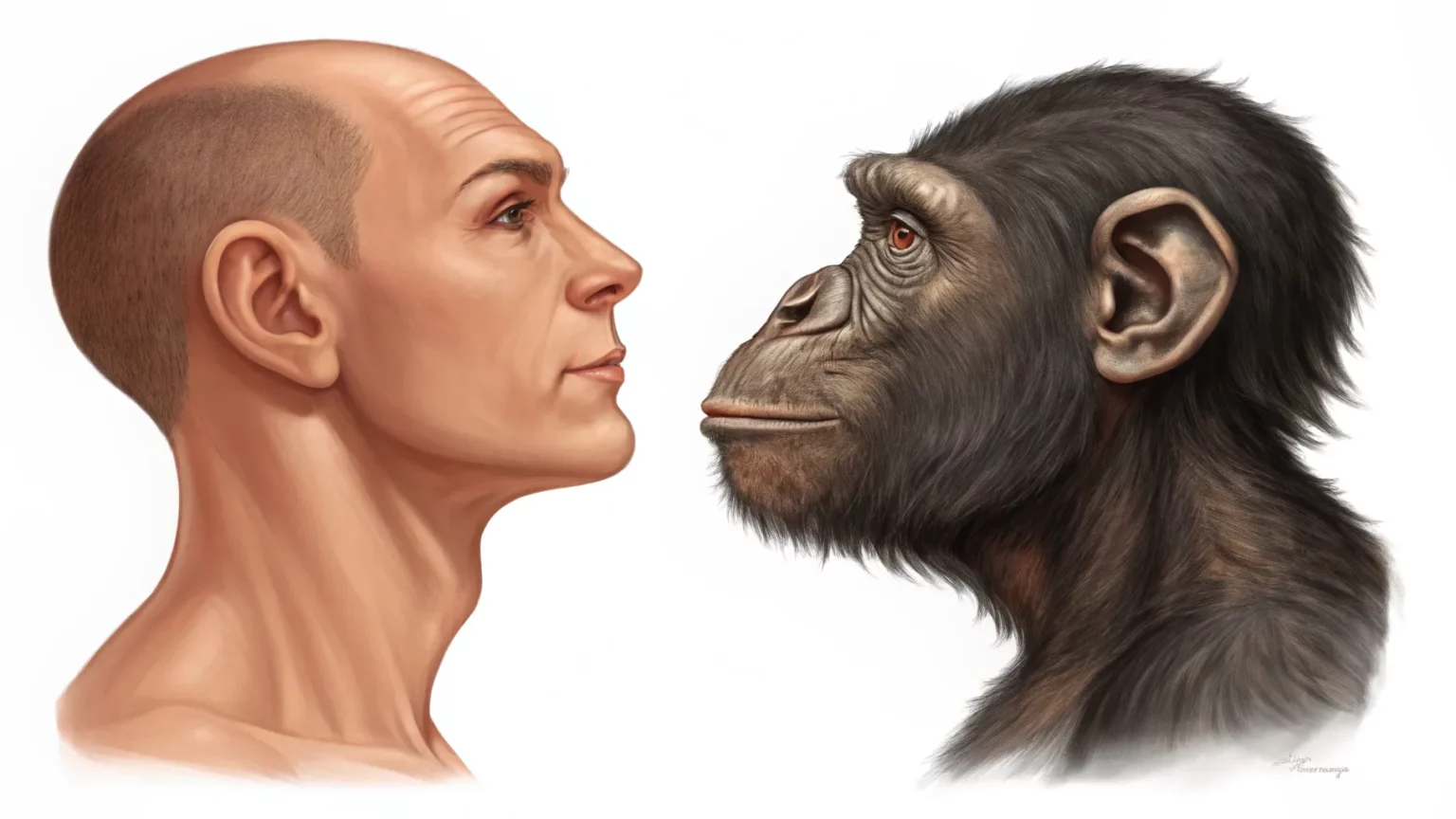
A new study revisits a simple fact with big implications: only humans have chins. The research, released this week, examines how that trait emerged and what it reveals about the paths evolution can take.
The work centers on the bony feature at the front of the lower jaw. It asks when the chin formed in our lineage and whether it serves a clear purpose. The findings suggest the story is less tidy than textbooks suggest, and that some traits may arise as side effects rather than direct adaptations.
What Makes the Human Chin Unique
“Humans are the only species that has chins.”
Fossils of early humans and Neanderthals show strong jaws but no true chin. The modern human chin, a forward-projecting point on the mandible, appears late in our evolutionary history. Many mammals have lower jaw shapes that taper or curve. None show the distinct protrusion seen in Homo sapiens.
Scientists have long debated why this difference exists. Some proposed that a chin strengthens the jaw during chewing. Others argued it may be linked to speech or social signaling. The new analysis challenges simple answers and calls for a broader view of how traits arise.
Rethinking “Rules” of Evolution
“A recent study sheds light on how that came to be and why evolution doesn’t always follow the rules.”
Evolutionary theory includes natural selection, genetic drift, and developmental constraints. Not every feature must be an adaptation shaped for a task. In some cases, traits appear as byproducts of changes elsewhere in the body. Researchers point to the chin as a possible example.
As human faces became flatter and brains grew larger, the lower face likely shifted in size and shape. Those shifts may have produced the chin without direct selection for chewing power or speech. The study places the chin within this bigger picture of body change over time.
Competing Ideas and the Evidence
Several hypotheses remain in play:
- Chewing: The chin acts like a brace for bending forces in the jaw.
- Social or sexual signaling: The chin affects facial appearance and mate choice.
- Developmental byproduct: The chin results from facial reduction and growth patterns.
Biomechanical tests have yielded mixed results on the chewing idea. Some models suggest the chin faces tension, not compression, making a brace less likely. Claims about signaling are hard to test in fossils. The byproduct view gains traction because it fits with known shifts in human facial growth and diet.


Why It Matters Beyond the Jawline
The chin debate speaks to a larger lesson. Traits can persist without a single clear function. That challenges efforts to assign a neat purpose to every feature. It also shapes how scientists read the fossil record and design tests for competing ideas.
This perspective influences fields from anthropology to medicine. Understanding growth patterns in the jaw helps orthodontists and surgeons plan treatments. It may explain why some people develop prominent chins or receding ones, and how these variations relate to development rather than simple function.
What Comes Next
The study highlights gaps that future work can fill. High-resolution imaging of growing jaws could track how the chin forms in life. Broader samples of fossils may refine the timeline of chin appearance. Computer models could compare chewing forces across diets and face shapes.
Cross-disciplinary research will be key. Anthropology can set the timeline. Developmental biology can chart growth. Engineering models can test stress and strain. Together, these tools may show whether the chin is a true adaptation or a side effect of a changing face.
The latest findings offer a clear message. The human chin may not fit a simple story. It invites a fresh look at how features emerge and last. That question matters for how scientists explain the past and predict what may come next in human evolution.