




A popular online game is drawing wide attention for its stark portrait of academic life, turning the hidden hurdles of early-career research into a public talking point. In recent weeks, players across campuses and labs have flocked to the browser-based title, which asks them to balance grant proposals, teaching loads, and a growing pile of deadlines. The game’s rise adds urgency to ongoing debates about job security, mental health, and the path to tenure.
Nature – A popular online game simulates life as an academic — and throws the challenges of being an early-career researcher into sharp relief.
Its core loop mirrors familiar routines. Players chase funding, manage lab budgets, mentor students, and navigate peer review. Choices come with trade-offs, and time is scarce. That structure has resonated with graduate students, postdocs, and junior faculty who say the tension feels real.
Why This Simulation Strikes A Nerve
The game arrives at a moment when many young scholars face short-term contracts and intense publication pressure. Hiring freezes and delayed searches during the pandemic left backlogs that still affect some fields. Even as labs reopen and conference travel resumes, early-career researchers report heavy workloads and uncertainty about long-term prospects.
Serious games often thrive when they help players test complex systems in a safe setting. Here, the system is academia itself. By condensing months of work into minutes, the simulation exposes the trade-offs that shape a research career. Focus on one big paper, or split time across multiple smaller projects? Teach more to help the department, or protect lab time to meet grant milestones? These decisions echo real meetings and annual reviews.
What Players Say The Game Gets Right
- Constant time trade-offs between research, teaching, and service.
- Grant cycles that reward persistence but drain energy.
- Peer review delays that ripple through careers.
- Mentorship duties that matter, yet are hard to schedule.
- Uncertain job security for early-career scholars.
Players also point to the subtlety of its reward system. It is possible to “win” a grant and still fall behind on teaching. It is possible to post a strong paper and still miss a promotion window. The message is not that success is rare, but that progress depends on choices that come with real costs.
What The Simulation Leaves Out
No game can capture the full scope of an academic life. Lab safety, fieldwork hazards, and international visa issues are tough to model. The emotional weight of rejections and the lift of mentorship are also hard to compress into numbers. Some educators caution that a stark focus on scarcity could discourage students who might thrive with the right support.
Others argue that the game opens doors for needed talks. Program directors can use it to start sessions on mentoring, time management, and grant planning. Career offices can pair gameplay with workshops on alternative paths in industry, policy, or nonprofits.
Implications For Departments And Funders
The game’s popularity highlights a growing call for structural fixes. Clearer promotion criteria, balanced teaching loads, and more bridge funding could ease pressure points. Departments can review service expectations for junior scholars. Funders can simplify applications and offer feedback that reduces guesswork.


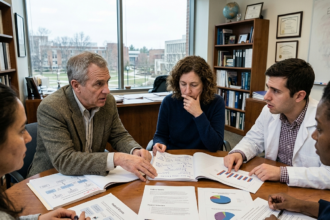
Some labs already run “grant sprints,” shorter internal reviews that mimic proposal cycles. Others share open templates for data management, preregistration, and lab onboarding. Tools like these reduce time spent reinventing processes and help early-career researchers focus on core work.
What To Watch Next
If the simulation continues to spread across campuses, it could shape training. Orientation programs may add it to reading lists and workshops. Faculty may use it to discuss how to set boundaries and protect research time. Student groups may host gameplay nights to compare strategies and share coping methods.
There is also room for sequels or modules that reflect field-specific paths, from humanities monographs to clinical trials. Community-built scenarios could surface local realities, such as regional grant programs or teaching-focused posts.
The game’s rise has turned private stresses into public conversation. By compressing the push and pull of academic work into a few clear choices, it gives players a shared language for hard topics. For now, its message is plain: the path is navigable, but trade-offs are real. The next step belongs to departments and funders who can turn that insight into better policies and support.