




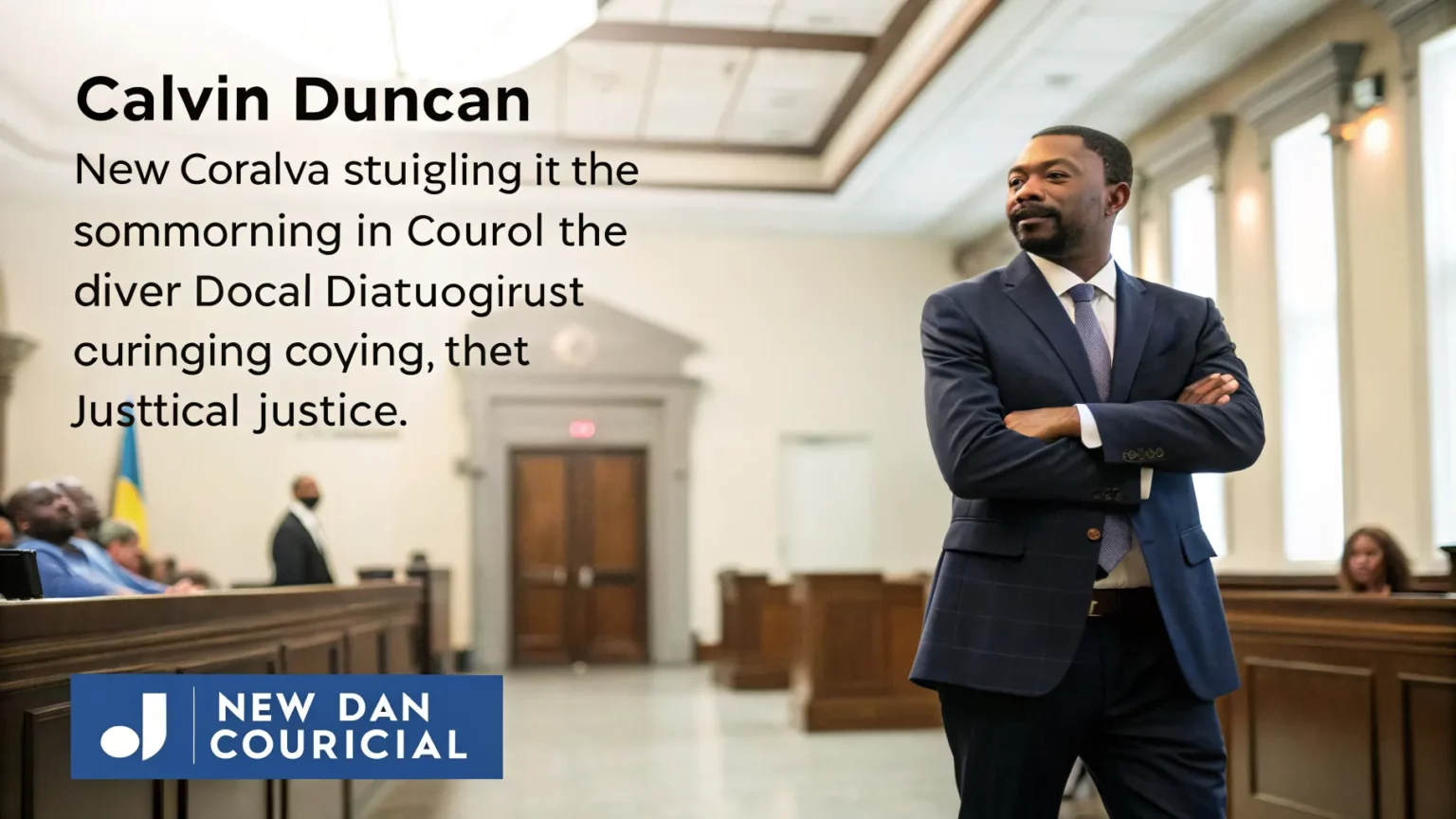
Calvin Duncan, cleared after nearly three decades behind bars, just won election as New Orleans’ clerk of criminal court. Now a fresh fight looms as Republican lawmakers push to erase the office he was chosen to lead. The clash sets up a test over local control, voting rights, and how the criminal justice system should be run.
“A New Orleans man exonerated after serving nearly 30 years in prison has a new fight on his hands. Calvin Duncan has been elected as the city’s new clerk of criminal court, but now Republican lawmakers are racing to eliminate the position.”
The stakes go beyond a single job title. The clerk of criminal court handles records, court calendars, and public access to case files. Voters picked Duncan to run that work. Lawmakers now suggest the system would run better if the office is dissolved or its duties are shifted.
From Wrongful Conviction to Public Office
Duncan’s path is striking. He spent nearly 30 years in prison before his exoneration. Such cases are rare, but not isolated. The National Registry of Exonerations reports thousands of people have been cleared across the country since 1989. Many lost a decade or more to wrongful convictions.
His campaign focused on fairness, efficiency, and transparency. Supporters say his lived experience gives him insight into the gaps that trap people in paperwork and long delays. Critics argued the office needs modernization that goes far past one election.
Why Lawmakers Want to Reshape the Office
Backers of the push say reform is about efficiency and cost. They argue recordkeeping can be centralized, reducing duplication across agencies and clerks. Consolidation, they say, could save money and simplify access for the public.
Opponents see it as something else. They argue lawmakers are overriding local voters days after an election result they did not like. They also warn that removing a locally elected clerk could weaken accountability for everyday services like issuing subpoenas and managing court dockets.
- Supporters’ case: streamline services, reduce costs, unify records.
- Opponents’ case: respect the vote, protect accountability, avoid power shifts away from the parish.
The History and the Stakes for New Orleans
New Orleans has long debated how to run its courts. The city’s criminal justice system relies on a web of offices with overlapping duties. Past efforts sought to merge some functions, often in the name of cost savings. Others feared that mergers would reduce checks and balances.
Louisiana has carried one of the highest incarceration rates in the nation. Backlogs, missing records, and slow case processing have real effects on people’s lives. That is the work the clerk’s office touches every day. Changing who runs that work matters to defendants, victims, lawyers, and families.



What This Means for Justice on the Ground
The clerk’s office is where case files live. It is where court dates are set and notices are issued. When records are late or wrong, cases can stall. When files are easy to find, people move through the system faster.
Duncan campaigned on improving access and cutting delays. Lawmakers claim a restructured system could do the same at scale. The risk is a rocky transition. Merging data, retraining staff, and rewriting procedures can slow services right when courts need speed and accuracy.
What Comes Next
Any move to eliminate or transfer the office’s duties will have to pass the Legislature and withstand legal review. Local groups are expected to weigh in. So are court officials who rely on the clerk’s data and staff.
For now, voters face a whiplash moment. They chose a leader who survived the worst of the system and promised to fix its everyday parts. Now the office itself may be on the chopping block.
The outcome will signal more than who holds a title. It will answer a bigger question: who gets to decide how local justice is managed. Watch for fiscal notes, transition plans, and whether any proposal protects public access to records. If those details are thin, the cost could be higher than any savings on paper.