




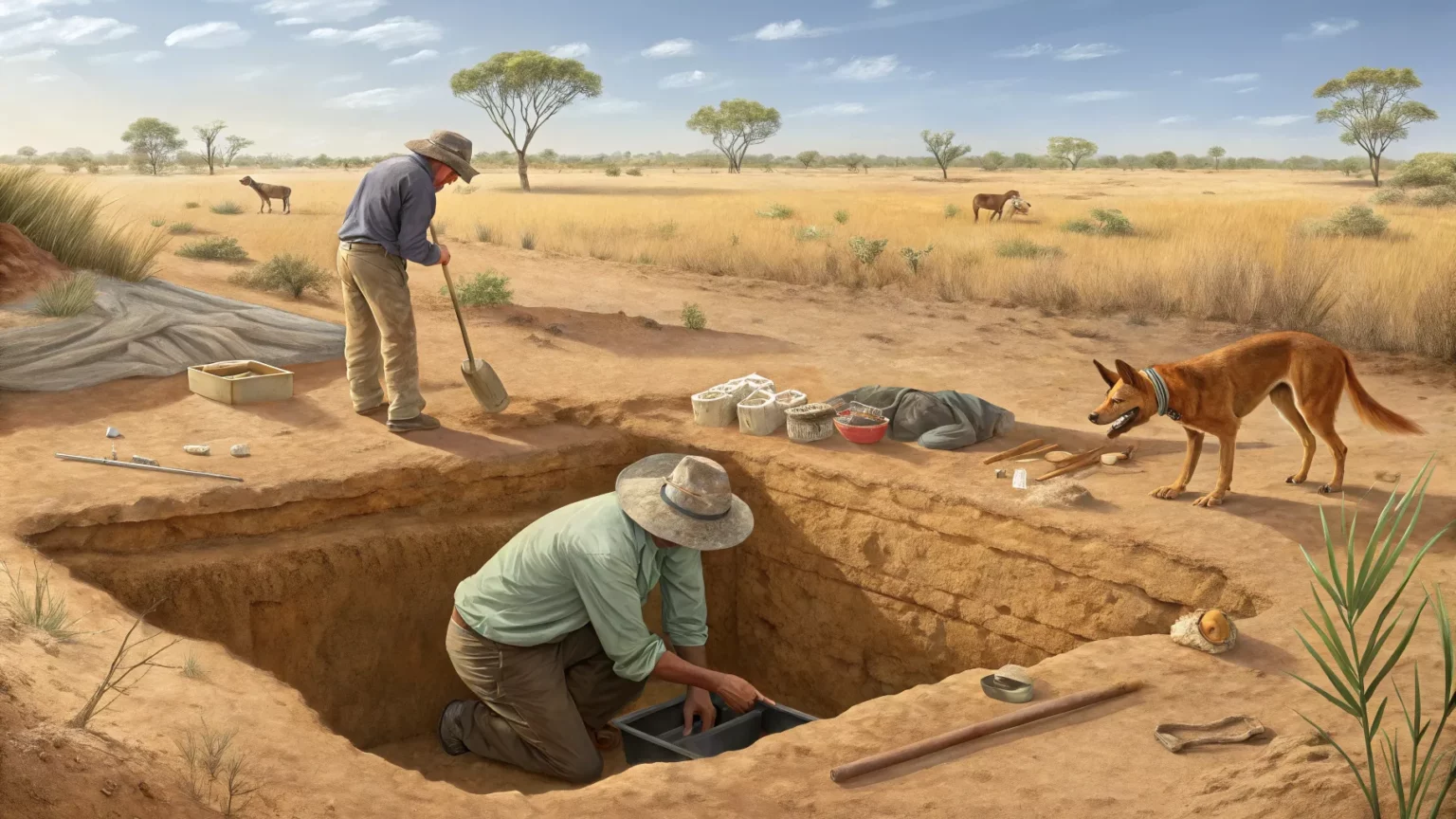
Archaeologists have uncovered the remains of a dingo interred by ancestors of the Australian Aboriginal Barkindji people, then ritually “fed” for about 500 years with river mussels. The finding brings fresh attention to long-running ceremonial care for animals in Aboriginal societies and raises new questions about belief, kinship, and ecology in inland Australia.
The discovery comes from Barkindji Country, where the river has long sustained people, plants, and animals. Researchers say the burial, and the offerings that followed, point to a sustained relationship between people and a wild canid. It may also shed light on how communities honored animals that served as companions, hunters, or cultural figures.
The Find and Its Unusual Care
Archaeologists have excavated the remains of a dingo that was buried by ancestors of the Australian Aboriginal Barkindji people and “fed” for the next 500 years with river mussels.
The team identified a formal burial rather than a simple discard. The presence of river mussels over centuries suggests repeated visits to the grave. The act of “feeding” implies a duty of care that survived across generations.
While the precise dates have not been released publicly, the 500-year span points to a practice sustained far longer than a single lifetime. This is rare for animal burials globally and notable within inland Australia.
Cultural Context and Possible Meanings
Dingoes have held important roles in many Aboriginal communities. They have acted as nighttime guardians, hunting partners, and cultural figures tied to story and identity. The Barkindji people live along a major inland river system, where shellfish were a key food source. Offering river mussels at a grave would have carried both practical and symbolic weight.
Researchers caution against a single reading of the site. The dingo may have been a valued camp companion. It could also have had totemic links or featured in local storylines. The careful burial and long-term offerings suggest respect and memory rather than disposal.
- Formal burial indicates intentional ceremony.
- Centuries of mussel offerings signal lasting obligation.
- Dingoes often held roles tied to protection and hunting.
Scientific Questions Ahead
The remains could help answer open questions about when and how dingoes lived with people in inland regions. Bone analysis may reveal diet and health. If isotopes show a diet rich in human food, that would support close camp life. If wear patterns suggest long-distance travel or hunting stress, that could point to a working role.
Shell deposits offer another line of evidence. Layers of mussel shell can be dated and compared to river flow patterns and climate records. That may show how ceremony persisted through floods, droughts, and social change.



Implications for Heritage and Ecology
The find highlights the depth of Aboriginal cultural practice tied to Country. It also shows how animals could be woven into ritual, memory, and care. For heritage managers, the site underlines the need to protect burial grounds that may look modest on the surface but hold long records of practice.
The discovery also speaks to the place of the dingo in Australia’s story. Current debates about dingo management in pastoral areas often focus on conflict. This burial adds a counterpoint by showing long-term respect and relationship.
Community Voices and Next Steps
Archaeologists say further work will proceed in partnership with Barkindji representatives. Any future analysis, display, or reburial decisions will rest with the community. That approach aligns with growing standards for Indigenous-led research and care of ancestral places.
Scholars expect careful sampling to establish the age range of the offerings. They also plan to examine the mussel shells to learn about harvest sites and seasonality. Together, those data could map how people returned to the grave across time.
The dingo’s burial and centuries of offerings present a clear message: relationships with animals ran deep and lasted across generations. As researchers and Barkindji custodians decide on next steps, the site will likely shape new studies of inland ritual life. It may also guide how Australia weighs heritage care and animal history in the years ahead.