




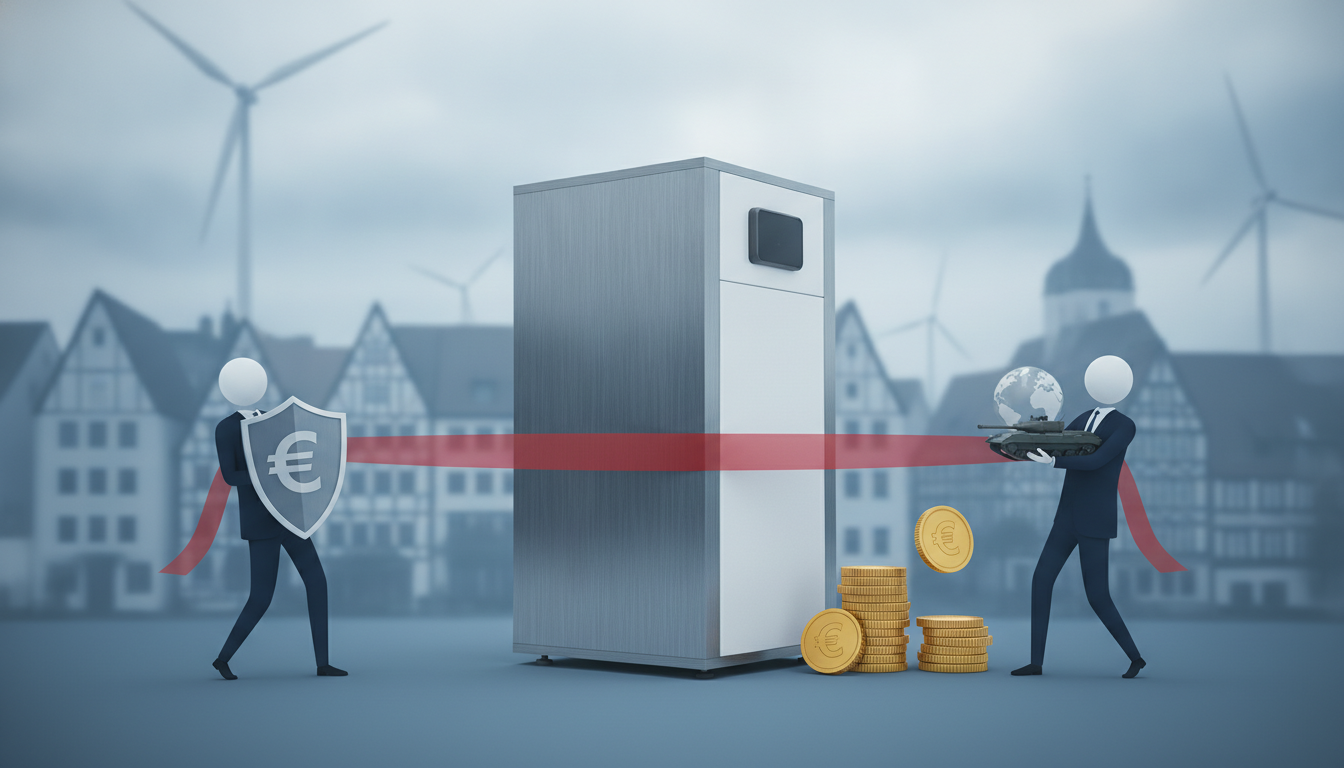
Germany will scale back support for low-carbon heat pumps by about €2.1 billion in the coming years, a move that signals shifting budget priorities as leaders channel more money to defense and security. The policy change, expected to affect households and installers nationwide, reflects pressure to contain public spending while maintaining commitments abroad.
Germany plans to cut generous subsidies for low-carbon heat pumps by about €2.1 billion ($2.4 billion) in the coming years, as it aims to make some budget savings while raising spending on defense and security.
The plan arrives as Europe’s largest economy attempts to balance energy transition goals with fiscal limits. It also comes as the government tries to meet NATO spending targets and respond to heightened security risks in the region.
Background: Heating, Emissions, and Tight Finances
Heating is a major source of emissions in Germany. Residential and commercial buildings account for a significant share of the country’s greenhouse gases. Heat pumps have been promoted as a cleaner option than oil and gas boilers, especially when powered by renewable electricity.
Berlin has spent recent years encouraging households to switch. Grants and tax breaks helped offset high upfront costs for equipment and installation. Demand rose during the gas price shock after Russia’s invasion of Ukraine, though supply chain delays and labor shortages slowed rollouts.
At the same time, Germany has faced budget strain. A 2023 court ruling curtailed the use of off-budget funds, triggering a broad spending review. Since then, departments have jockeyed for resources, and climate programs have been an ongoing target for adjustments.
Defense Takes Priority in a Security-Driven Budget
Officials have pledged to meet or exceed the NATO benchmark of 2% of GDP for defense. Spending plans include modernizing equipment, rebuilding stockpiles, and supporting allied security. This fiscal shift is reshaping other parts of the budget.
Analysts say the heat pump decision fits a wider recalibration. Funding for climate and energy programs remains, but with tighter caps. The government is signaling that security needs now command a larger share of limited resources.
Impact on Households and the Heat Pump Market
Industry groups warn the cut could slow adoption. Heat pumps cost more upfront than traditional boilers, even though operating costs can be lower over time. Smaller grants may deter price-sensitive homeowners, especially in older buildings that need upgrades.



Installers report that clear and stable policy helps people commit. Any uncertainty can lead to deferred purchases. Manufacturers may also delay investments in production and workforce training if demand becomes harder to predict.
- Planned reduction: about €2.1 billion over several years.
- Expected effect: fewer or smaller grants for new installations.
- Potential outcome: slower replacement of oil and gas heating.
Consumer advocates argue that targeted aid for low- and middle-income households is essential. Without it, they say, the switch could stall in areas with older housing stock and limited insulation.
Climate Goals and Policy Trade-Offs
Germany aims to reach climate neutrality by 2045. Cutting emissions from buildings is part of that plan. Fewer subsidies could complicate that path if installations drop below targets.
Energy economists suggest alternatives to keep momentum:
- Stable, multi-year funding to give households confidence.
- Cheaper green electricity to improve running cost savings.
- Training programs to expand the installer workforce.
Some back the subsidy cut if paired with tighter efficiency standards and stronger carbon pricing on fossil heating fuels. That approach would shift incentives from public spending to market signals, though it risks higher bills for those who cannot switch quickly.
European Trends and Market Signals
Across Europe, heat pump sales surged in 2022 but slowed in parts of 2023 and 2024 as energy prices eased and policies shifted. Manufacturers have flagged order volatility and called for consistent rules.
Germany’s move will be watched by neighbors facing similar pressures. If reduced support leads to fewer installations, suppliers could consolidate, and prices might not fall as fast as hoped. If the market holds steady, it would suggest that consumers are motivated by long-term energy savings and climate concerns.
Investors will look for clarity on how the cut is phased and which households remain eligible for aid. Clear communication could prevent a freeze in orders and keep projects moving.
The decision marks a test of Germany’s ability to balance defense and climate goals under tight budgets. Officials now face the task of protecting vulnerable households, maintaining a viable market for clean heating, and keeping emissions on a downward track. The details of the rollout, and any companion measures on electricity pricing and building standards, will decide how much ground is lost—or gained—in the shift to cleaner heat.