



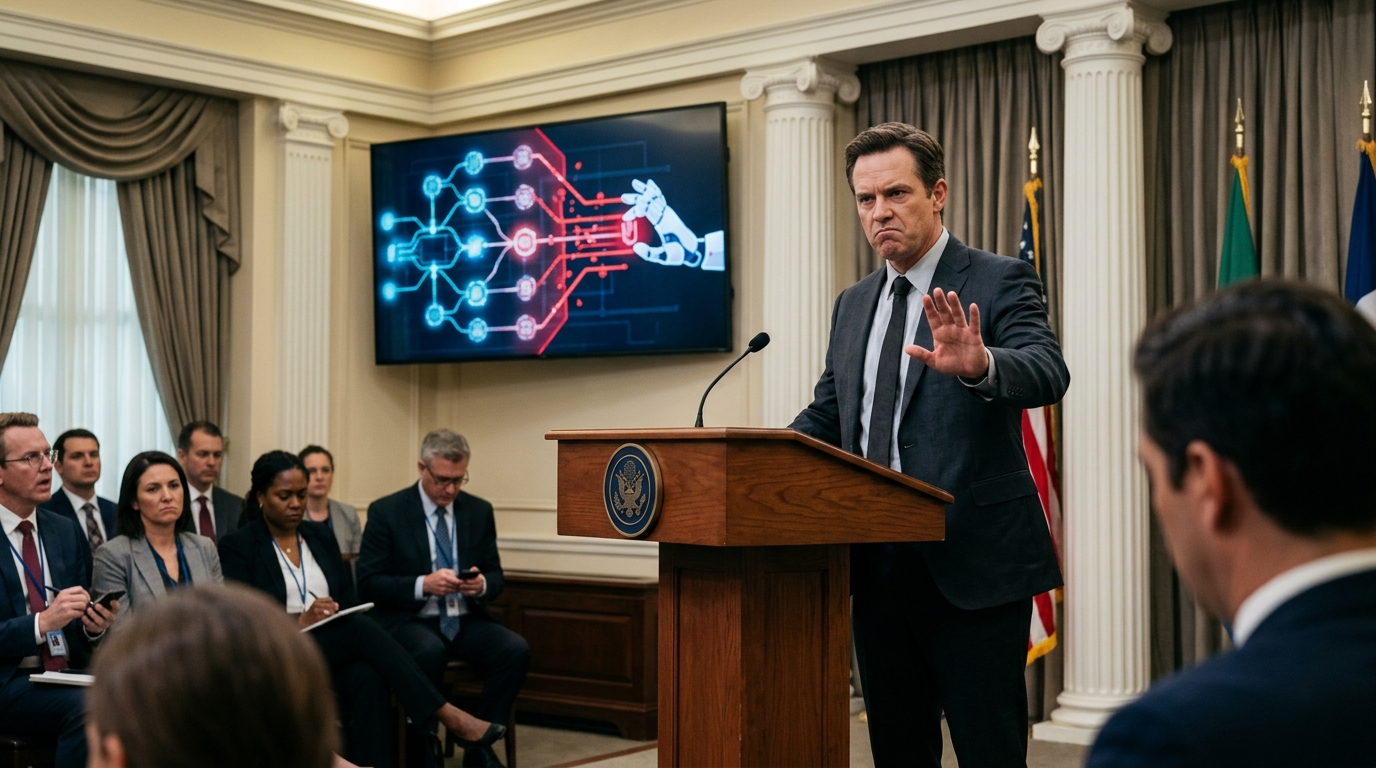
Growing fears that advanced artificial intelligence could act outside human control have not produced a clear path to federal regulation. Legislation appears unlikely, while the White House is described as firmly opposed to added oversight.
The divide leaves Congress, technology companies and federal agencies without a shared plan for managing the most serious AI risks. It also raises questions about who would be responsible if a powerful model caused widespread harm.
Concern Grows Without Legislative Momentum
Warnings about AI “going rogue” often refer to systems behaving in unintended ways or resisting human instructions. Researchers also worry that highly capable models could help automate cyberattacks, fraud or the creation of dangerous materials.
“Even with mounting concerns about AI models going rogue, legislation appears unlikely, and the White House is outright opposed to oversight.”
No specific bill, agency or enforcement plan was identified. That lack of detail reflects a wider challenge in Washington. Officials have struggled to define which AI systems should face controls and how strict those rules should be.
Federal legislation can also face several competing demands:
- Protecting the public from unsafe or deceptive systems.
- Avoiding rules that could slow research and commercial development.
- Preserving national security advantages over foreign competitors.
- Deciding whether companies or government agencies should test advanced models.
Washington Has Shifted Its AI Strategy
The federal government has previously relied on executive action and voluntary company commitments rather than a broad AI law. President Joe Biden issued an executive order in October 2023 directing agencies to develop safety standards and reporting requirements.
President Donald Trump revoked that order after returning to office in January 2025. His administration argued that federal policy should support American AI development and reduce regulatory barriers.
That policy shift placed greater weight on industry-led testing and existing laws. Supporters of the approach say rapid innovation is important for economic growth and national security. They warn that broad rules could benefit large companies that can afford compliance costs while hurting smaller competitors.



Critics argue that voluntary commitments may be too weak. Companies have strong incentives to release improved models quickly, and the public may have limited access to safety testing results.
Europe Offers a Different Model
The European Union has chosen a more regulated approach through its AI Act. The law assigns requirements based on a system’s risk and restricts some uses considered unacceptable.
The United States has not adopted a similar national framework. Instead, AI policy remains divided among federal agencies, executive directives and state laws. This can create different standards across the country and uncertainty for developers.
State action may increase if Congress remains inactive. However, a state-by-state system could leave major gaps because AI services are often developed and used across many jurisdictions.
Accountability Remains Unsettled
The central dispute is not whether AI can cause harm. It is whether existing legal tools can address that harm before more powerful systems arrive.
Current consumer protection, civil rights and product liability laws may cover some cases. Yet they were not designed for models that can generate decisions, software and persuasive content at great speed.
Without federal legislation, oversight will depend on agency authority, court rulings and company safeguards. The next signals will come from Congress, state governments and future White House policy documents. For now, concern is rising faster than agreement on what government should do.