






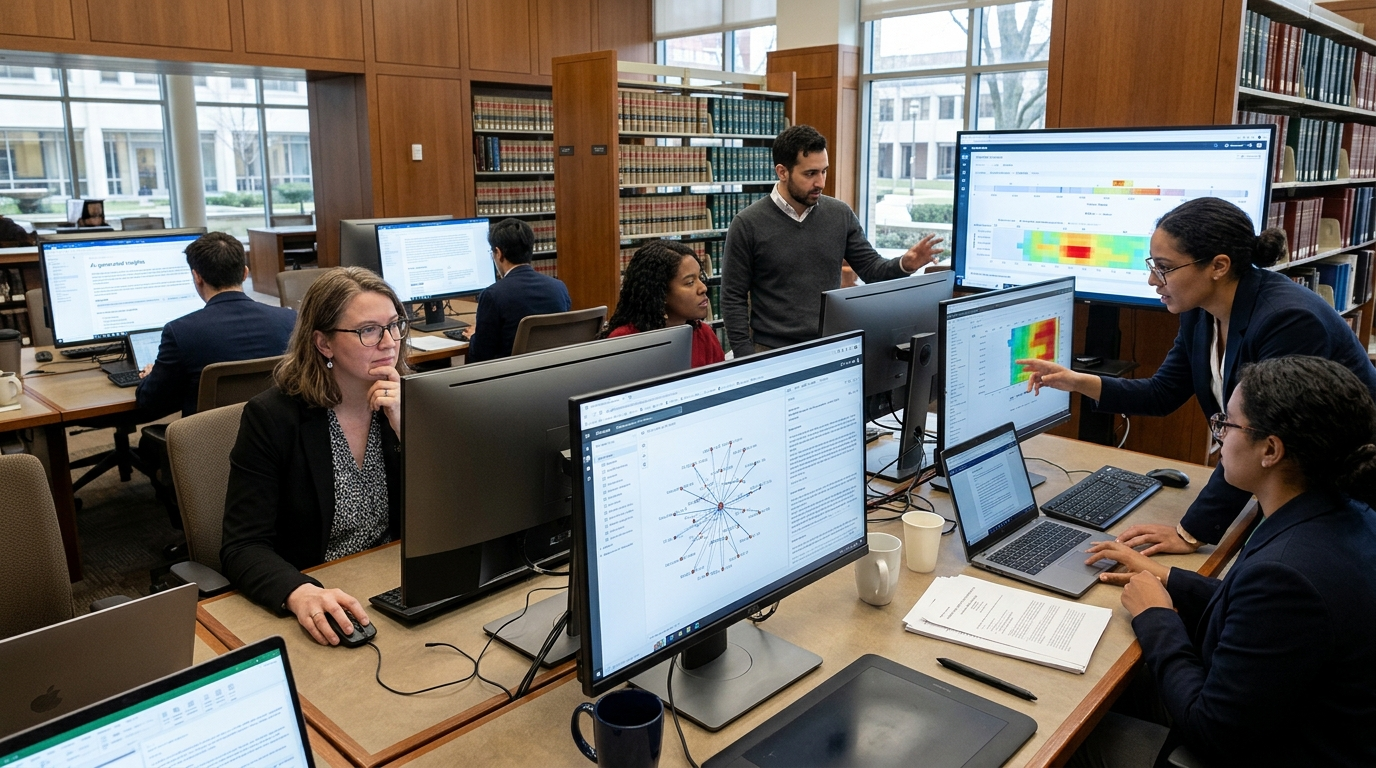
The Robert Crown Law Library is taking a hands-on approach to legal artificial intelligence through staff training, tool testing, and internal innovation. Its work offers law schools a practical model for responding to technology that is changing legal research, education, and practice.
The effort comes as law schools face pressure to prepare students for AI-assisted legal work. These systems can review documents, summarize cases, and help draft legal text. They can also produce false citations, overlook key facts, and expose confidential information.
Three-Part Strategy Guides the Response
The library’s approach centers on three connected areas. Training builds knowledge among staff and users. Testing examines whether products are useful and reliable. In-house projects allow the library to address needs that commercial services may not meet.
“Through training, tool-testing, and in-house innovation, the Robert Crown Law Library is a model for how law schools can respond to legal AI.”
This strategy treats AI literacy as part of legal education rather than a separate technical subject. Lawyers must understand both the uses and limits of any tool that shapes their work.
- Training can teach users to verify AI-generated claims and citations.
- Tool testing can compare accuracy, privacy protections, and research value.
- Internal development can focus on the needs of a specific law school.
Libraries Take on a Wider Role
Law libraries have long helped students and faculty assess sources, search databases, and follow citation rules. Generative AI adds a new duty: teaching users how to examine machine-produced answers.
That role fits the skills of law librarians. They understand research methods, database limits, access policies, and the need for reliable authority. They can also test whether an AI system identifies controlling law or simply produces a convincing response.
The shift may change how students learn. Traditional legal research often requires users to trace cases, statutes, and secondary sources. An AI assistant can shorten that process, but it may also hide the steps used to reach an answer.
For educators, the challenge is to preserve those research skills while teaching effective use of new systems. A student who receives a quick summary must still check the source, legal status, jurisdiction, and context.



Testing Can Expose Legal and Ethical Risks
Legal AI products present issues that go past accuracy. Schools must consider confidentiality, copyright, bias, data storage, and vendor access to user prompts. These concerns are especially important in clinics, where students may handle sensitive client records.
Structured testing can help schools set rules before adopting a product widely. Reviews may examine whether a tool invents authorities, treats similar prompts consistently, and clearly identifies its sources.
Commercial vendors may offer speed and broad access to legal materials. Internal projects may provide greater control over design and data. However, local development requires staff time, technical support, and regular maintenance.
A Model Other Law Schools Can Adapt
The Robert Crown Law Library’s example suggests that schools do not need to choose between banning AI and accepting it without limits. They can build measured programs that connect experimentation with oversight.
The key question is whether institutions can turn early trials into lasting policies. Schools will need clear standards for classroom use, research verification, privacy, and professional responsibility.
The library’s three-part response provides a starting point. Training supports informed use, testing identifies weaknesses, and internal innovation gives educators more control. As legal AI develops, law libraries may become central to deciding how the profession uses it responsibly.