




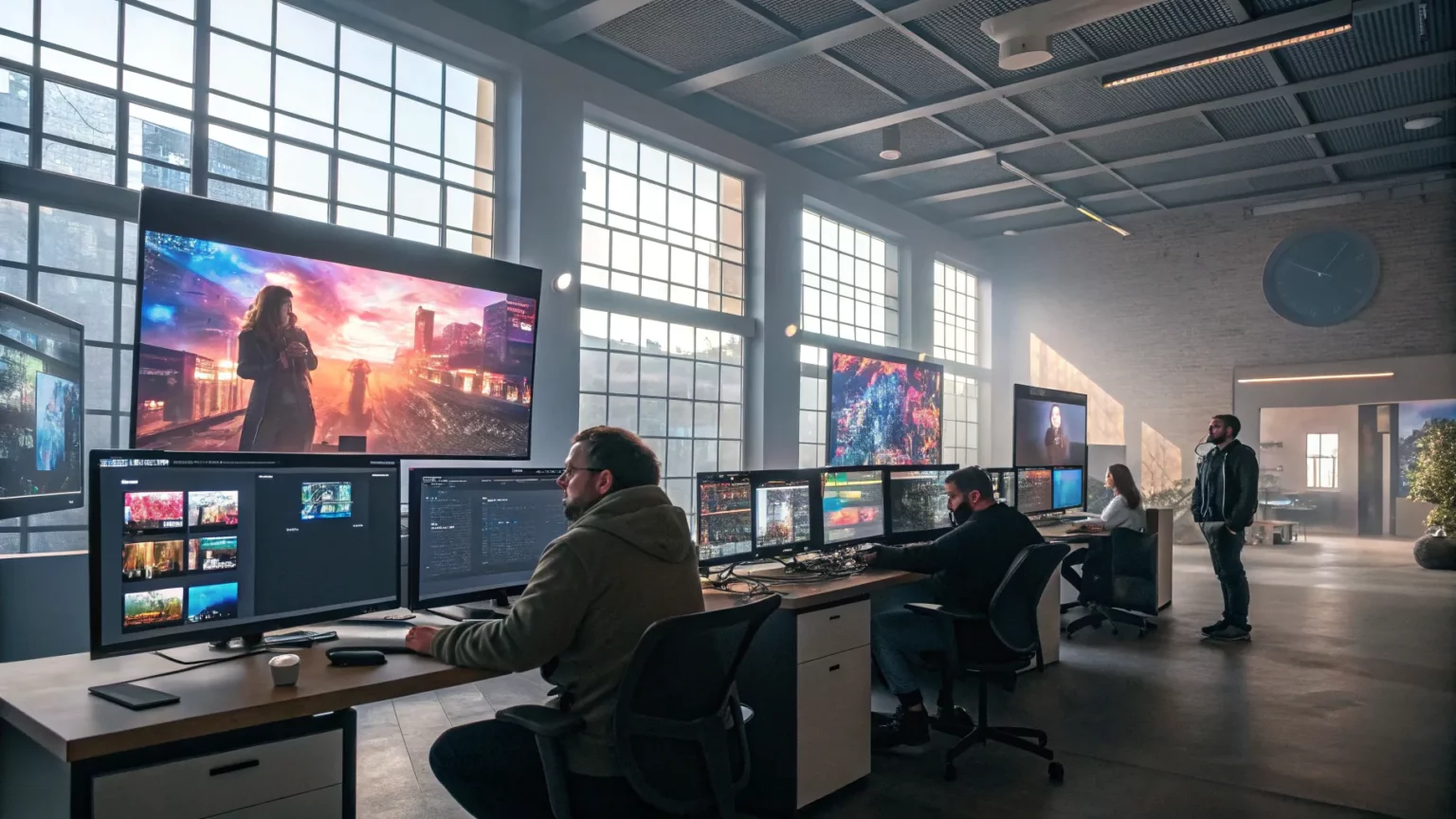
A growing number of advertising agencies and brands are adopting generative artificial intelligence technology to create commercial content, marking a significant shift in how advertisements are produced in the industry.
The move toward AI-assisted commercial production comes as companies look for ways to reduce costs, speed up creative processes, and experiment with new visual styles that might not be achievable through traditional production methods.
Changing Production Landscape
Generative AI tools allow advertisers to create images, video sequences, and even entire commercials without the need for expensive shoots, large production crews, or lengthy post-production processes. This technology can generate visual content based on text prompts, existing brand assets, or style references.
Major advertising conglomerates including WPP, Publicis, and Omnicom have all reported increased integration of AI tools into their creative workflows. Meanwhile, smaller agencies are finding that AI levels the playing field, allowing them to produce high-quality content that previously would have required much larger budgets.
“We’re seeing a democratization of production capabilities,” said one industry expert. “Agencies of all sizes can now create professional-looking commercials with significantly reduced resources.”
Cost and Efficiency Benefits
The financial advantages of AI-generated commercials are substantial. Traditional commercial production can cost anywhere from tens of thousands to millions of dollars, depending on complexity, talent, and distribution requirements. By comparison, AI-generated content can be produced for a fraction of these costs.
Beyond cost savings, the speed of production has also improved dramatically. What once took weeks or months can now be accomplished in days or even hours, allowing brands to respond more quickly to market trends or current events.
Some of the key advantages advertisers are finding with generative AI include:



- Reduced production costs by up to 80% for certain types of commercials
- Faster turnaround times for campaign assets
- Ability to create multiple versions of ads for testing
- Easier adaptation of content for different markets and platforms
Creative Limitations and Concerns
Despite the advantages, the industry is grappling with several challenges related to AI-generated commercials. Questions about originality, copyright, and the authentic representation of human experiences remain significant concerns.
Some creative directors worry that over-reliance on AI could lead to a homogenization of advertising styles. Others point out that while AI excels at creating certain types of content, it still struggles with nuanced storytelling and emotional resonance that human creators bring to commercials.
There are also technical limitations. Current generative AI systems sometimes produce unrealistic human features or inconsistent elements within scenes. These issues often require human intervention and editing, somewhat offsetting the efficiency gains.
“AI is an incredible tool, but it doesn’t replace human creativity. The most effective approach combines AI efficiency with human insight and direction,” noted a creative director at a major agency.
Future Outlook
Industry analysts predict that generative AI will continue to gain traction in advertising production, with the technology improving rapidly. As these tools become more sophisticated, the line between AI-generated and traditionally produced commercials is likely to blur further.
Many agencies are now developing hybrid approaches, using AI for initial concept generation, background elements, or specific visual effects while maintaining human oversight of the creative direction and final output.
For consumers, the shift may be largely invisible, as the goal remains creating engaging, effective advertising regardless of the production method. However, some brands have begun to highlight their use of AI in production as a selling point, positioning themselves as innovative and forward-thinking.
As the technology evolves, advertisers will need to balance the efficiency and cost benefits of AI with maintaining brand authenticity and creative distinction in an increasingly competitive marketplace.