




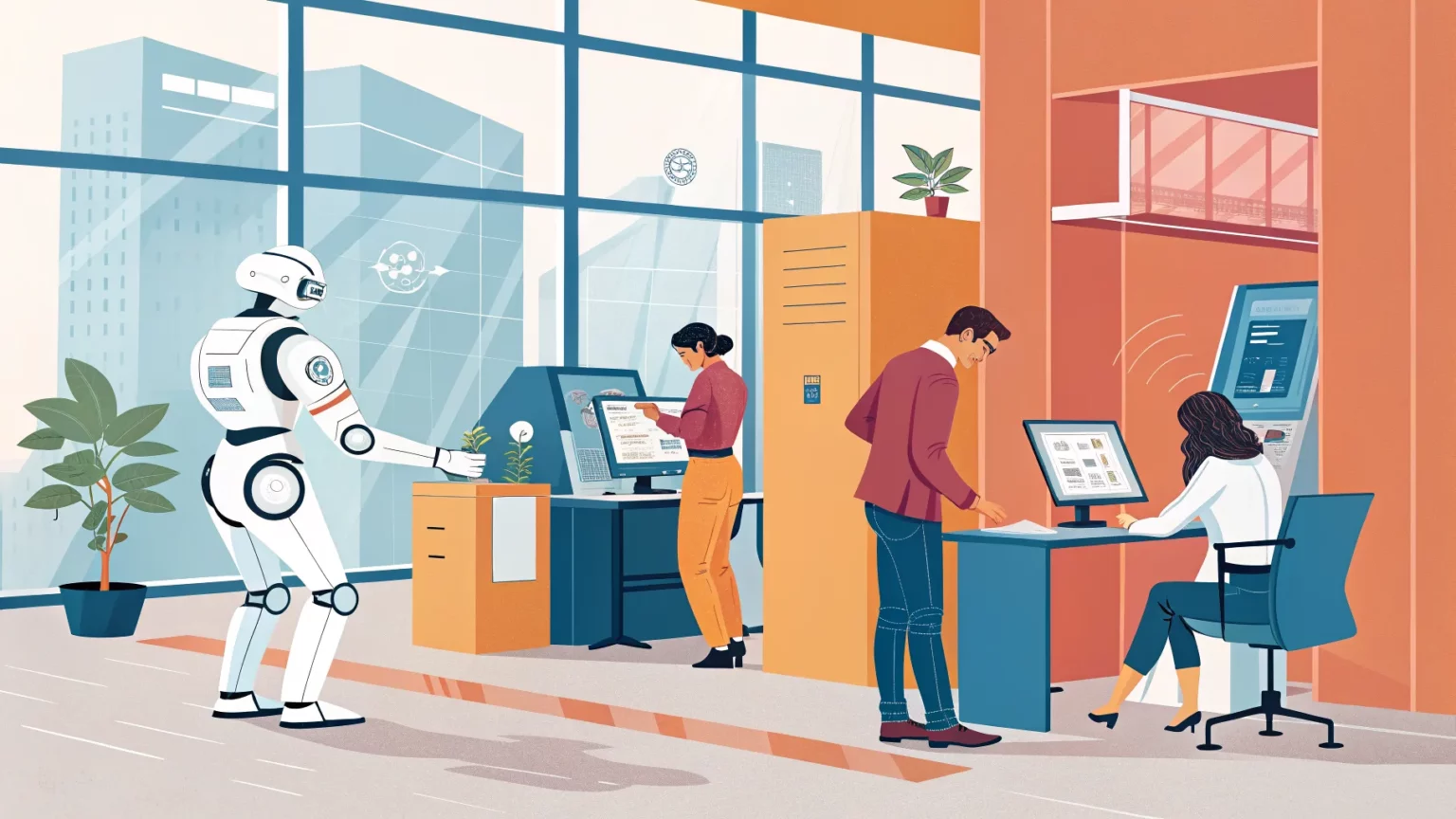
An artificial intelligence leader at a major technology company has forecast that much white-collar work could be automated within 18 months, intensifying a debate over how fast offices will change and who stands to gain or lose. The prediction, made this week, lands as companies rush to deploy generative AI tools across finance, legal, marketing, and customer service.
The comment arrives amid a surge of investment in AI systems that summarize documents, write code, and answer complex questions. It raises urgent questions for employers, workers, and policymakers about timelines, training, and safeguards.
Background: A New Wave of Office Automation
Past automation waves reshaped factory floors and logistics. Today’s wave targets desk jobs. Generative AI can draft emails, produce reports, and analyze spreadsheets in seconds. Many firms are testing copilots for sales teams and AI assistants for software development.
Major consultancies and economic bodies have issued mixed forecasts. A 2023 analysis by Goldman Sachs estimated hundreds of millions of jobs could be exposed to AI automation globally, though not all would disappear. McKinsey projected that up to half of work activities might be automated over the next few decades, with timelines varying by sector and policy choices. The OECD warned that some roles face high exposure while many others will change rather than vanish.
Against that backdrop, the latest prediction sets a short clock for change. As the AI executive put it:
“White-collar work could be automated within 18 months.”
What the Prediction Could Mean for Offices
In practical terms, an 18‑month horizon suggests rapid rollout of tools that take over routine tasks. Early targets include scheduling, expense audits, document review, compliance checks, and first drafts of presentations. Coding assistants already speed up software work by suggesting functions and tests.
If adopted at scale, companies could see faster project cycles and smaller teams for certain functions. Managers may restructure roles around oversight, exception handling, and client work. Some firms could slow hiring for entry-level roles that once handled repetitive tasks.
Workers with strong AI literacy may gain leverage. Those without access to training could be squeezed. The split may widen pay gaps within similar job families.



Skepticism and Caveats
Labor economists caution that task automation does not equal job automation. Many roles bundle social skills, judgment, and accountability that tools cannot replace. Productivity gains often shift work rather than erase it.
Reliability remains a concern. Generative systems can produce errors, hallucinate sources, or embed bias. Regulated industries, such as healthcare and finance, face strict controls that slow deployment. Data privacy and intellectual property risks add friction.
Adoption also depends on change management. Past IT rollouts show that training, workflow redesign, and incentives take time. A bold 18‑month timeline may prove uneven across sectors and regions.
Industry Reactions and Early Use Cases
Some executives welcome aggressive timelines as a way to cut costs and defend margins. Startups pitch end‑to‑end automation for claims processing, invoice handling, and customer support. Unions and worker groups call for guardrails, citing risks of job loss and surveillance.
Pilot programs hint at both promise and limits. Legal teams use AI to summarize case law but keep attorneys in the loop. Finance departments auto‑reconcile transactions while staff investigate anomalies. Contact centers route common issues to chatbots, with humans handling escalations.
The result is a hybrid model. Automation handles the repetitive core. People manage exceptions, ethics, and outcomes.
Policy and Corporate Responses
Governments are weighing new rules on AI transparency, accuracy, and workplace impact. Companies face pressure to publish guidelines and measure results beyond short‑term savings.
- Disclose when AI is used in decisions that affect livelihoods.
- Invest in training that helps workers use and audit AI tools.
- Track error rates and document human oversight.
- Share productivity gains through pay, time, or benefits.
Experts also urge stress tests. Before removing roles, leaders should test systems on real data, audit for bias, and simulate failure modes. Insurance and legal exposure may hinge on these steps.
What to Watch in the Next 18 Months
Key signals will show whether the forecast holds. Productivity data could reveal gains in sectors that adopt copilots. Job postings may shift from routine clerical work toward AI‑assisted roles. Wage patterns in support functions will offer early clues.
Technical milestones also matter. Improvements in tool reliability, retrieval methods tied to private data, and better monitoring could speed adoption. High‑profile errors or lawsuits could slow it.
For now, the prediction has sharpened the timeline for a long‑running shift. Offices may not empty, but job content will change. The speed of that change will depend on trust, training, and clear rules.
The next year and a half will test whether AI can handle the busywork of the modern office while people focus on judgment, relationships, and results. Expect uneven progress, hard choices, and close scrutiny from workers and boards alike.