




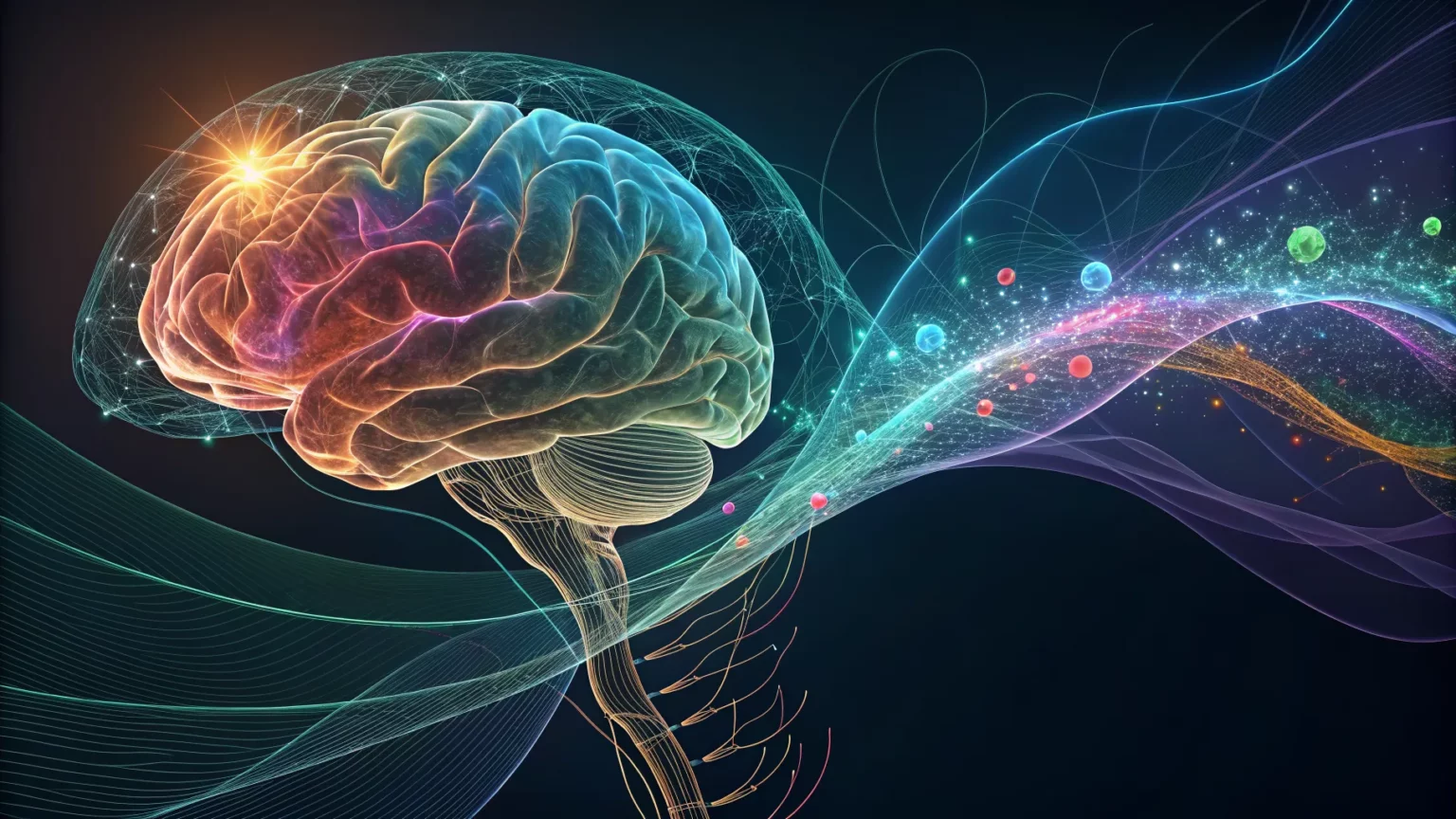
A new deep learning model promises to turn torrents of brain signals into clear, trackable paths, a step that could reshape how scientists study thought, emotion, and neurological disease. The research team says the system converts complex recordings into “trajectories” that reveal how activity changes over time. While key details remain under wraps, the approach signals a push to make sense of overwhelming neural data and guide future therapies.
“Researchers have developed a deep learning model that transforms overwhelming brain data into clear trajectories, opening new possibilities for understanding thought, emotion, and neurological disease.”
Why Brain Data Needs Simplifying
Modern brain recordings can track thousands of signals at once. They arrive fast, and they vary across people and tasks. Making sense of that volume is hard. Many labs use dimensionality reduction to compress signals into patterns that are easier to study. Trajectory models go a step further by showing how those patterns move through time, like a route on a map instead of a single snapshot.
Researchers have used related ideas in motor control studies to trace how the brain prepares and executes movement. Extending that logic to thought and emotion is challenging. Feelings and mental states unfold more slowly, can overlap, and are not as easy to label as a hand reach. A model that renders those states as paths could help link brain dynamics with behavior and symptoms.
How the Model Could Work
The team describes a deep learning system trained to sift through dense recordings and produce low-dimensional paths. Each path would represent a changing state, such as attention, mood, or a memory being formed. In practice, this means raw spikes or imaging signals are filtered, organized, and projected into a smaller space that preserves key structure.
Such models often combine feature extraction with recurrent units that track time. They can learn patterns not visible to simple methods. If tuned well, the output can reveal transitions, stable states, and cycles that align with tasks or symptoms. The promise is a cleaner view without losing important detail.
Potential Benefits for Medicine and Research
Turning noisy data into readable paths could speed up discovery. It may help scientists compare brain states across people or within the same person over days and weeks. That is vital for conditions that wax and wane, like depression or epilepsy.
- Clinicians could monitor a patient’s neural state as a path that drifts with treatment.
- Researchers could spot early warning patterns before seizures or mood episodes.
- Brain-computer interfaces could adapt by following state changes in real time.
For basic science, trajectories offer a way to test theories of how thoughts form and fade. If a model shows repeatable paths for similar tasks, that supports the idea that the brain reuses stable motifs to handle complex jobs.
Questions About Reliability and Ethics
New models raise old issues. Overfitting can create neat pictures that do not hold up across sessions or labs. Without careful validation, a trajectory might reflect artifacts instead of true brain states. Replication across datasets will be essential.



Privacy is another concern. Trajectory maps could reveal sensitive information about mood or intentions if paired with behavior. Clear consent, strict data controls, and limits on secondary use will be needed, especially if tools move into clinics or consumer devices.
Interpretation also matters. A simple path can invite overconfident claims about “reading minds.” Experts warn that trajectories describe population-level dynamics, not private thoughts. Any clinical use should be tied to outcomes and grounded in patient benefit.
What Experts Will Watch Next
Scientists will look for signs that the model generalizes across tasks and recording types. They will ask whether the paths predict behavior or symptoms better than current baselines. They will also test if the approach works with both invasive and noninvasive data.
They will examine transparency. Can researchers trace which signals drive a path? Are there tools for uncertainty and error checking? Open benchmarks and shared code would speed progress and let independent teams stress-test claims.
The debut of a model that turns heavy neural streams into clear trajectories marks a push to translate brain complexity into forms people can use. If validated, it could guide studies of thought and emotion and help track disease in real time. The next phase will demand open tests, careful ethics, and proof that cleaner maps lead to better care and stronger science. For now, the signal is promising; the field will be watching the path it takes.