





At the Reuters NEXT conference in New York, the future of work took center stage as speakers weighed how artificial intelligence could reshape jobs and productivity across the economy. The wide-ranging discussion, held this week in Manhattan, focused on job growth and workforce shifts rather than worries about an AI market bubble.
Panelists described a near-term period of rapid change, with companies racing to embed AI in daily operations. The tone signaled urgency for employers, workers, and policymakers who are trying to manage both opportunity and risk.
Setting the Agenda: Jobs First, Bubble Later
“The transformative effects of artificial intelligence dominated discussions … with panelists concentrating on how it may upend work — and job growth — sidestepping concerns about an AI bubble.”
Speakers kept the conversation anchored on labor and growth. Rather than debate market froth, they focused on how AI tools are entering offices, factories, and logistics networks. Many framed the next few years as a test of whether productivity gains can outpace disruption.
That emphasis reflects a growing view among executives and economists. AI could boost output and profits, but the benefits may be uneven without targeted training and new safety nets.
Background: What Data Says About Job Exposure
Global research offers a mixed picture. The International Monetary Fund reported in 2024 that AI could affect about 40% of jobs worldwide, with higher exposure in advanced economies. Some roles may be enhanced, while others face automation risk.
Goldman Sachs estimated in 2023 that up to 300 million full-time jobs could be exposed to automation, though many tasks could be augmented rather than replaced. The net result depends on new roles created by AI and how quickly workers shift into them.
Historically, major technologies have delivered both disruption and growth. The personal computer and the internet erased certain tasks but spawned new industries. Panelists suggested AI may follow a similar arc, though at a faster pace.
Inside the Debate: Displacement, Productivity, and Pay
Several speakers argued that AI’s first impact will be task-level change. Routine work in customer service, finance, and operations may be automated, freeing time for higher-value tasks. That change could lift output per worker.


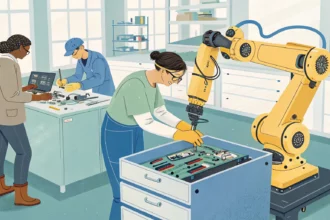
Others warned that productivity gains do not guarantee broad wage growth. If companies reduce hiring or consolidate roles, workers may not see immediate gains. The balance could hinge on training programs and how firms share savings from automation.
Labor groups have called for stronger transition support, including reskilling and wage insurance. Tech leaders, for their part, urged faster adoption paired with clear rules on data security and model accountability.
Policy and Corporate Playbooks
Attendees highlighted urgent steps for governments and employers:
- Invest in training tied to specific tools used on the job.
- Create guidelines for responsible AI use and auditing.
- Support workers in transition with time-limited benefits.
Several executives said they are moving from pilots to deployment in customer support, coding, and marketing. Early results show reduced response times and faster content production. Still, many firms are building checks to prevent errors and manage legal risk.
What Was Left Out: Bubble Fears
While AI market valuations drew little attention on stage, investors continue to debate sustainability. Some analysts warn that spending on chips and cloud could run ahead of revenue. Others say enterprise demand remains strong as firms retool workflows.
By placing jobs at the center, the conference signaled that the larger near-term challenge is social and operational, not just financial. Whether or not valuations cool, the workforce transition has already begun.
What Comes Next
Expect more sector-specific deployments over the next year. Health care, retail, and manufacturing are testing AI for scheduling, demand forecasting, and quality control. Regulators are drafting rules on transparency and bias, which could shape adoption speed.
For workers, the message was direct: adapt skills to human–AI collaboration. For leaders, the priority is to measure outcomes and share gains. For policymakers, the task is to cushion shocks without slowing innovation.
The conference closed with a clear signal. AI’s job impact is no longer a distant prospect but a current management challenge. The next phase will be decided by how quickly training, safeguards, and new roles scale to meet the technology’s spread.