




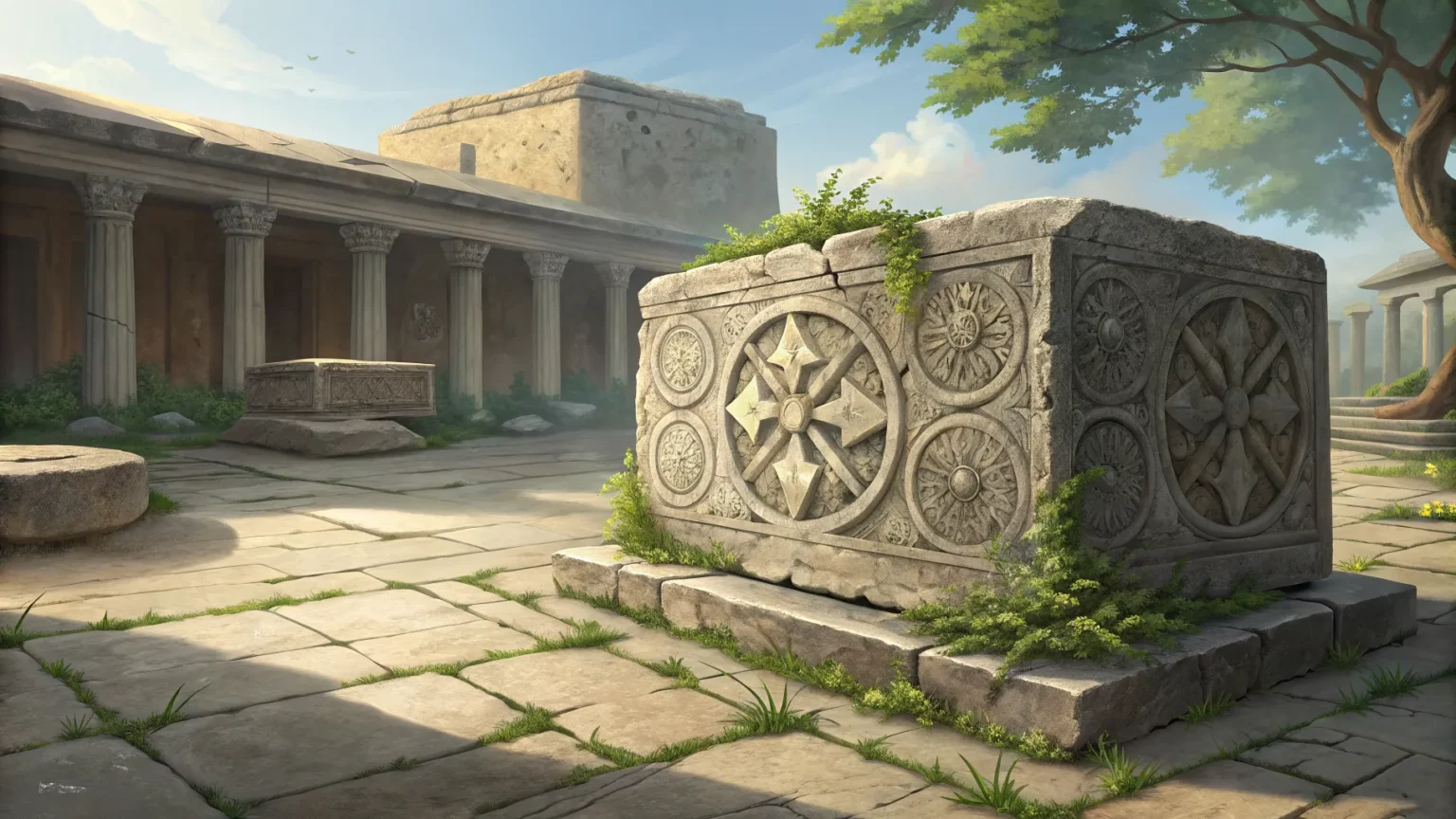
An ancient carving found on a limestone block may be the work of a traveler who once stood inside Jerusalem’s Second Temple. The tentative reading, offered by researchers reviewing the stone at another synagogue site, hints at a personal memory etched into a sacred setting. If correct, the carving would link two holy places and offer a rare, human voice from antiquity.
The find, still under study, raises fresh questions about how worshippers shared experiences across distant communities. It also shows how small marks on building stones can carry stories across centuries.
Background: Pilgrims, Holy Sites, and Memory
The Second Temple stood in Jerusalem for centuries and drew crowds from across the region. Pilgrims came for major festivals, vows, and offerings. Many traveled for days. They often brought home tokens, stories, and prayers.
Archaeologists have long documented traveler marks and simple drawings on stones in synagogues, inns, and way stations. Some were names. Others were symbols. A few tried to capture scenes or buildings. Most are hard to interpret, and many are fragmentary.
Scholars say this habit fits a wider pattern in the ancient Mediterranean. People left brief notes on walls and stones to record visits, thank a deity, or remember a vow. These short texts and images can be deeply personal, even if only a few lines remain.
The Claim and Its Context
“A pilgrim who visited the Second Temple in Jerusalem may have carved their memories into a limestone block for another synagogue.”
The statement reflects a cautious reading of the carving. The stone was part of a synagogue at a different location, suggesting that the maker visited Jerusalem and later recorded what they saw back home. The carving’s style, and the choice of a synagogue wall or block, supports the idea of shared memory across sites of worship.
Researchers stress that the piece is not a detailed picture or a full inscription. It may be a simple outline, a symbol linked to the Temple, or a brief text. The proposed link relies on parallels with other pilgrim marks and the stone’s setting in a house of prayer.
What Experts Are Watching
Scholars will look for date clues in the carving technique, letter forms, and tool marks. They will also compare the stone with other synagogue finds. If the piece aligns with known periods of synagogue building and travel routes, the case grows stronger.



- Does the carving match known symbols tied to the Temple?
- Is the style consistent with the era of active pilgrimage?
- Was the block reused, and if so, when?
Each answer can narrow the time frame and test the pilgrim idea. A secure date would help place the carving in the rhythm of festival travel, when crowds moved between towns and Jerusalem several times a year.
Meaning for Communities Then and Now
If a pilgrim carved this memory into a synagogue stone, it shows how distant communities drew meaning from Jerusalem. A personal mark set inside a local house of prayer could offer a shared link to the Temple’s rites. It may also show how worshippers anchored belief in daily spaces, not just in famous sites.
For today’s readers, the carving serves as a quiet reminder that history is built from small acts. A few lines on limestone can carry a voice across time. It reflects travel, devotion, and the urge to mark a life moment.
What Comes Next
Further study will focus on high-resolution imaging, material tests, and comparisons with similar stones. Any trace of pigment or plaster could indicate whether the carving was meant to be seen or was scratched in passing. A match with other pilgrim-style marks would strengthen the reading.
Researchers caution that the interpretation may change as new evidence appears. For now, the carving invites careful attention. It offers a possible bridge between a traveler’s memory and a local synagogue’s life.
The latest reading suggests a simple truth: people have long tried to hold on to what matters. As analysis continues, the stone may help explain how faith, travel, and community shaped each other, and what traces those ties left in stone.