




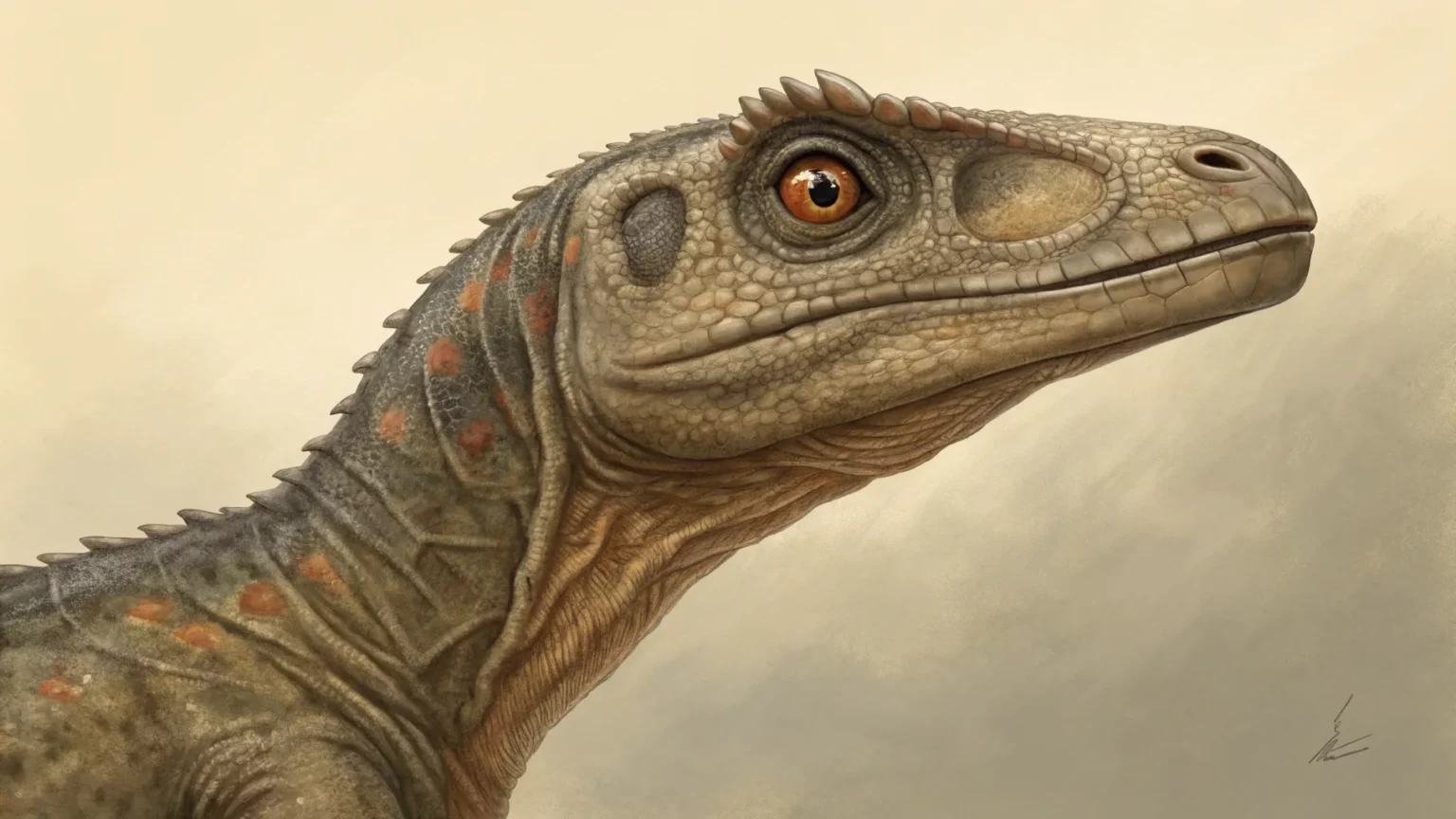
A thumb-sized fossil from Devon is prompting a fresh look at how lizards began. Dated to about 242 million years ago, the specimen carries features that do not match long-held expectations for the earliest lizard relatives. Researchers used high-resolution scans to study the skull and named a new species, Agriodontosaurus helsbypetrae, suggesting early lepidosaurs were more diverse than once thought.
The find adds a surprising twist to a large group that now includes more than 12,000 species of lizards, snakes, and the tuatara. The work highlights how small fossils can shift big debates in vertebrate evolution.
Background: A Puzzling Start for Lepidosaurs
Lepidosaurs are reptiles with a deep history that stretches back to the Triassic Period. Their early record is thin, leaving many questions about when key traits appeared. In modern lizards and snakes, skull hinges and palate teeth are common features. Many scientists expected those traits to mark the earliest chapters of their lineage.
Specimens from the Middle Triassic are rare and often fragmentary. That has made it hard to test ideas about how skulls, jaws, and teeth evolved in these animals. The new fossil from Devon arrives as a rare, well-preserved window into that time.
What the Fossil Reveals
The team used synchrotron imaging to examine the fossil’s internal structures. The scans exposed details that would have been missed under standard methods, including tooth form and skull connections.
“High-resolution synchrotron scans revealed details invisible to the naked eye,” the researchers said.
Those details point to an unexpected mix of traits. Instead of the expected skull hinges and palate teeth seen in modern relatives, the animal shows a blend of primitive structures and unusual features.
It shows a “surprising mix of primitive and unusual traits—along with strikingly large, blade-like teeth.”
Based on these features, the team named the species Agriodontosaurus helsbypetrae. The large, blade-like teeth hint at a diet that may have included soft-bodied prey or slicing flesh, though exact habits remain under study.
Why It Matters for Evolutionary Timelines
The fossil’s age, about 242 million years, places it near the early branching of lepidosaurs. If the earliest members lacked some of the skull features seen in modern lizards and snakes, those traits may have evolved later or appeared in multiple steps. That could shift phylogenetic trees and change how researchers interpret other Triassic finds.

Scientists have often used skull joints and palate dentition to anchor early relationships. This specimen suggests those markers may not be reliable on their own. It also raises the chance that early lepidosaurs explored a wider range of diets and skull designs than previously recognized.
- Age: about 242 million years
- Origin: Devon
- Group: Early lepidosaur relative
- Name: Agriodontosaurus helsbypetrae
- Key trait: large, blade-like teeth
Method Matters: Imaging That Changes the Picture
Synchrotron imaging has become a powerful tool for small and fragile fossils. It can reveal hidden tooth roots, nerve canals, and bone sutures without damaging the specimen. In this case, it helped map subtle joints and dental features that support the species diagnosis and its place on the reptile tree.
The study reports a fossil “shaking up scientists’ assumptions about the earliest members of the lizard lineage.”
Such methods are reshaping how paleontologists handle microfossils. They also help revisit old collections where overlooked details may still sit beneath mineral crusts.
Debate and What Comes Next
Some paleontologists caution that one fossil cannot carry the entire story. Triassic reptiles evolved in complex ways, and single specimens can be unusual. Further discoveries from similar deposits will be needed to confirm whether these traits represent a broader pattern or a specialized branch.
Future work will test diet assumptions with wear analyses and look for matching fossils at nearby sites. Additional scans could compare the skull and teeth with other early lepidosaur candidates to refine the family tree.
The Devon find does not close the case on lizard origins, but it sets a clear agenda. Watch for new Triassic specimens, more high-resolution imaging, and revised evolutionary trees as researchers weigh this small fossil’s large message.