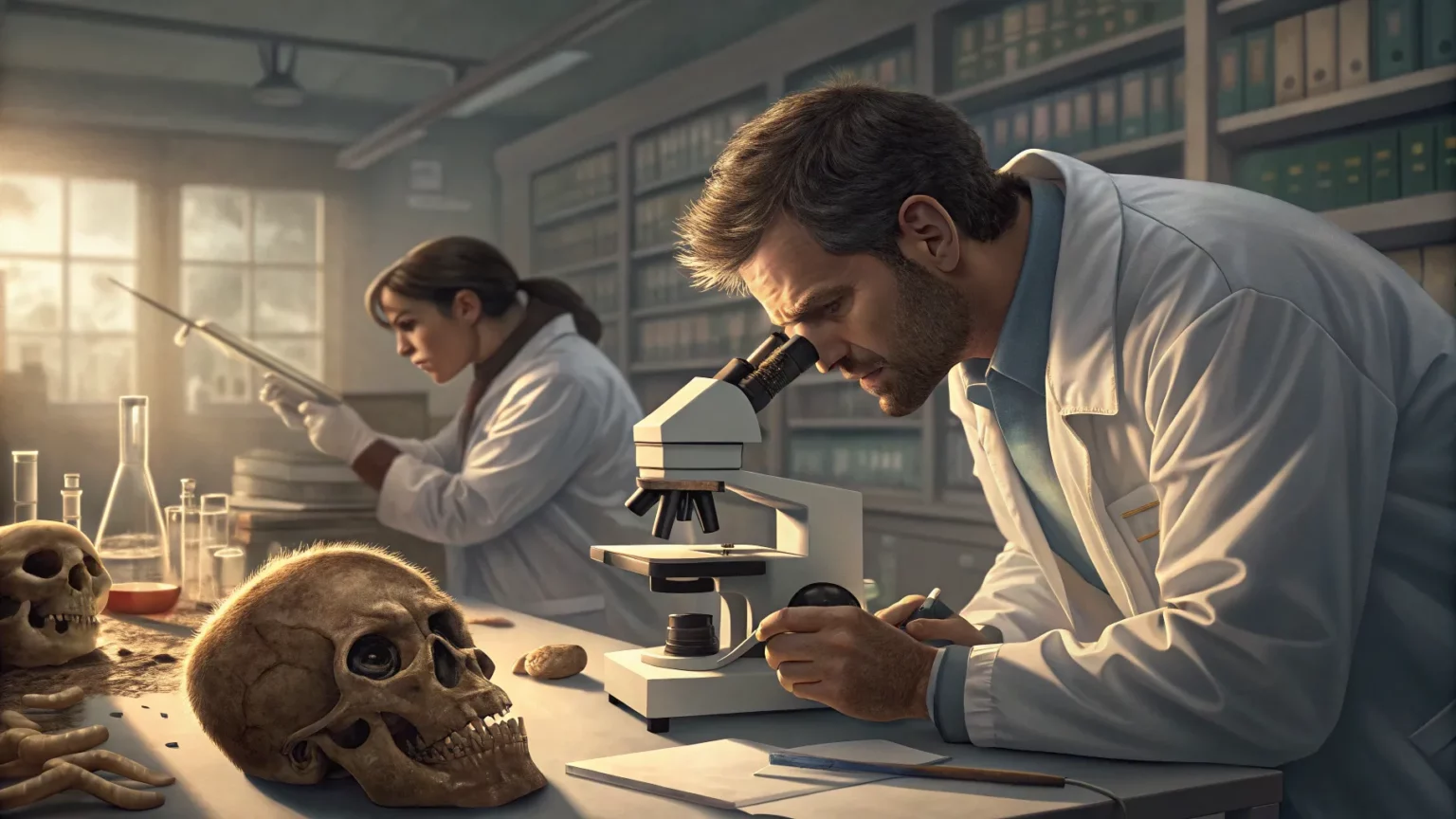
Scientists are turning to ancient proteins to help solve mysteries in human evolution that DNA analysis alone cannot address. As DNA breaks down over time, researchers have found that proteins can survive much longer, offering a new window into our distant past.
The study of ancient proteins, known as paleoproteomics, is emerging as a critical tool for anthropologists and evolutionary biologists. This approach allows researchers to extract information from fossils where DNA has long since decomposed, potentially filling significant gaps in our understanding of human origins.
How Proteins Outlast DNA
While DNA typically degrades within thousands of years except in ideal preservation conditions, proteins can remain intact for much longer periods. This durability makes protein analysis particularly valuable for studying older fossils from critical periods in human evolution.
“Proteins are more stable molecules than DNA,” explains one researcher involved in the field. “They can survive in fossils for hundreds of thousands or even millions of years, giving us access to information that would otherwise be lost forever.”
The structure of proteins, particularly those found in teeth and bones, helps them resist environmental factors that quickly break down DNA. This resistance to decomposition makes them valuable time capsules of biological information.
New Insights Into Human Ancestry
Recent applications of protein analysis have already yielded significant findings. Researchers have used this technique to:
- Identify previously unknown human relatives
- Determine relationships between ancient human species
- Establish more accurate timelines for human migration patterns
In one notable case, protein analysis of a 1.9-million-year-old tooth fragment provided insights into an early human relative when DNA analysis would have been impossible due to decomposition.
The technique has also helped clarify relationships between Neanderthals, Denisovans, and modern humans, showing protein differences that reflect their evolutionary divergence.


Combining Methods for Fuller Picture
Scientists emphasize that protein analysis works best as a complement to, not a replacement for, traditional DNA studies. When used together, these approaches provide a more complete picture of human evolution.
“We’re not suggesting proteins replace DNA analysis,” notes one expert. “Rather, proteins allow us to extend our research timeline much further into the past and fill in gaps where DNA is no longer present.”
The combination of techniques has already helped resolve some long-standing questions about human evolution, particularly regarding species that existed before the emergence of Homo sapiens.
Technical Challenges Remain
Despite its promise, protein analysis faces several obstacles. The extraction process is complex and requires specialized equipment. Additionally, interpreting protein data presents different challenges than DNA analysis.
Contamination remains a major concern, as modern proteins can easily mix with ancient samples. Researchers have developed strict protocols to minimize this risk, including working in clean rooms and using control samples.
The field also struggles with limited reference data. Unlike the extensive DNA databases available today, protein databases for ancient species remain under development.
As technology improves and methods become standardized, researchers expect protein analysis to become a standard tool in evolutionary studies, particularly for very ancient specimens where DNA recovery is impossible.
The advancement of paleoproteomics represents a significant step forward in our ability to understand human origins. By examining these durable molecular remnants, scientists can now peer further into our evolutionary past than ever before, potentially answering questions that have puzzled researchers for generations.