



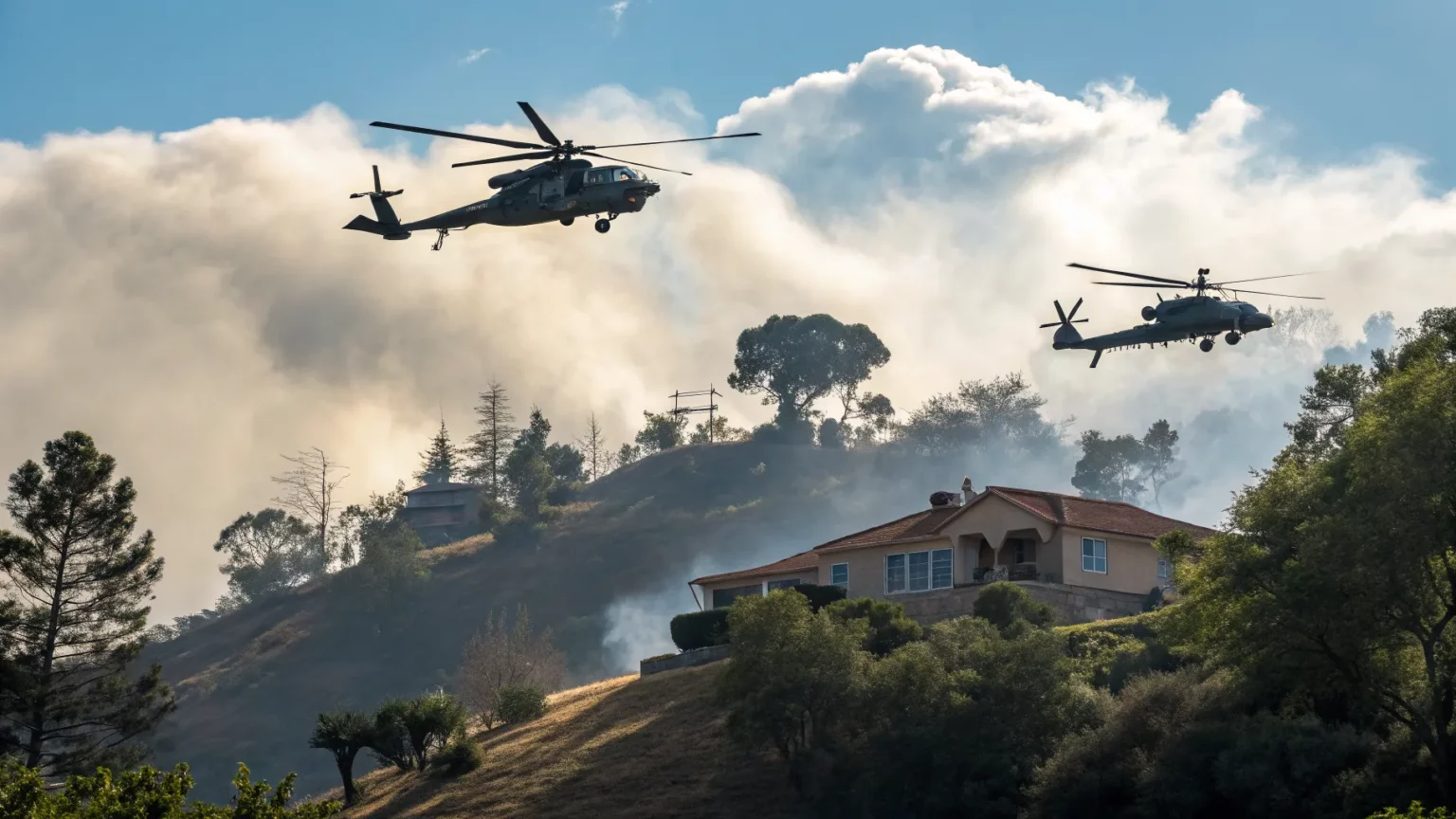
The U.S. Army has opened an inquiry after two AH-64 Apache helicopters on a training mission maneuvered close to the hillside home of musician Kid Rock. The incident raises questions about flight safety, training protocols, and how the military balances realistic exercises with community concerns.
The Army is investigating after two AH-64 Apache helicopters on a training run maneuvered near the hillside home of Kid Rock.
What Sparked the Inquiry
According to the Army, the helicopters were conducting a training run when they flew near the property. There were no reports of injuries or damage. Even so, the service treats unexpected proximity to homes as a matter for review.
Apaches are attack helicopters designed for agility at low altitude. That agility can bring them close to terrain and structures during exercises. While such training is routine, proximity to private residences can trigger scrutiny, especially when high-profile properties are involved.
Training Rules and Community Boundaries
Military pilots train under rules that differ from civilian flights, but safety remains the top priority. Crews plan routes, brief risks, and avoid sensitive areas when possible. Low-level training can occur in designated corridors or training areas, with specific minimum altitudes and procedures set by commanders.
Community relations also matter. Residents near training routes often raise concerns about noise and vibration. The Army typically coordinates with local authorities for scheduled activities and investigates complaints to keep goodwill intact.
How the Army Investigates
An aviation safety review looks at both human decisions and mechanical performance. Investigators will examine whether the crews followed their briefing and if weather, terrain, or navigation factors played a role.
- Flight plans and mission briefs
- Aircraft tracking data and cockpit video
- Pilot reports and chain-of-command reviews
- Local conditions, including visibility and wind
Outcomes can range from clearing the crews to adding training, adjusting local procedures, or, if warranted, discipline. The goal is to learn from the event and reduce risk on future flights.
The Apache Factor
The AH-64 is a twin-engine attack helicopter built for speed, precision, and survivability. Its mission set includes close air support, reconnaissance, and training that mimics real-world terrain and threats. That means flying low, turning sharply, and working in pairs or teams to build crew coordination.



Experts often argue that realistic training saves lives in combat. Critics counter that realism should not come at the cost of rattled neighborhoods or property concerns. The tension between readiness and peace and quiet is not new, and every incident like this one brings it back into focus.
Industry And Public Reactions
Safety advocates tend to look for patterns: Are near-home flights clustered in certain areas or times? Are crews receiving clear guidance on local no-fly zones or advisory distances? Military supporters point out that the United States asks a lot of its aviators, and realistic practice is essential to keep them sharp.
For public figures, any unusual activity near a property can attract attention, but investigations apply the same standards regardless of the address. The central questions are simple: Were the rules followed, and are the rules right for the mission and the community?
What Comes Next
The Army’s review will likely be swift. Commanders will weigh the facts, brief findings, and decide on any changes to routes, altitude rules, or crew training. If new guidance is issued, it could shape how future low-level flights are planned near residential areas.
For now, the takeaway is clear. Realistic training and public safety have to live side by side. This investigation will show whether the balance held—and how it might be tightened. Watch for the Army’s findings, any updates to local training procedures, and whether community outreach expands as a result.