



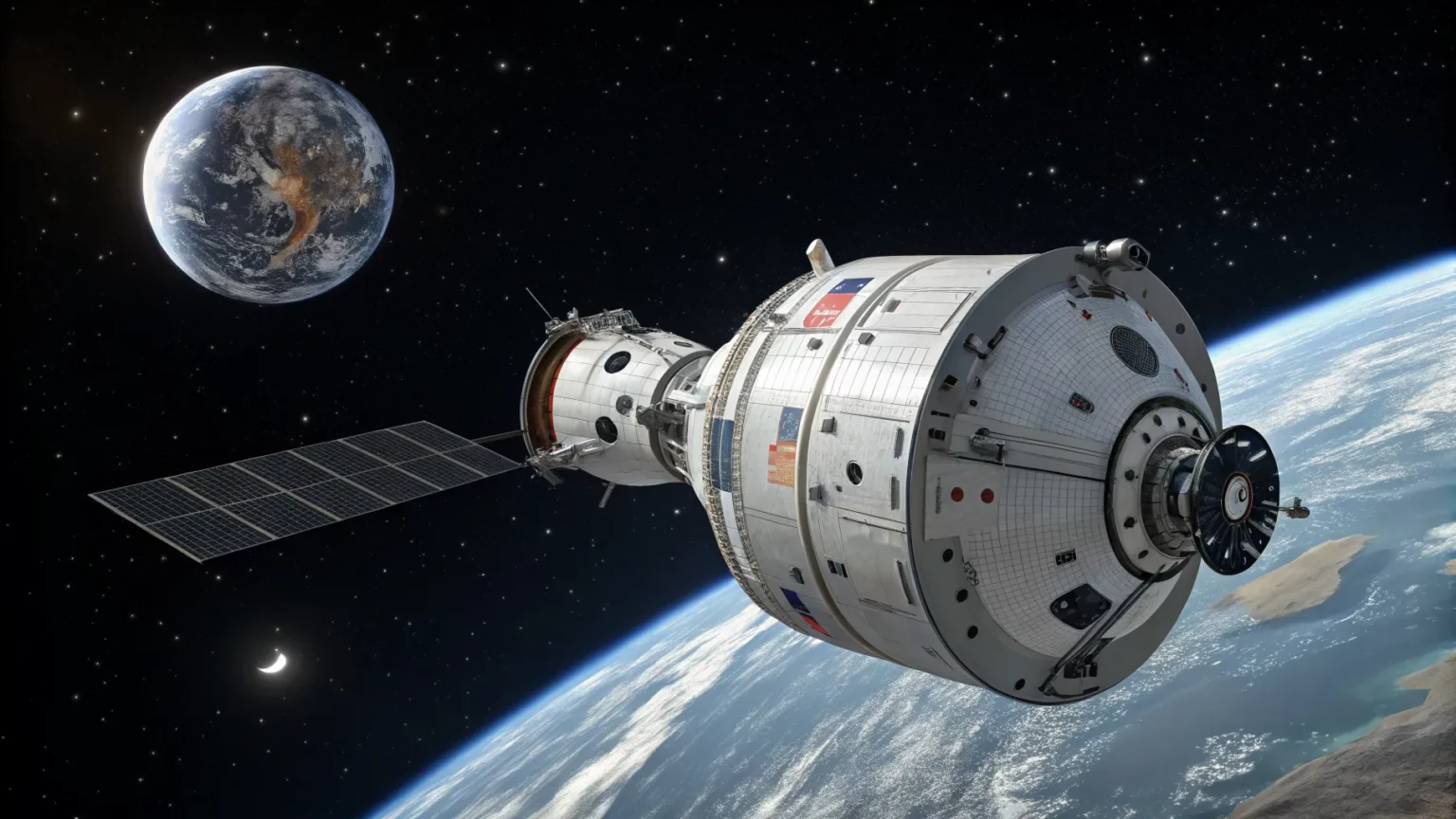
The Artemis II crew is on track to challenge one of spaceflight’s longest-standing marks: the farthest distance humans have traveled from Earth. If their lunar flyby goes as planned, the mission could eclipse a record held since 1970 by Apollo 13.
The flight, part of NASA’s return-to-the-moon campaign, sends four astronauts on a figure-eight trip around the Moon before heading home. The goal is to test Orion’s life-support systems and deep-space navigation while building momentum for a crewed lunar landing on a later mission. The timing of the milestone highlights the pressure to deliver progress after years of planning and delay.
“The Artemis II astronauts are racing toward a new distance record on their moon flyby. Apollo 13’s crew currently holds the record for the humans traveling the farthest from Earth.”
Why This Record Still Matters
Apollo 13’s record comes from a crisis. On April 14, 1970, after an oxygen tank exploded, the crew swung around the Moon on a free-return path. Their far point from Earth reached roughly 248,655 miles (about 400,171 kilometers). They survived against long odds, but the mission never touched the lunar surface.
Artemis II is built for a different purpose. NASA wants to prove the Orion spacecraft and its systems can support a crew well beyond low Earth orbit. The flight is meant to set a safe baseline for longer missions, including a Moon landing with Artemis III. A new distance record would be symbolic proof that human spaceflight is once again pushing past the limits set in the Apollo era.
The Flight Plan and the Physics
Breaking the distance mark depends on trajectory. A slightly higher swing past the Moon can place Orion farther from Earth than Apollo 13 reached. It’s a careful balance: close enough for strong lunar gravity assist and communications, far enough to meet test objectives without adding risk.
- Current record: Apollo 13 at about 248,655 miles from Earth.
- Target: A lunar flyby designed to exceed that distance briefly before return.
- Spacecraft: Orion, powered to the Moon by NASA’s Space Launch System, with deep-space life support on board.
Mission planners say the record is not the primary goal. Safety checks, crew systems, and precise navigation come first. Still, the geometry of a lunar flyby often puts a spacecraft at or near the edge of prior human reach.
What Experts Are Watching
Engineers will monitor Orion’s environmental controls, thermal performance, and avionics during the deep-space leg. The farther the craft travels, the more demanding communications and timing become. These are dress rehearsals for sustained lunar operations later in the decade.
Space policy analysts point out the public value of a clean, high-profile achievement. A fresh human distance record is easy to explain and hard to ignore. It can help NASA keep political support and industrial partners aligned through budget cycles and hardware upgrades.



There are caveats. Distance alone does not measure mission complexity. Apollo 13’s crew endured a life-or-death scramble. Artemis II is a planned test with modern safeguards and redundant systems. The comparison is apples to oranges, but the record still offers a clear signpost of human reach.
From Apollo to Artemis
The Apollo program ended in 1972, leaving a long gap without deep-space crewed flights. The Artemis program is NASA’s attempt to revive that capability, build a sustained lunar presence, and prepare for future Mars missions. Artemis II is the crewed shakedown cruise after Artemis I’s uncrewed lunar test flight proved Orion could survive the trip and splash down safely.
Success would tee up Artemis III, which aims to deliver astronauts to the lunar surface using a separate lander. Each mission depends on the lessons and confidence gained from the one before it.
What Comes Next
If Artemis II surpasses Apollo 13’s distance, expect a short window where humans reach a new personal best and then begin the long ride home. The immediate payoff is the data: precise measurements of how Orion performs at the fringes of human travel.
The larger payoff is momentum. A clean flight builds trust in the hardware, keeps schedules intact, and nudges the Moon landing within reach. For now, the record is both a headline and a checkpoint. The real test is whether Artemis can turn this moment into regular trips farther, longer, and safer.
Watch for confirmation of the peak distance, any course corrections during the lunar swing, and post-flight reports on system performance. A new record would close one chapter from Apollo while opening a new one for long-haul human spaceflight.