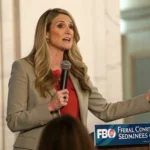





Bank of America executive Sharon Miller said small business clients are watching high-level U.S.-China talks and fast-moving AI tools at the same time, weighing costs and opportunities. In a recent television interview, the President of Business Banking outlined how policy headlines and new technology are shaping investment, hiring, and pricing decisions across local firms. Her comments point to a cautious but engaged Main Street that wants clarity on trade and practical guidance on AI.
The Stakes of Renewed U.S.-China Engagement
Business owners often react quickly to signs of easing or hardening relations between Washington and Beijing. Tariffs, export controls, and supply chain bottlenecks can raise costs or delay orders. A meeting between U.S. and Chinese leaders can reset expectations, even before policy changes arrive.
Miller noted that clients with exposure to imported inputs, electronics, and industrial parts are most sensitive. A predictable tariff path helps with pricing and inventory planning. Uncertainty can freeze capital spending and push companies to overstock or switch suppliers at higher cost.
Market watchers say communication between the two governments tends to calm currency and commodity swings. That can lower risk for manufacturers and retailers. Yet owners remain wary that any truce may prove temporary, given recent trade flare-ups.
What Small Businesses Are Watching
Small firms employ nearly half of U.S. workers, according to federal data. Their sentiment often turns on a few concrete issues they can act on. Miller emphasized three near-term priorities for clients.
- Supply reliability and shipping times for key inputs.
- Tariff exposure on finished goods and parts.
- Financing costs for inventory and equipment.
Owners who import finished goods are modeling price moves under different tariff scenarios. Others are qualifying secondary suppliers in Mexico and Southeast Asia to hedge risk. Service firms are less exposed to trade shifts but still face cost pressure when equipment and software prices rise.
AI Moves From Test to Tool
AI is moving from curiosity to daily utility for many small firms. Miller said clients are using basic tools for marketing content, customer support scripts, and data clean-up. The draw is speed and lower administrative load, not novelty.
Early adopters report time savings in proposals, invoicing notes, and job estimates. Retailers are trying AI chat assistants for product questions after hours. Contractors are testing scheduling aids that match crews, parts, and sites more efficiently.



Owners also see limits. Many want clearer guidance on accuracy, data privacy, and how to measure return on investment. They are asking banks and vendors for simple playbooks, not grand strategies.
Costs, Credit, and Caution
Financing conditions are central to whether AI and supply chain moves translate into growth. Higher rates raise the hurdle for software, hardware, and inventory upgrades. Miller said cash-flow forecasting and disciplined budgeting are back in focus for clients.
Lenders are encouraging firms to pilot AI in narrow tasks before scaling. That approach caps risk while building internal skills. It also helps owners compare vendor promises with measurable results, like faster response times or lower error rates.
Some entrepreneurs remain skeptical. They remember past tech cycles that delivered less than advertised. Others are concerned about training staff and reshaping workflows while demand is uneven.
What to Watch Next
Businesses will track whether U.S.-China talks produce clearer tariff and export policies. Any step that stabilizes shipping and input prices would feed directly into 2024 and 2025 budgets. Owners will also watch freight rates and delivery times as signals of supply stress or relief.
On the technology front, expect steady, practical adoption rather than big bets. Firms are likely to add AI tools where they see quick payback, such as support, sales outreach, and back-office tasks. Banks and software providers will compete to offer templates and training that lower complexity.
Miller’s message was measured. Small businesses are staying engaged, controlling what they can, and asking tough questions about cost, risk, and value. Policy clarity and simple, reliable tools may determine how much momentum they carry into the next quarter.