




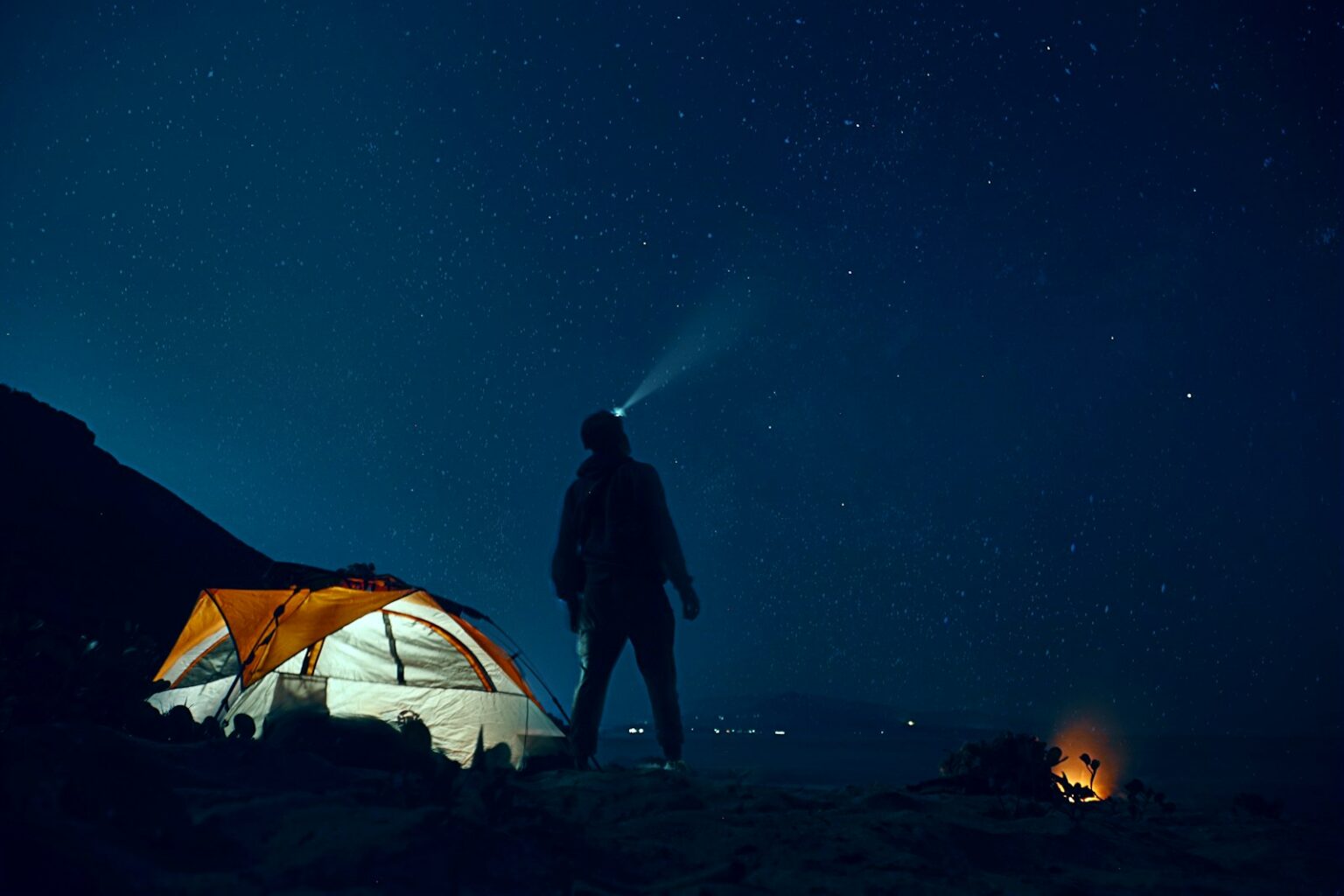
People everywhere are discovering the enjoyment of camping. In fact, Millennials and Gen Zers are leading the pack when it comes to packing it up, backpacking for hours, and just plain spending time in nature. However, camping requires more than just desire: proper gear is essential for the safest possible experience. And having the best headlamps for camping helps.
If you’re a novice camper, you may ask whether or not a headlamp is essential. It is because it frees up your hands. Instead of having to hold and maneuver a flashlight, you can cook, pitch your tent, and complete activities with freedom and control.
There’s just one issue: You may find it difficult to figure out which kind of headlamp is going to serve you best when you’re outside. After all, the headlamp that works great for your best friend isn’t always going to meet your unique needs. Accordingly, you should plan your next headlamp purchase by using five key features to guide your purchase.
What to Look for in the Best Headlamps for Camping
1. Lumens
When you begin to research headlamps, you’ll hear a lot about lumens. But it can be difficult to visualize how bright 300 lumens is compared with 500 lumens or 1500 lumens. The U.S. Department of Energy offers a simple explanation, stating that 1600 lumens is approximately the brightness of a 100-watt indoor light bulb, 800 lumens lines up with a 60-watt light bulb, etc.
Be aware that many headlamp models give you the ability to choose between lower and higher lumens. For instance, portable lighting solutions brand Luxpro showcases several headlamps in their collection that can shine as brightly as 3000 lumens. However, you can usually adjust the lumens to achieve a perfect beam.
2. Battery Life
The longer you can use your headlamp without recharging, the better. This is particularly the case if you are at any risk of being without replacement batteries. (You should always carry replacements, but it’s easy to forget in the rush to get to your camping destination.)
Many headlamps offer surprisingly long battery lifespans. However, do read the fine print. Some say they will work for days, but only on the dimmest brightness. If you plan to use the highest settings regularly, you may want to opt for a more expensive headlamp that requires fewer battery changes.
3. Durability
As you explore the broader market of headlamps, you will see an incredible range of materials and components being used by different brands. Each material has a durability limit, so consider the typical conditions your headlamp will face.



For example, you might enjoy a lot of camping in wet conditions. A waterproof headlamp will keep going in the heaviest downpour, and its elements won’t start to break down with exposure to moisture. Does this mean you have to buy the most expensive headlamp to ensure lasting reliability? To be honest, not necessarily. That said, read what other reviewers have said if you’re unsure about a headlamp’s toughness.
4. Ease of Use
It can be tempting to purchase a headlamp with many bells and whistles, such as smart features or voice-activated controls. The only problem is that the more modes and features a headlamp offers, the steeper your learning curve will be.
Truth is, an overly engineered headlamp may be unsuitable for casual camping experiences. On the other hand, having a headlamp that’s truly “smart” could benefit you if your camping adventures take you into deep caverns or nighttime hikes over rocky and harrowing terrain. Be prepared to practice using your headlamp if you choose a multifunctional, complex unit.
5. Comfortable Design
The best headlamp for you will always be the one that you actually want to wear. This necessitates trying it on and walking around with it for substantial periods before you ever enter into the woods.
What should you look for in terms of comfort and fit? A headlamp shouldn’t be constrictive, but it shouldn’t move around, either. If your headlamp keeps sliding around even after you adjust it, you may need a different size or model. The same holds if you have a headlamp that feels too heavy or cumbersome around the crown of your head. Be aware that some materials may chafe unless you wear the headlamp over a tight hat or cap.
Accessories for Your Headlamp
After you’ve picked out a favorite headlamp to take outdoors, mull over the idea of adding a few accessories to power up the overall experience of having a headlamp. Case in point, you may want to grab a waist lamp, too. Waist lamps can be used in tandem with headlamps to project beams of light at two levels. Portable waist lamp innovator FlipBelt offers a unique and lightweight one that can be recharged with a USB cable. It’s not marketed specifically for campers, but it is still outdoor-friendly.
Chest lamps can be great accompaniments for the same reason as waist lamps. Although they sit higher than a waist lamp, they can be aimed at the ground to illuminate a larger area.
The next time a camping trip looms large on your schedule, be sure to bring a headlamp along with all your other gear, equipment, and apparel. The more you wear it, the more you’ll appreciate its usefulness.