




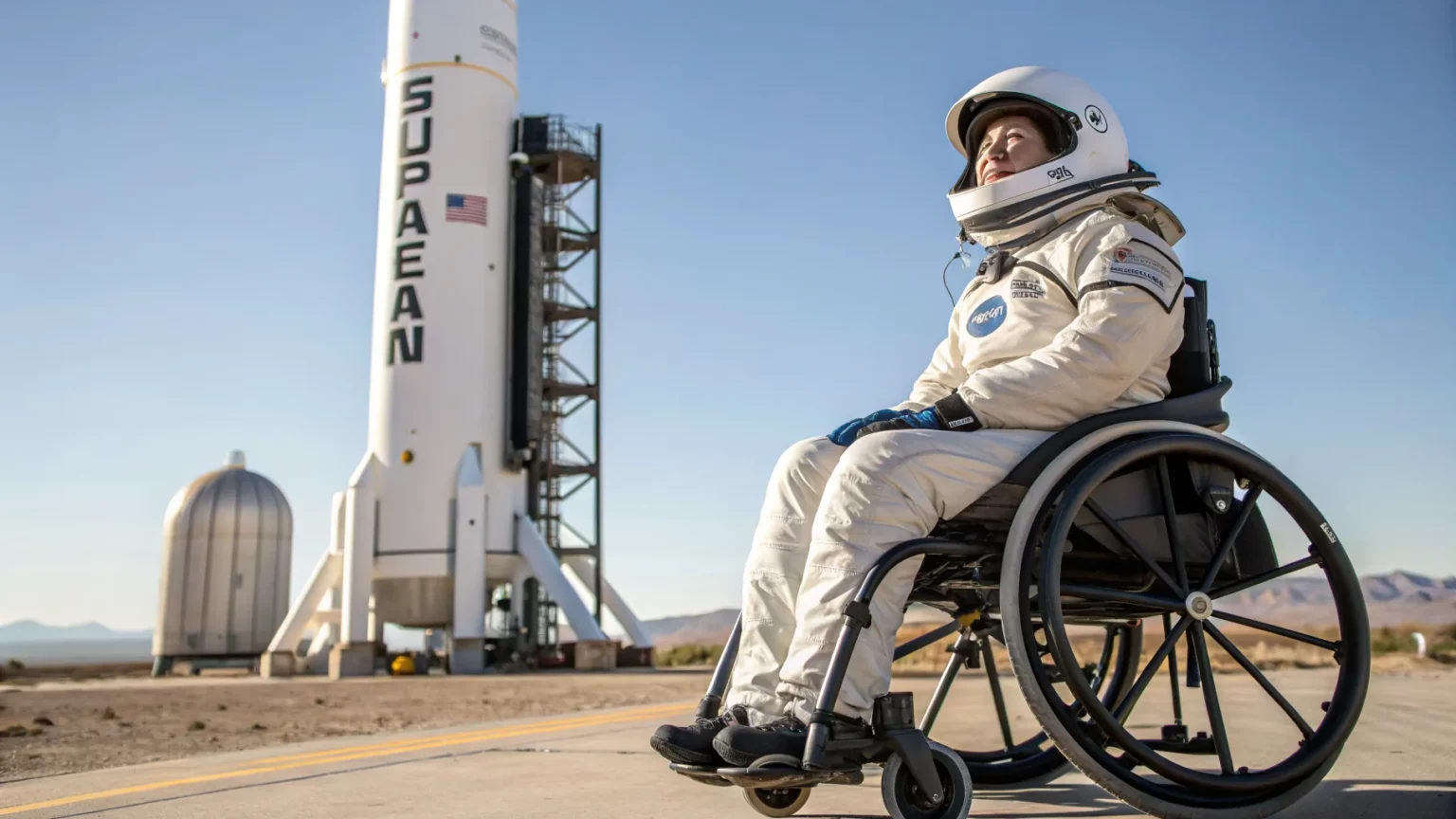
Blue Origin is preparing to send the first wheelchair user to space, naming Michaela Benthaus to a New Shepard mission that the company says will mark an accessibility milestone. The flight, which will lift off from West Texas on a suborbital trajectory, is set to add a new chapter in human spaceflight by expanding who can take part and how spacecraft support them.
The company framed the moment as a step toward inclusive access. New Shepard offers a brief, high-altitude flight past the Kármán line with several minutes of weightlessness before landing.
“Blue Origin prepares to launch the first wheelchair user to space as Michaela Benthaus joins historic New Shepard mission, marking accessibility milestone.”
Why This Mission Matters
Spaceflight has long set physical standards that excluded many would-be flyers. Most professional astronauts faced strict medical rules shaped by early programs. Commercial flights have widened the door. Blue Origin flew its first crewed mission in 2021. In May 2024, the company carried former Air Force pilot Ed Dwight, then 90, making him the oldest person to reach space.
Disability advocates have pressed for more inclusive design. Groups such as AstroAccess have run parabolic flight campaigns since 2021 to test mobility aids, tactile labeling, audio cues, and emergency procedures in microgravity. Volunteers with mobility, visual, and hearing disabilities have completed those flights, offering data on how crews could adapt in weightlessness.
What New Shepard Will Do
New Shepard is a reusable, autonomous system designed for suborbital missions. The capsule is pressurized, has large windows, and returns by parachute. A typical flight lasts about 10 to 11 minutes from launch to touchdown, passing an altitude of roughly 100 kilometers before reentry.
The West Texas facility uses elevators and a gantry to reach the hatch level, which can help riders with mobility needs. Inside, New Shepard features reclining seats fixed to the floor for launch and landing. Flyers unbuckle during the coast phase to float.
- Launch and landing occur in West Texas.
- Flight time is about 10–11 minutes.
- Peak altitude is near the Kármán line.
- Capsule is autonomous; no pilot is onboard.
Access Meets Safety and Training
Commercial spaceflight participants must complete training and sign informed consent under FAA rules. That training covers seat operations, harness use, cabin egress, and emergency drills. For a wheelchair user, teams will also plan transfer procedures in and out of the seat, secure mobility devices, and ensure clear paths inside the cabin.
Emergency planning is central. Crews practice rapid exit after landing and rehearse contingencies. Adaptive plans can include:



- Custom restraint checks to prevent pressure points.
- Clear tactile or visual cues for timing and movement.
- Defined crew roles to assist during seat transfers.
Engineers and medical staff will watch biometric data and movement patterns to learn how mobility aids and restraint systems perform in microgravity and during reentry loads.
Broader Impact on the Industry
The flight adds urgency to a larger shift. Commercial missions have already expanded who gets to fly, from private researchers to tourists. An accessible suborbital mission could push hardware suppliers and training providers to redesign cabins and checklists with a wider range of users in mind.
Future orbital operators may take notes. Vehicles like SpaceX Crew Dragon and, soon, Boeing Starliner and Sierra Space’s Dream Chaser, can incorporate lessons on seat geometry, communications, and emergency aids. Regulators may also seek more data on how to certify cabins and ground systems for riders with diverse needs without adding undue barriers.
What To Watch Next
Key questions include how New Shepard teams handle the boarding process, where mobility devices are stowed, and how communications guide movement during weightlessness. Observers will also look for published post-flight findings that can inform training and design across the sector.
Success could lead to dedicated accessible missions or set standards for mixed crews. It could also encourage more research flights that test new aids, from improved harnesses to haptic alerts.
Blue Origin’s plan signals that spaceflight can widen access with planning and design. If the mission runs as expected, it will offer clear evidence that more people can fly safely. The next step is making these practices routine so future missions start inclusive by default.