




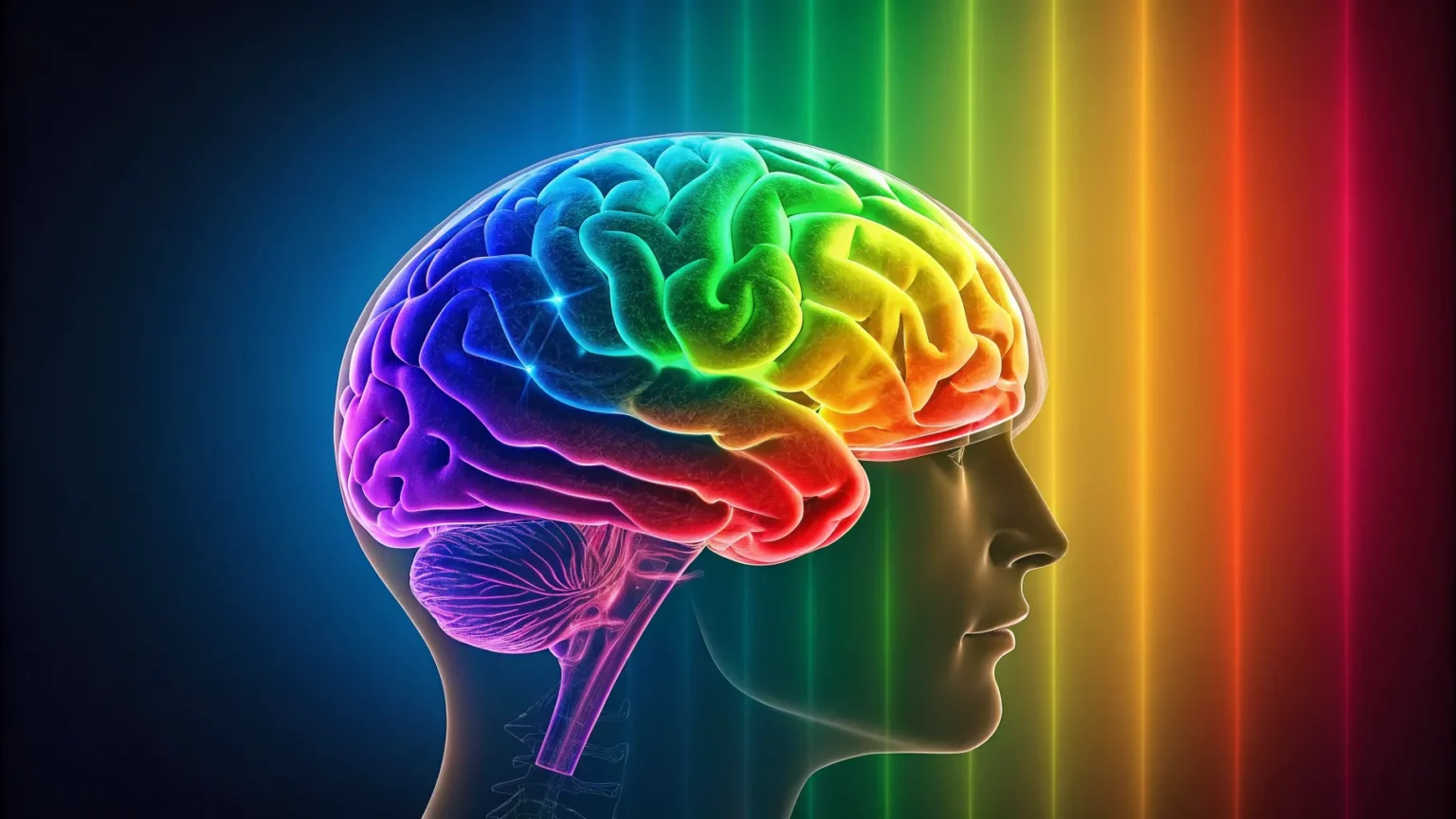
New research indicates that human brains may respond in similar ways when viewing the same colors, though scientists remain cautious about drawing definitive conclusions. The study explores how neural responses to specific hues might be more universal than previously thought.
While researchers have long studied how humans perceive color, this new investigation focuses specifically on brain activity patterns when subjects view identical color samples. The findings suggest a potential consistency in how our brains process color information, regardless of individual differences.
Neural Patterns and Color Perception
The research examined brain responses when participants viewed various color samples. Scientists monitored neural activity using advanced imaging techniques to track how different regions of the brain responded to specific hues.
Results showed notable similarities in brain activation patterns across different participants when they observed the same color. This consistency appeared despite variations in participants’ backgrounds, experiences, and other individual factors that might influence perception.
However, researchers emphasize that these findings remain preliminary. The team has not yet claimed that all people experience colors identically, only that there appear to be shared neural responses when processing color information.
Implications for Understanding Perception
This research could have significant implications for multiple fields, including:
- Psychology and neuroscience, by deepening our understanding of sensory processing
- Design and marketing, by providing insight into how colors might universally affect viewers
- Art and visual communication, by explaining why certain color combinations may have widespread appeal
The study also raises questions about the balance between shared human experiences and individual differences in perception. While our brains may process color stimuli similarly at a fundamental level, cultural factors and personal experiences still likely influence our conscious experience of color.
Research Limitations
Scientists involved in the study maintain a careful stance regarding their conclusions. The research team emphasizes that correlation in brain activity does not necessarily mean identical subjective experiences. Two people might show similar neural patterns when viewing red, for example, but could still describe or experience the color differently.



Additionally, the sample size and diversity of participants will need expansion in future studies to verify whether these patterns hold across different populations and cultures.
The research team plans to conduct follow-up studies with larger, more diverse groups of participants and more sophisticated brain imaging techniques to further explore these initial findings.
As scientists continue to investigate the relationship between brain activity and color perception, this research provides an intriguing glimpse into the possibility that certain aspects of how we experience the world might be more universal than we previously understood.