




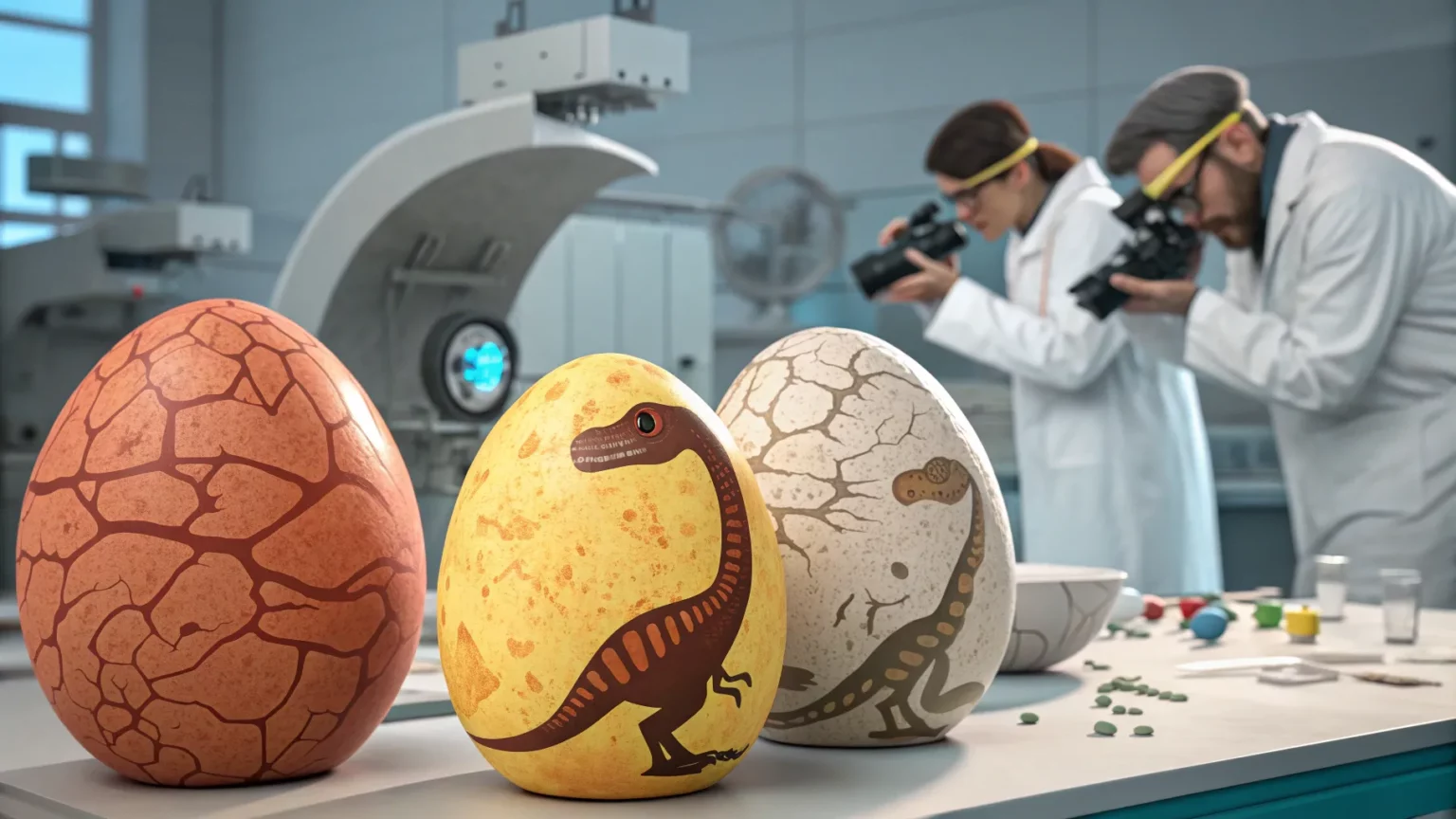
A new scientific finding suggests that fossilized dinosaur eggshells hold a natural clock that can show when the animals lived. Researchers say the approach delivers precise ages and could change how many sites are dated. The work points to a faster, clearer way to place fossils on the geologic timeline, with implications for museums, field teams, and classrooms worldwide.
“Researchers have found that fossilized dinosaur eggshells contain a natural clock that can reveal when dinosaurs lived.”
Scientists have long relied on layers of rock and radioactive minerals to estimate the age of fossils. These methods work well where volcanic ash or certain minerals are present. Many dinosaur sites lack those materials, leaving wide age ranges and debates. Eggshells are found at many sites, including places without volcanic layers. If eggs can carry their own timing signal, it could fill major gaps in the fossil record.
How an Eggshell Becomes a Clock
The reported method rests on chemical signals preserved in the shell’s hard minerals. As an egg forms, its shell grows in layers. Each layer can lock in a record of its environment. Over time, parts of that record remain stable within the fossil. Researchers say they can read that signal to estimate the time the egg was laid.
Because eggs come from specific moments in a dinosaur’s life, they serve as timestamps. A nest or clutch can mark a season and a year for a site. This offers a different kind of marker than bones, which may be moved by water or buried long after death.
“The technique delivers surprisingly precise ages and could revolutionize how fossil sites around the world are dated.”
Why Precision Matters for Dinosaur History
Better dates can refine big questions about dinosaur evolution and extinction. Small shifts in timing can change how scientists link fossils to climate swings, sea-level changes, or asteroid impacts. If eggshell clocks narrow those ranges, timelines for species origins and disappearances could be updated.
The approach may also help track nesting behavior and migration. Clusters of precisely aged eggs could show whether a species returned to the same nesting ground over many years. It could also reveal how species moved as environments changed.
How It Could Work Across Sites
Researchers suggest the method can be applied wherever fossil eggshells survive. That includes arid badlands, riverbeds, and desert margins where bird and reptile eggs are often preserved. If the technique proves reliable across different climates and rock types, it could provide a common dating tool for many expeditions.
- Dating sites that lack volcanic ash layers.
- Cross-checking ages from rock strata and other fossils.
- Building seasonal records of nesting and habitat use.
- Aligning local discoveries with global events.
Field teams could collect eggshell fragments along with bones, adding a second line of evidence. Museums could revisit old collections and assign tighter age ranges to iconic specimens. Classroom lessons could bring clearer timelines to life for students.


Checks, Limits, and What Comes Next
Several questions remain. Not every site preserves delicate eggshells. Some shells are altered by heat, water, or pressure, which can change their signals. Researchers will need ways to screen samples and confirm that the “clock” stayed intact during fossilization.
Independent tests will be key. Age estimates from eggshells should be compared with dates from rock layers, ash beds, and other techniques when possible. Agreement across methods would build confidence and define where the approach works best.
If validated, the eggshell method could speed up surveys and reduce uncertainty. It might also help settle debates over the timing of regional extinctions and recoveries. The gains would come site by site, as teams apply the same protocols and share results.
The early takeaway is clear: a familiar fossil may become a powerful timekeeper. With more testing and careful use, eggshells could sharpen dinosaur timelines and reshape how fieldwork is planned. Watch for wider trials, shared standards, and studies that link eggshell ages to climate and ecosystem change. Those steps will show whether this natural clock can become a trusted tool for dating the deep past.