




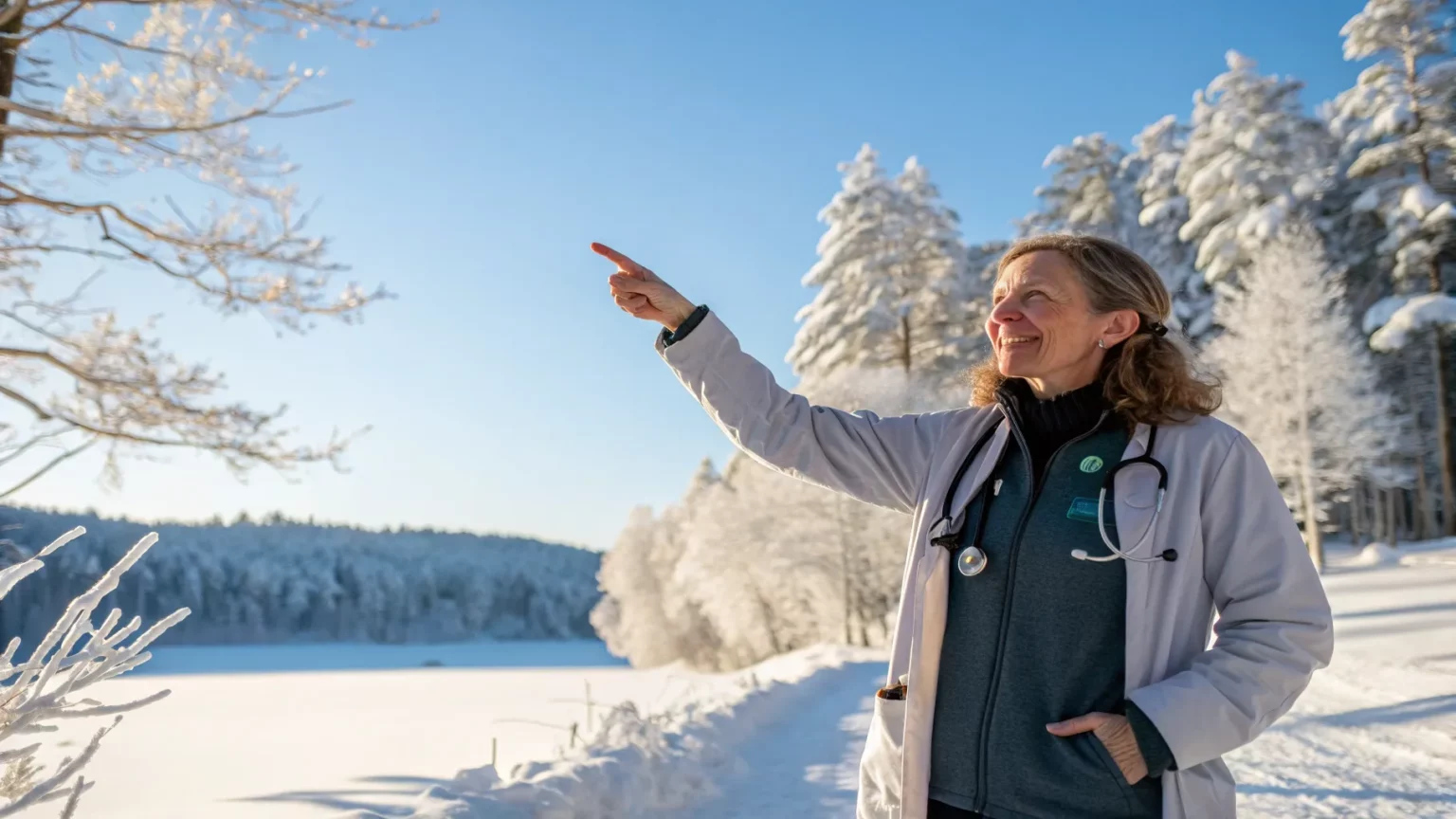
An emergency physician in New Hampshire is giving winter a friendly green light. Dr. Sarah Crockett of Dartmouth-Hitchcock Medical Center says more time outdoors can boost health, and if that includes a clean scoop of fresh snow, she is not worried. Her stance adds a practical voice to a chilly debate: is eating snow safe, and does it fit into a healthy routine?
Crockett, who works in emergency and wilderness medicine, encourages patients to get outside more often. She frames snow as part of that experience, when handled with common sense. The guidance arrives as families search for low-cost ways to enjoy winter and stay active.
Outdoor Prescription Gains Ground
Prescribing time outside is not new. Clinicians have promoted nature time for stress relief, better sleep, and improved mood. Hospitals and clinics around the country have experimented with “park prescriptions” to nudge patients into regular walks and winter play.
For Crockett, the message is simple: snow can be part of that joy. She describes the small ritual of catching a snowflake or shaping a quick snow cone as a moment worth savoring.
“To stop and just be present and want to catch a snowflake on your tongue, or scoop up some fresh, white, untouched snow that’s collected during something as exciting as a snowstorm, I think that there’s space in our world to enjoy that,” she said.
Is Snow Safe To Eat?
Health experts generally advise caution but not panic. Fresh, clean snow away from traffic is less likely to contain dirt or chemicals. The first flakes during a storm may trap more airborne particles; later accumulation is often cleaner.
Concerns focus on contamination near roadways, industrial sites, or areas where animals roam. Colored, crusted, or old snow is a clear no. In short, treat it like produce: if it does not look clean, skip it.
In wilderness settings, survival guidance differs. Eating large amounts of snow can lower body temperature. Melting it first is the safer move if you need water. Crockett’s view applies to a treat, not a hydration plan.
How To Do It Safely
- Pick fresh, white, untouched snow far from roads and walkways.
- Avoid yellow, gray, or trampled patches.
- Use a clean container or scoop from the top layer.
- Limit it to a treat, not a water source.
- For kids, keep portions small and location choices careful.
Some families add fruit syrup or juice to make quick snow cones. That turns a short walk into a fun kitchen-meets-backyard project. Crockett has no objections when the snow is clean.



Why The Advice Resonates
As screens compete for attention, small outdoor rituals help break routines. A few minutes in the cold can lift energy and mood, especially during dark months. Parents also appreciate simple activities that cost nothing.
Crockett’s advice blends practicality and joy. It also meets people where they live: snow is part of daily life in New England, and using it safely can make winter feel friendlier.
She does not “explicitly tell her patients… to swallow snow,” but she often prescribes more time outside. If that time includes “a handful of ice crystals straight” or a homemade treat, “she’s all for it.”
What Experts Say And What Comes Next
Environmental and public health researchers have long noted that snow can collect airborne particles. That is why location and timing matter. Yet for most healthy people, a small amount of clean, fresh snow is unlikely to cause trouble.
The bigger story is the outdoor habit. Doctors are nudging patients to step out in cold months rather than hibernate. Short walks, sledding, and yes, a fresh spoon of snow can make movement feel more inviting.
As winter wears on, the practical rules are clear: choose clean snow, keep portions modest, and enjoy the moment. Crockett’s approach points to a larger shift in care—less lecture, more living.
The takeaway is straightforward. Safe winter fun is a health tool hiding in plain sight. Watch for more clinicians to prescribe nature time, with common-sense tips that turn snow days into easy wins for families.