



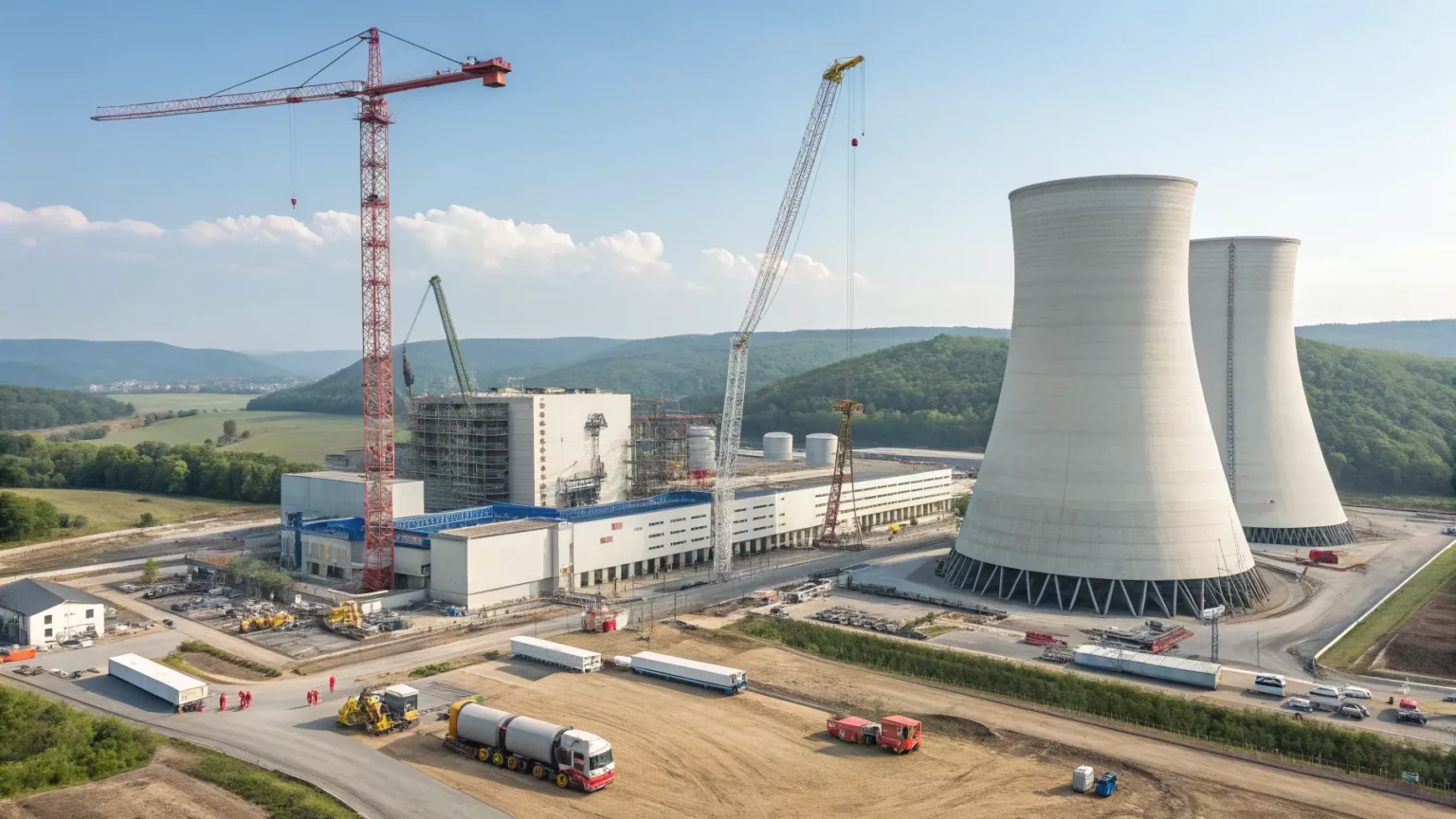
Electricite de France SA has increased the projected cost of building six new nuclear reactors in France by 8% to €72.8 billion, sharpening a funding test for the state-owned utility as inflation and construction pressures persist.
The higher price tag, disclosed this week, marks the latest shift in a flagship plan to expand France’s nuclear fleet. The revised estimate covers the first wave of six EPR2 reactors that government leaders have framed as key to energy security and climate goals.
What Changed and Why It Matters
“Electricite de France SA raised its cost estimates for the six nuclear reactors it plans to build in its home country by 8% to €72.8 billion ($85 billion), highlighting the funding challenge faced by the state-owned utility as construction costs continue to rise.”
The 8% increase implies a prior estimate near €67.4 billion. The jump reflects higher materials prices, tight supply chains, and scarcity of specialized labor. It may also account for design refinements and added contingency as France seeks to avoid past delays.
The government reasserted full control of EDF in 2023. That status gives Paris a bigger role in financing decisions, electricity pricing, and risk-sharing. It also means any cost pressure could flow to the state budget or power bills unless managed through policy tools.
Background: A High-Stakes Nuclear Revival
President Emmanuel Macron announced plans in 2022 to build six EPR2 reactors, with an option for eight more, to replace aging plants and meet future demand. The first pair is planned at Penly, followed by sites such as Gravelines and Bugey.
France relies heavily on nuclear power for low-carbon electricity. However, construction has been difficult across Europe. EDF’s Flamanville-3 project has faced years of delay and cost escalation. In the UK, Hinkley Point C has seen multiple schedule and budget revisions.
Russia’s war in Ukraine and the gas price shock pushed energy security to the forefront. Policymakers argue new nuclear capacity can help stabilize supply and meet climate targets, alongside renewable power and grid upgrades.
Funding and Financing Options Under Review
The new figure raises fresh questions about how to pay for the program. EDF’s balance sheet has been strained by past overruns and price caps on power. The state may need to combine debt, equity injections, and regulated revenue models to manage risk.


- Estimated total for six EPR2 units: €72.8 billion.
- Increase from prior estimate: 8%.
- Key cost drivers: inflation, supply chains, skilled labor, contingency.
Analysts say clearer rules on long-term power contracts and regulated returns could lower financing costs. Some point to the UK’s regulated asset base model as a template, though France’s framework will reflect its nationalized structure.
Industry Reactions and Risks
Supporters argue the higher estimate is a realistic baseline that reduces the risk of surprise increases later. They say early procurement, tighter project controls, and standardization of the EPR2 design should improve delivery.
Critics warn of “lock-in” to big, capital-heavy projects that can strain public finances. They favor faster deployment of wind and solar with grid-scale storage. They also note workforce bottlenecks as several European countries plan new builds at the same time.
EDF executives have stressed lessons learned from earlier projects. Standardization of reactor components and a phased approach could help. Yet the scale is large, and any delay in the first pair of units could ripple across the entire program.
What the Numbers Suggest
The revised €72.8 billion implies a per-unit average near €12.1 billion before financing costs. Actual outlays will depend on sequencing, localized site costs, and contracting strategy. A faster build-out could spread fixed costs, but it raises execution risk.
France’s electricity demand could rise with electrification of transport and industry. If demand grows as projected, the new capacity may curb imports and reduce exposure to volatile gas markets. If demand lags, power pricing and utilization could be pressured.
Outlook: Timelines and Accountability
The government is expected to seek tighter milestones, transparent reporting, and stronger oversight. Clear timelines for the first two EPR2 units will signal whether the broader fleet can be delivered on budget and on schedule.
The cost revision underscores a trade-off: higher near-term spending against potential long-term system stability and lower carbon emissions. Market watchers will look for details on financing terms, supplier contracts, and workforce plans in the coming months.
EDF’s updated estimate sets a new baseline for France’s nuclear reboot. The next test is execution: locking in suppliers, training workers, and keeping to schedule. Investors and consumers should watch for clearer financing plans, regulatory support, and early site progress to gauge whether the project can hold its new cost line.