



A new class of edible droplet microlasers could turn foods and pills into smart surfaces that report on quality and safety in real time. Researchers say the tiny light sources can sit directly on produce, meat, or tablets and flag changes before they reach consumers. The approach points to a new way to track freshness, tampering, and storage conditions across supply chains.
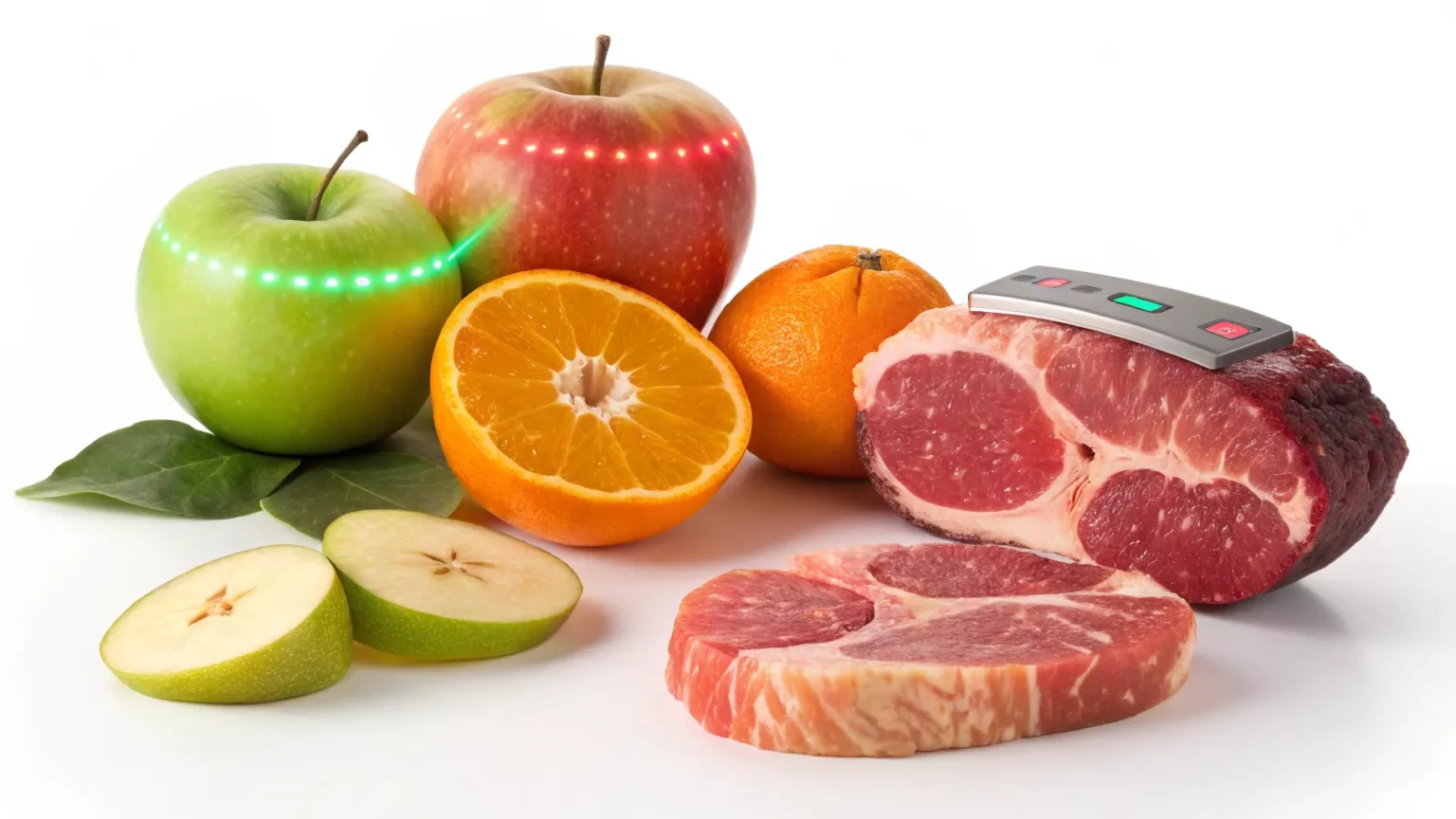
The concept places minuscule, food-safe droplets that act as lasers onto items during manufacturing or packaging. When illuminated, each droplet emits a distinct optical signal. Shifts in that signal can indicate changes in temperature, pH, or other markers linked to spoilage or degradation. The idea is to make monitoring simple, passive, and readable with basic optical tools.
“Droplet microlasers made from edible components can be directly integrated onto foods and pharmaceuticals to enable advanced monitoring.”
Why It Matters Now
Food safety remains a global concern. The U.S. Centers for Disease Control and Prevention estimates 48 million Americans get sick from foodborne illness each year. Producers and retailers invest in labels, time-temperature indicators, and barcodes, but many systems are hard to read or easy to ignore. A signal that changes in clear, measurable ways could close gaps in current checks.
Concerns also extend to medicines. The World Health Organization has reported that substandard or falsified medical products affect patient safety, especially in low- and middle-income countries. Tools that verify storage conditions and authenticity at the pill or blister-pack level could add a new layer of protection.
How Edible Microlasers Work
Microlasers are microscopic structures that emit laser light when excited by another light source. In this case, the lasing material is made from edible or biocompatible ingredients. That makes it safe to place on food surfaces or drug tablets. The droplets can be tuned to emit specific colors or patterns that shift when the local environment changes.
Because the signal is optical, the readout can be simple. Handheld scanners, phones with clip-on optics, or factory cameras can record and compare signals. A change could trigger a flag for quality control or prompt removal from shelves.
- Signals can encode item identity and condition in one spot.
- Droplet size and composition can be adjusted for different products.
- Readout could be compatible with low-cost devices.
Potential Uses Across Supply Chains
On fresh foods, droplets could indicate if cold-chain breaks occurred. On meat and seafood, they could respond to pH shifts linked to spoilage. On packaged goods, they could show if tampering occurred by detecting seal breaches. On pharmaceuticals, droplets could monitor exposure to heat or humidity that degrades active ingredients.
Producers may also track batches through unique optical “fingerprints.” That could deter counterfeiting and help trace items during recalls. Retailers could scan pallets at receiving docks and again at the shelf. Consumers might one day check status at home with a phone-based reader.



Challenges and Open Questions
Experts caution that real-world adoption will take time. Edible materials must stay stable on wet, oily, or acidic surfaces. Signals must remain clear under store lighting and during handling. Any added materials must not affect taste, texture, or appearance.
Regulators will review safety and labeling. Companies will ask about cost per item and line-speed integration. Privacy advocates will want guardrails if optical IDs link to purchase records. Standard protocols for reading and interpreting signals will also be needed.
Manufacturers may favor passive indicators that need only ambient light. Others may prefer active scans that reduce false alarms. Pilots in controlled settings could help answer these questions.
What Comes Next
Early trials will likely focus on high-value products where losses are costly. That includes specialty seafood, biologic drugs, and temperature-sensitive vaccines. Over time, costs could fall enough for wider use on produce and packaged foods.
Researchers are exploring materials that are common in food science, such as edible oils and approved colorants. If those ingredients achieve stable lasing and clear signals, the path to approval may be smoother. Industry groups could help set shared standards for readout and data handling.
The promise is clear: small, safe light sources that bring lab-style sensing to each item. If technical and regulatory hurdles are met, foods and pills could soon report their own condition. Watch for pilot programs at processing plants and pharmaceutical packagers, and for early rules on labeling and consumer access to readings.