




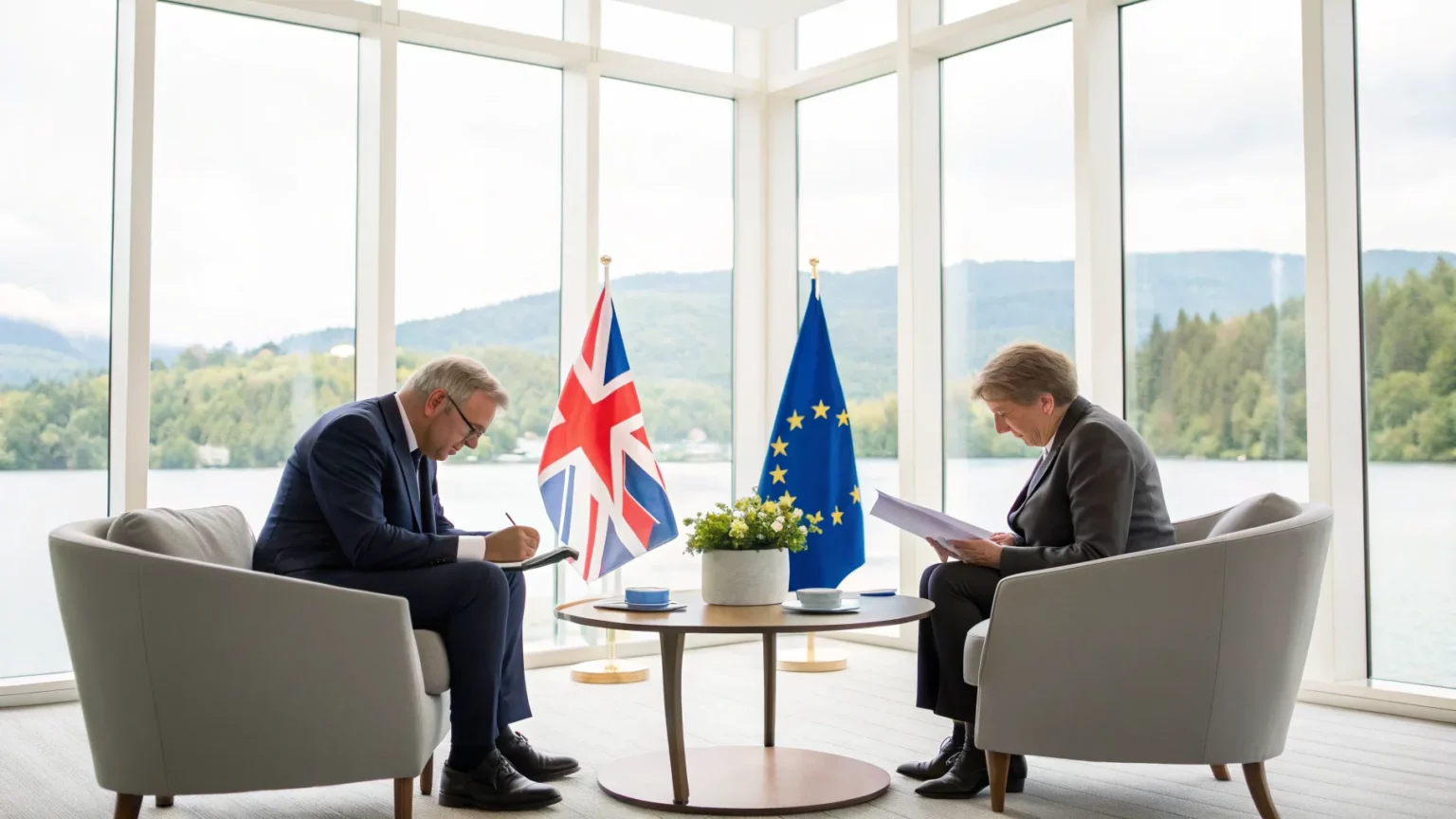
The European Union is signaling a fresh opening to talks with the United Kingdom as officials weigh risks from war, trade tensions, and fragile supply chains. Speaking as global uncertainty rises, European Commission executive vice-president and trade chief Valdis Dombrovskis indicated Brussels is ready to engage with London on shared challenges and practical cooperation.
“The EU is willing to engage with Britain amid mounting global uncertainty.”
The comment lands at a sensitive moment. A new U.K. government has sought steadier ties with the bloc, while both sides face pressure from conflicts, inflation aftershocks, and a cooling global economy. Any move to rebuild trust could shape trade, regulation, and security coordination in the months ahead.
Why It Matters Now
Europe and the U.K. are contending with a set of overlapping shocks. The war in Ukraine has strained energy markets and defense budgets. Trade disputes with large economies threaten supply chains. Businesses worry about rules that differ across jurisdictions, adding cost and delay. In this setting, a working relationship between the EU and U.K. is not only diplomatic theater—it has real implications for jobs, prices, and investment decisions.
While the two sides ended free movement and full market access with Brexit, they remain tightly linked. The EU is still the U.K.’s largest trading partner, and the U.K. is a top market for many European exporters. Coordination on standards, data, and border checks can cut friction without reopening the core Brexit deal.
The State of EU–UK Relations
Relations have warmed since disputes over Northern Ireland eased under the Windsor Framework. The U.K. rejoined the EU’s Horizon Europe research program, showing that targeted cooperation is possible. The Trade and Cooperation Agreement (TCA) continues to frame the relationship, with a formal review expected in 2026. Preparations for that review are already guiding officials, think tanks, and industry groups.
Even so, businesses still report costs from customs forms, rules-of-origin checks, and diverging product standards. Food and drink producers, chemicals firms, and small exporters have been hit hard by paperwork. Logistics companies say predictability at borders remains their top ask.
What “Engagement” Could Cover
Dombrovskis’s signal leaves room for pragmatic steps. Officials and trade experts point to areas where limited deals or technical fixes could bring quick gains without altering the TCA’s core terms.
- Mutual recognition for professional qualifications in select sectors
- Regulatory cooperation on product standards and chemicals
- Data flows and digital trade facilitation
- Veterinary and plant health measures to ease food checks
- Mobility for short-term business travel and touring professionals
- Joint work on supply-chain security and critical materials
Security and foreign policy coordination also feature strongly. Sanctions enforcement, defense procurement, and support for Ukraine are natural areas for closer work. These topics have seen quiet cooperation even when trade talks grew tense.

Industry and Market Reactions
Business groups on both sides have pushed for smoother customs and clear rules. Manufacturers want predictable standards to reduce testing costs. Services firms argue that better data rules and easier business travel would unlock investment. Freight operators say small steps, such as more trusted trader schemes, could speed up border traffic.
Financial markets tend to reward stability. Signals of pragmatic EU–UK contact can lower risk premiums and help currency and bond markets. But investors will look for concrete changes, not only warm language.
Risks and Limits
Political constraints remain. Brussels will not reopen single-market access without full rule alignment and court oversight—conditions London rejects. The U.K. is cautious about new obligations that might curb regulatory autonomy. Domestic politics on both sides can stall even narrow fixes.
There is also the question of timing. With the TCA review on the horizon, both sides may size up how far to go now versus saving bigger moves for a structured process later.
Outlook
The signal from Dombrovskis hints at a window for steady, low-drama progress. If officials can notch small wins—on veterinary checks, data transfers, or professional mobility—they could rebuild confidence ahead of the TCA review. Clear benefits for exporters, researchers, and travelers would help sustain momentum.
For now, one line captures the opening: the EU is willing to talk. The coming months will show whether that intent turns into practical agreements that ease trade friction, support security goals, and give businesses the certainty they need.