




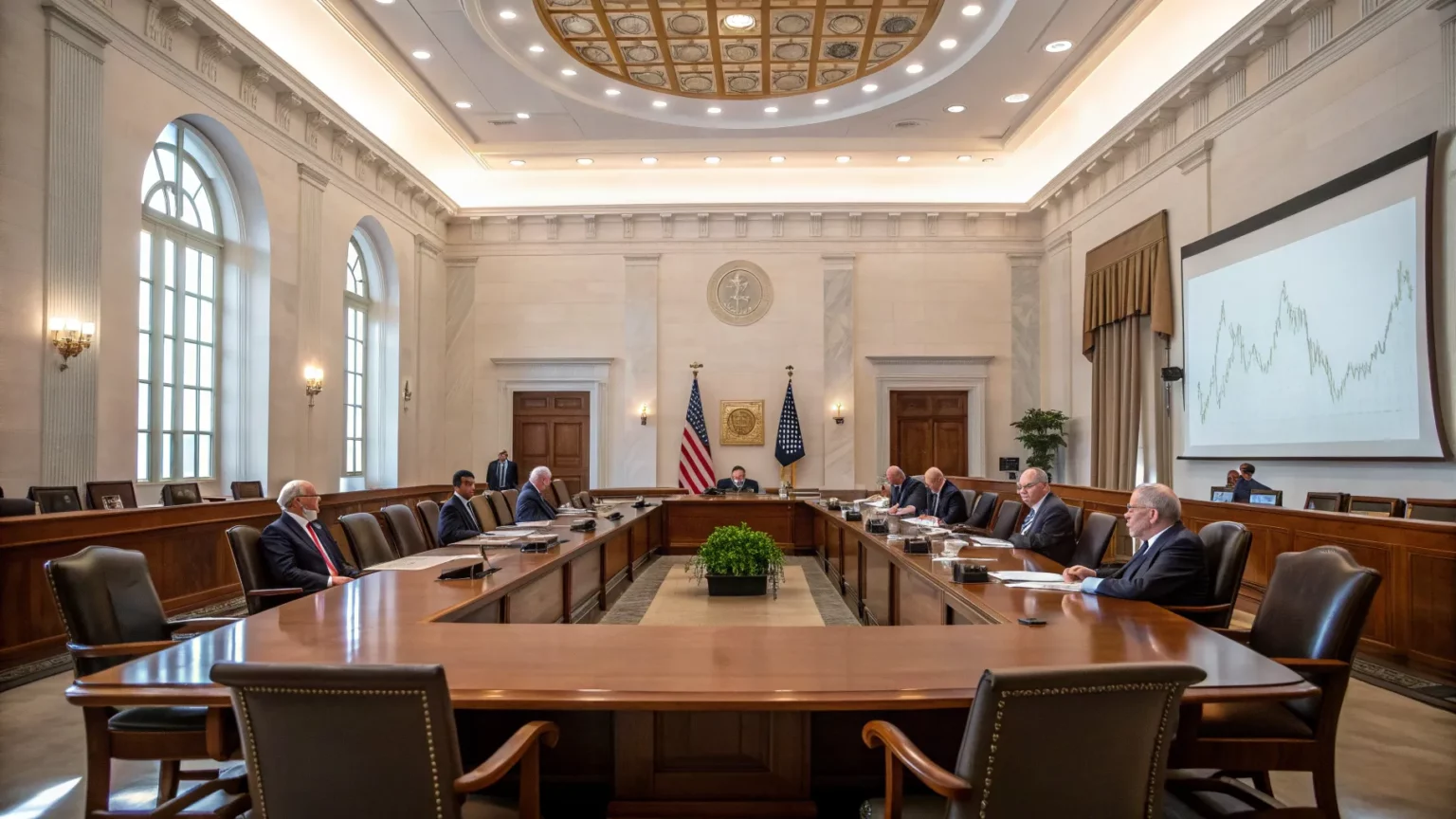
The Federal Reserve moved to steady its leadership ranks, approving the reappointment of nearly all regional bank presidents at a moment of political scrutiny and market sensitivity. In Washington, the central bank’s governing board signed off on 11 of the 12 posts, leaving one exception as attention grows over how the institution guards its independence under pressure from the Trump administration.
“The Federal Reserve’s governing board unanimously approved the reappointment of nearly all of the Fed’s 12 regional bank presidents… The Fed’s board approved the reappointment of 11 of the presidents.”
The decision shapes who helps set interest rates and oversee bank supervision across the country. It marks a routine but consequential step in a process that comes around on a fixed cycle and often draws little public notice. This time, it lands amid heightened debate over the central bank’s decisions and the role of regional leaders in policy making.
Why These Reappointments Matter
Reserve bank presidents sit on the Federal Open Market Committee, the policy panel that sets the federal funds rate. Five of the 12 presidents vote each year on a rotating basis, while the New York Fed president holds a permanent vote. Even those without a vote take part in every policy meeting, shaping debate on inflation, employment, and financial stability.
Approving 11 reappointments keeps the leadership map largely intact. That continuity can reassure investors and banks that day-to-day oversight and policy debate will proceed without disruption. It also signals confidence from the Board of Governors in the regional banks’ choices and performance.
How Regional Presidents Are Chosen
Each of the 12 Reserve Banks—spanning cities from Boston to San Francisco—has its own board of directors. Those boards select a president, subject to approval by the Fed’s Board of Governors in Washington. Presidents typically serve five-year terms that align to end every five years, in calendar years ending in “1” and “6,” at which point they are considered for reappointment.
- 12 regional banks cover distinct U.S. districts.
- Presidents serve renewable five-year terms, subject to approval.
- They help set interest rates and guide local bank supervision.
This structure balances national policy with regional insight. Presidents bring views from their districts on labor markets, credit conditions, and business investment. Those reports often influence the tone of policy discussions, especially when data are mixed or evolving.
Political Scrutiny and Institutional Independence
The Trump administration has criticized central bank policy in public remarks, focusing on interest rate decisions. That attention has spilled over to the broader institution, including the regional banks. The reappointments therefore carry symbolic weight as a signal of stability and adherence to established processes.
Economists note that central bank independence can support steady inflation and employment outcomes. Pressure from elected officials can influence expectations and market behavior, even when it does not change the final policy path. By endorsing nearly the full slate of presidents, the Fed appears intent on maintaining continuity in its decision-making ranks.



What the Exception Could Mean
With 11 reappointments approved, one post remains an outlier. Such exceptions can stem from routine factors, including pending searches, retirements, or ongoing reviews. The Fed did not detail the reason in the statement. Historically, gaps are filled through acting leadership or interim arrangements, which keep supervisory and operational work on track.
Market reaction to staffing news is usually muted unless it signals a sharp shift in policy. Absent that, investors tend to focus on inflation readings, job growth, wage trends, and forward guidance from the FOMC. Still, leadership changes can affect how districts weigh risks and communicate with businesses and banks on the ground.
What to Watch Next
Attention will turn to upcoming FOMC meetings and the committee’s summary of economic projections. Any change in voting members due to rotation or leadership transitions could shape the balance of views on inflation and growth. Regional surveys of manufacturers, services firms, and consumers will offer early clues on demand and pricing pressures.
If the remaining vacancy is finalized soon, the lineup for the current policy year should be clear. If not, an interim leader may continue to participate without a vote until a president is confirmed. Either route suggests steady policy deliberations in the near term.
The central takeaway is continuity. By reappointing 11 regional presidents, the Fed signaled a steady hand while facing outside pressure. The final open question—who fills the remaining seat and when—will draw interest, but policy will likely hinge more on inflation, employment, and financial conditions than on any single leadership change.