



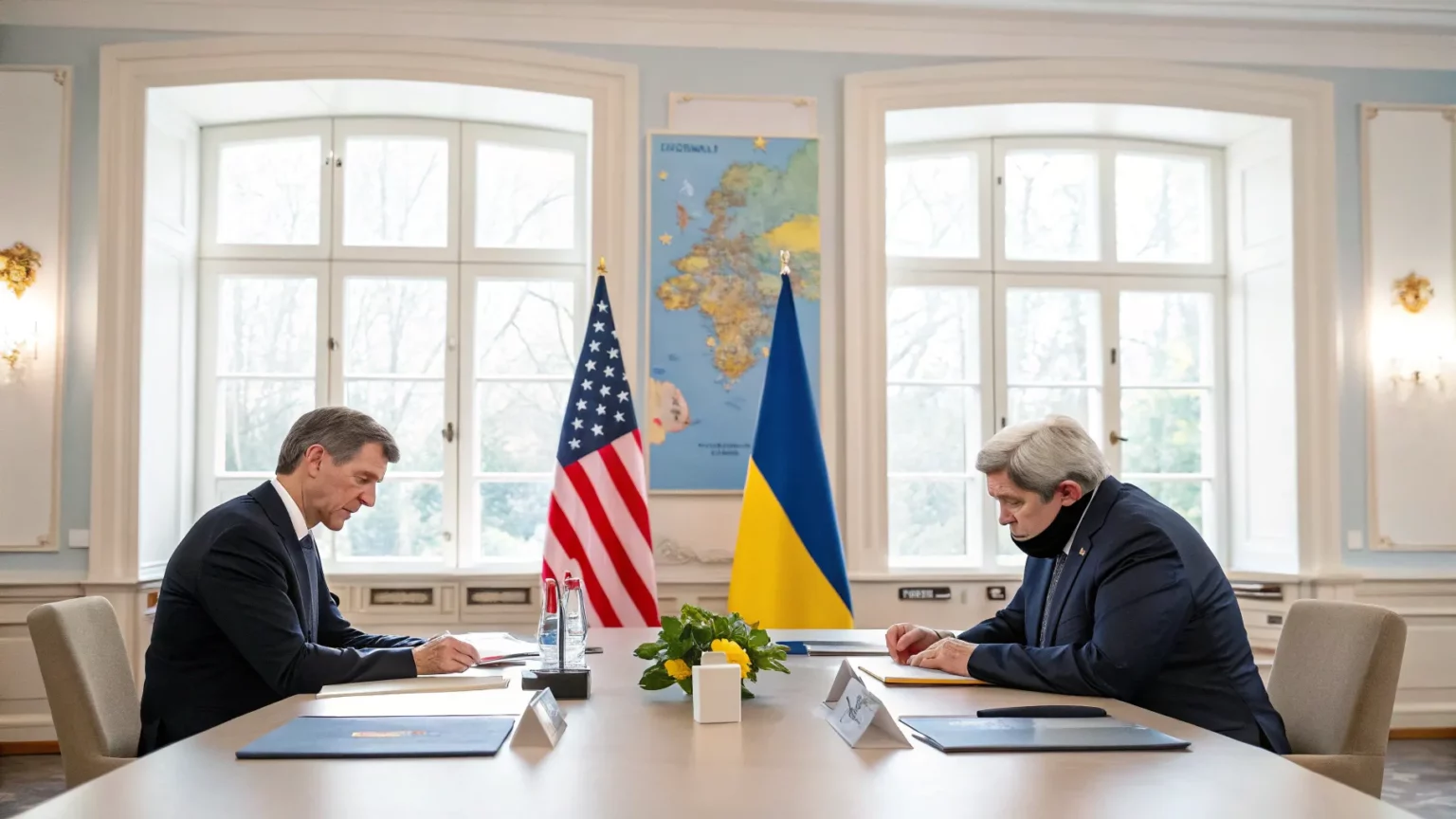
Top U.S. and Ukrainian officials said they made progress toward ending the Russia-Ukraine war during quiet talks in Geneva on Sunday. The closed-door discussions centered on an American peace proposal that some European allies worry tilts too far toward Moscow. The meetings offered a rare hint of movement in a conflict that has stretched across borders, budgets, and public patience.
What Happened In Geneva
The talks brought together senior figures from Washington and Kyiv. They focused on how to halt fighting and lay the groundwork for a lasting deal. While few details were released, officials flagged meaningful steps forward.
“Top U.S. and Ukrainian officials say they’ve made progress toward ending the Russia-Ukraine war.”
That progress, officials said, grew from a U.S.-drafted plan on the table.
“They discussed an American proposal for peace.”
Not everyone was pleased. Several European partners expressed discomfort.
Some allies fear it is “too favorable to Moscow.”
Why Europe Is Wary
European concerns point to familiar fault lines. Leaders fear a deal that freezes the front lines could lock in Russian gains and invite future attacks. They also worry that easing pressure on Moscow too soon could weaken unity and make sanctions harder to enforce later.
Past efforts offer a cautionary tale. The Minsk agreements paused fighting years earlier but did not deliver a stable peace. Many in Europe do not want a repeat that leaves Ukraine stuck with a fragile truce and limited options.
Ukraine’s Red Lines
Kyiv has signaled what it must see in any plan. It seeks security guarantees strong enough to deter renewed assaults. It wants an end to missile and drone strikes on cities and infrastructure. It also pushes for accountability for war crimes and support for rebuilding homes, power grids, and schools.
Territorial integrity remains central. Ukrainian leaders have repeatedly said that any roadmap must address occupation, deportations, and the return of prisoners. They also want clear timelines, not open-ended promises that fade under pressure.


What Washington Wants
The U.S. position appears to prize stopping the shooting first, then locking in durable terms. That includes limits on heavy weapons near the front, safety measures around nuclear facilities, and corridors for grain and humanitarian aid. Washington also wants a plan that other partners can support without blowing up their own politics at home.
Yet the charge that the proposal leans toward Moscow suggests trade-offs are on the table. Those could include phased sanctions relief, sequencing withdrawals, or a monitored cease-fire. Each idea comes with risks, both military and political.
Key Sticking Points
- How to define and verify a cease-fire that holds.
- Whether any territorial concessions are considered, even temporarily.
- Sequencing of sanctions relief against concrete steps on the ground.
- Security guarantees credible enough to deter renewed attacks.
- Justice mechanisms and accountability for wartime abuses.
The Stakes and the Road Ahead
The war has uprooted millions, strained budgets, and pushed energy and food costs higher worldwide. Europe’s security map has already shifted, with defense spending rising and supply chains rewired. A fragile peace could calm markets and save lives. A weak one could store up the next crisis.
Geneva was a test of intent. The next step will be converting broad ideas into drafts with timelines, inspectors, and backup plans if parties renege. Expect further talks with European capitals and coordination with G7 and United Nations channels. Confidence-building moves—like prisoner exchanges, demining, and power grid repairs—could signal momentum.
For now, one sentence stands out. Officials said they “made progress.” The weight of that claim will depend on what is written next—and who signs it.