



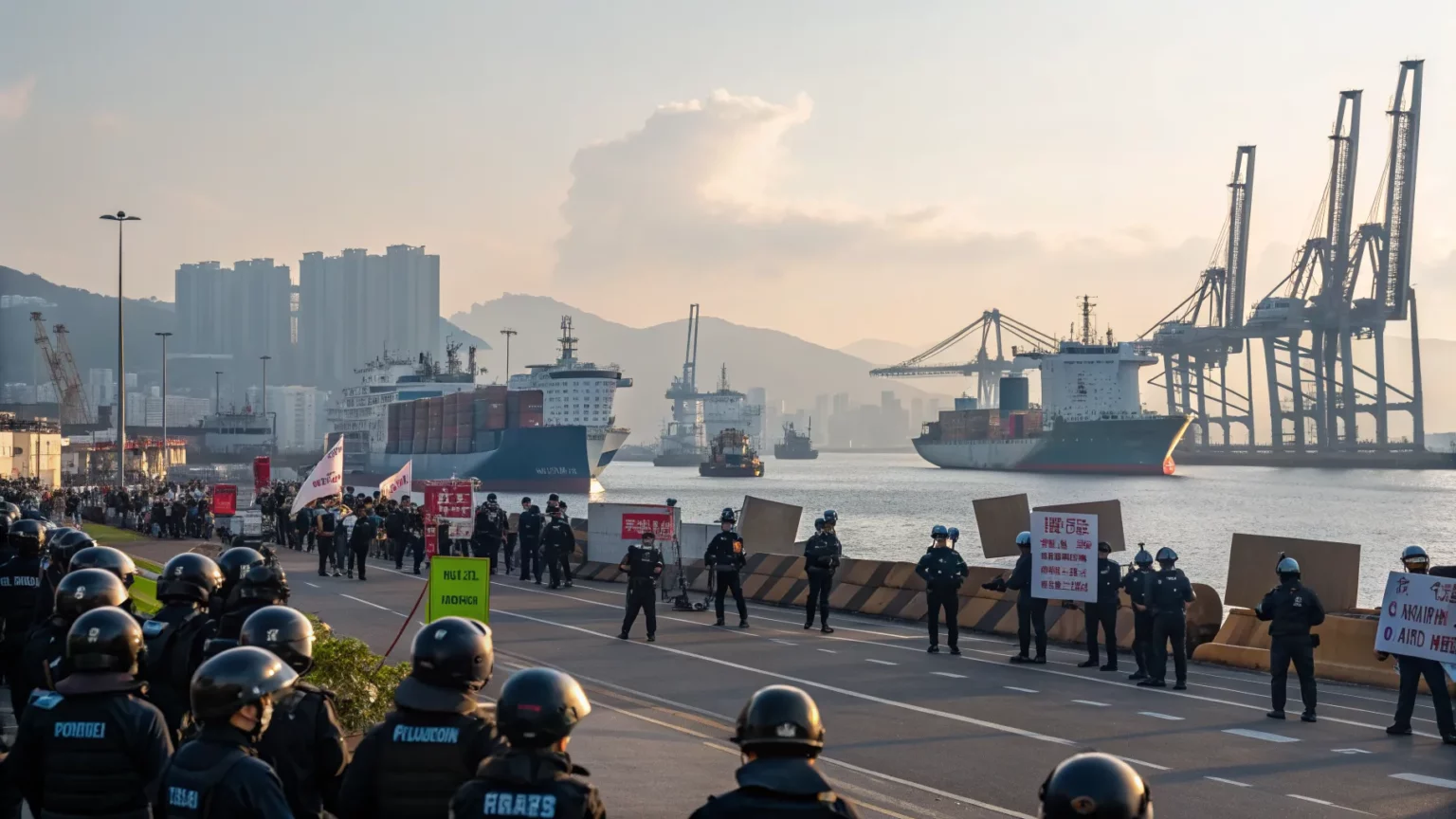
Hong Kong has protested Panama’s seizure of two ports on the Panama Canal, a waterway crucial to global shipping. The city’s government said Tuesday it had raised strong objections after the facilities, run for decades by a Hong Kong-based company, were taken over by Panamanian authorities. The move raises trade, legal, and diplomatic questions at a time of strained logistics and tight maritime capacity.
What Sparked the Dispute
The Commerce and Economic Development Bureau in Hong Kong said it had lodged a formal complaint. Officials framed the case as a defense of long-standing commercial rights. They argued that stability and respect for contracts are essential for investor confidence.
The bureau said it had lodged a “stern” protest over the takeover.
Details on the legal basis for the seizure were not immediately available. The Hong Kong operator has managed the ports for years under concession agreements. Those contracts typically set performance terms, investment duties, and dispute procedures. Any change in control would likely hinge on those clauses.
Panamanian officials did not immediately provide a public explanation. It is not clear whether the move is temporary, related to compliance, or a step toward a new operator. Industry groups are watching for court filings or regulatory notices that clarify the process.
A Vital Trade Artery
The Panama Canal links the Pacific and Atlantic Oceans and serves as a major route for container ships, energy cargoes, and vehicles. It carries a meaningful share of world maritime trade by tonnage and value. The ports at either end handle transshipment, fueling, and repairs that keep vessels on schedule.
Any disruption at adjacent terminals can ripple across shipping lanes. In recent years, the canal has also faced draft limits and transit caps due to drought. Lines have already adjusted schedules and sometimes shifted cargo to other routes. Added uncertainty around port control could strain planning for carriers and shippers.
Business and Geopolitical Stakes
For Hong Kong, the case touches on the protection of overseas investments by companies with roots in the city. It also intersects with broader ties among Panama, China, and international logistics firms. Panama switched diplomatic recognition to Beijing in 2017 and has courted trade and infrastructure deals. Port operations are often seen as strategic assets because they shape cargo flows and revenue.
Analysts say the outcome may influence how investors assess concession risk in Latin America. It could also become a test of how governments balance commercial contracts with national policy goals. Insurance costs, borrowing terms, and bid interest in future port tenders may be affected by the signal this episode sends.


- Shippers may face schedule changes if terminal services are interrupted.
- Insurers could reassess political risk and legal exposure.
- Credit markets may reprice debt for firms with similar concessions.
What to Watch Next
The key questions now revolve around process, timelines, and transparency. Market participants want to know whether the takeover followed concession terms, and if arbitration or courts will decide. They also seek clarity on port operations during the transition, including pilotage, customs, labor, and security.
Trade lawyers note that many concession contracts include international arbitration. If invoked, that path could take months or years. Meanwhile, shippers will focus on operational continuity and whether service levels change under new oversight.
Regional port competition is also in focus. Nearby terminals could pick up overflow if carriers reroute. That shift would have knock-on effects for trucking, warehousing, and feeder services across Central America and the Caribbean.
Hong Kong’s protest signals that the dispute will not fade quickly. Resolution depends on clear legal steps from Panama and open communication with carriers and tenants. The broader shipping community will watch for steady terminal operations, any arbitration filings, and signs that contract rules are being followed. If those elements hold, trade flows may weather the shock. If not, the impact could spread from two ports to schedules and costs across multiple routes.