




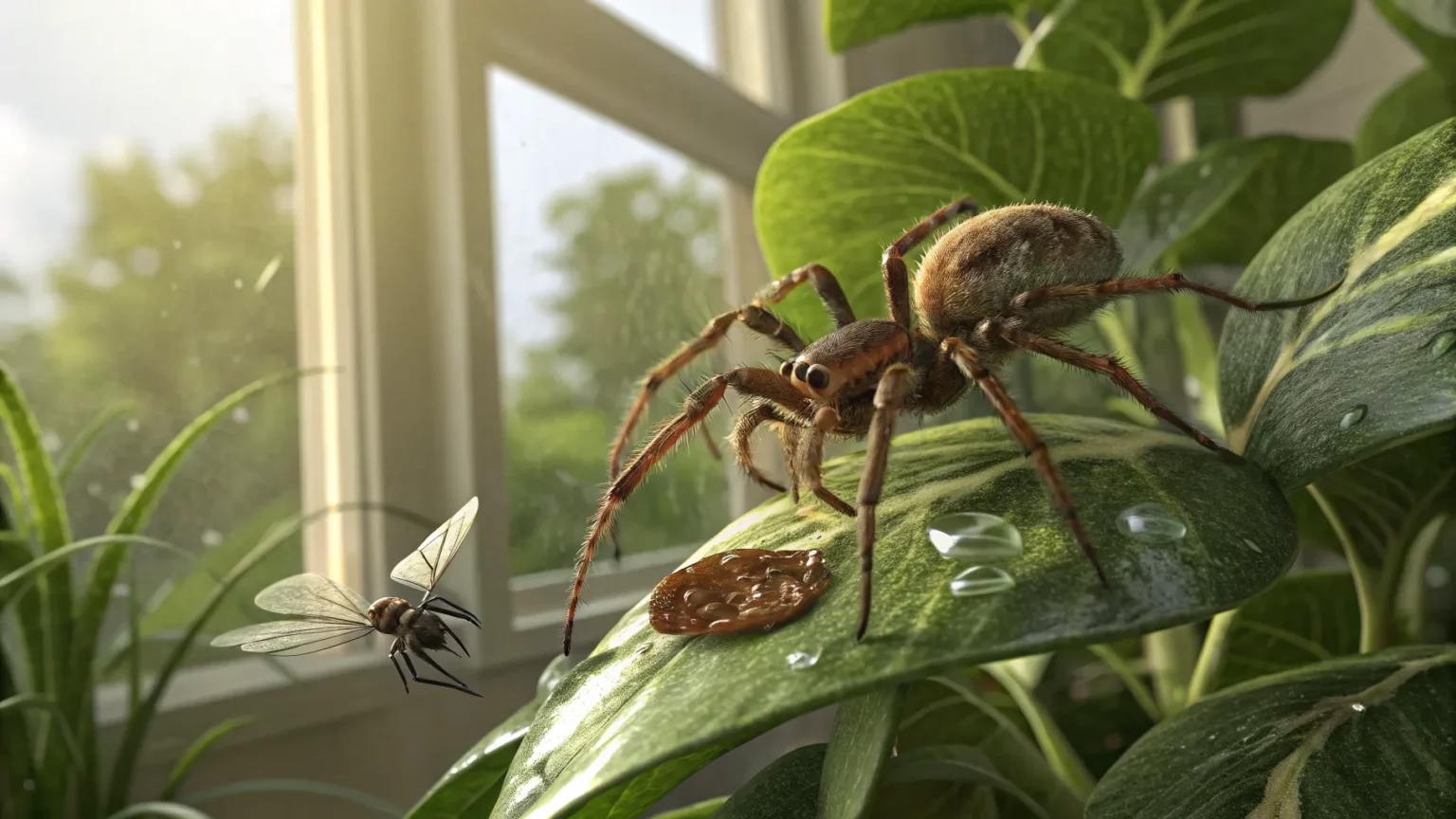
Spiders commonly found on houseplants employ an unusual hunting technique that might surprise many homeowners. Rather than using venom injections like many of their arachnid relatives, these household spiders simply regurgitate their venom directly onto their captured prey.
This distinctive hunting method involves the spider first securing its victim with silk threads, effectively immobilizing it before applying the digestive venom. The process eliminates the need for the traditional bite-and-inject method used by most venomous spiders.
Unique Hunting Strategy
The hunting behavior represents an evolutionary adaptation that sets these common house spiders apart from other species. After capturing and restraining their prey with silk, these spiders expel venom from their digestive tract, essentially “vomiting” the toxic substance onto the immobilized victim.
This external application of venom serves multiple purposes in the spider’s feeding process. The venom not only kills the prey but also begins breaking down tissues, making digestion easier for the spider. This pre-digestive process is particularly efficient for these small predators.
Scientists note that this method may have developed as an energy-saving mechanism, allowing the spiders to subdue prey without the muscular effort required for venom injection through fangs.
Implications for Homeowners
For people who maintain indoor plants, understanding these spiders’ behavior provides context for the small arachnids they might discover among their greenery. These spiders typically establish themselves on houseplants because the plants attract the small insects that make up their diet.
Despite their somewhat unsettling hunting technique, these spiders generally pose no threat to humans. Their venom is designed to affect small insects, not people or pets. In fact, these spiders can be beneficial as they help control pest populations that might damage houseplants.
Common signs of these spiders include:



- Small, irregular webs between plant leaves or stems
- Wrapped insect remains near the base of plants
- Tiny spiders that quickly retreat when disturbed
Ecological Role
The presence of these spiders represents part of the mini-ecosystem that can develop around houseplants. They serve as natural pest control, helping to manage populations of fungus gnats, aphids, and other small insects that might otherwise damage indoor plants.
Their specialized hunting technique allows them to thrive in the relatively limited environment of potted plants, where they can capture enough prey to sustain themselves without needing to build elaborate web structures that would be more visible to homeowners.
For those concerned about these eight-legged residents, experts suggest that careful inspection of new plants before bringing them home can help prevent introducing spiders to indoor environments. However, they also emphasize that these spiders play a beneficial role in maintaining plant health by controlling pest populations.
The next time you notice a small spider on your houseplant, you might consider its unusual hunting strategy and ecological role before deciding whether to remove it or let it continue its work as a tiny but effective pest controller.