




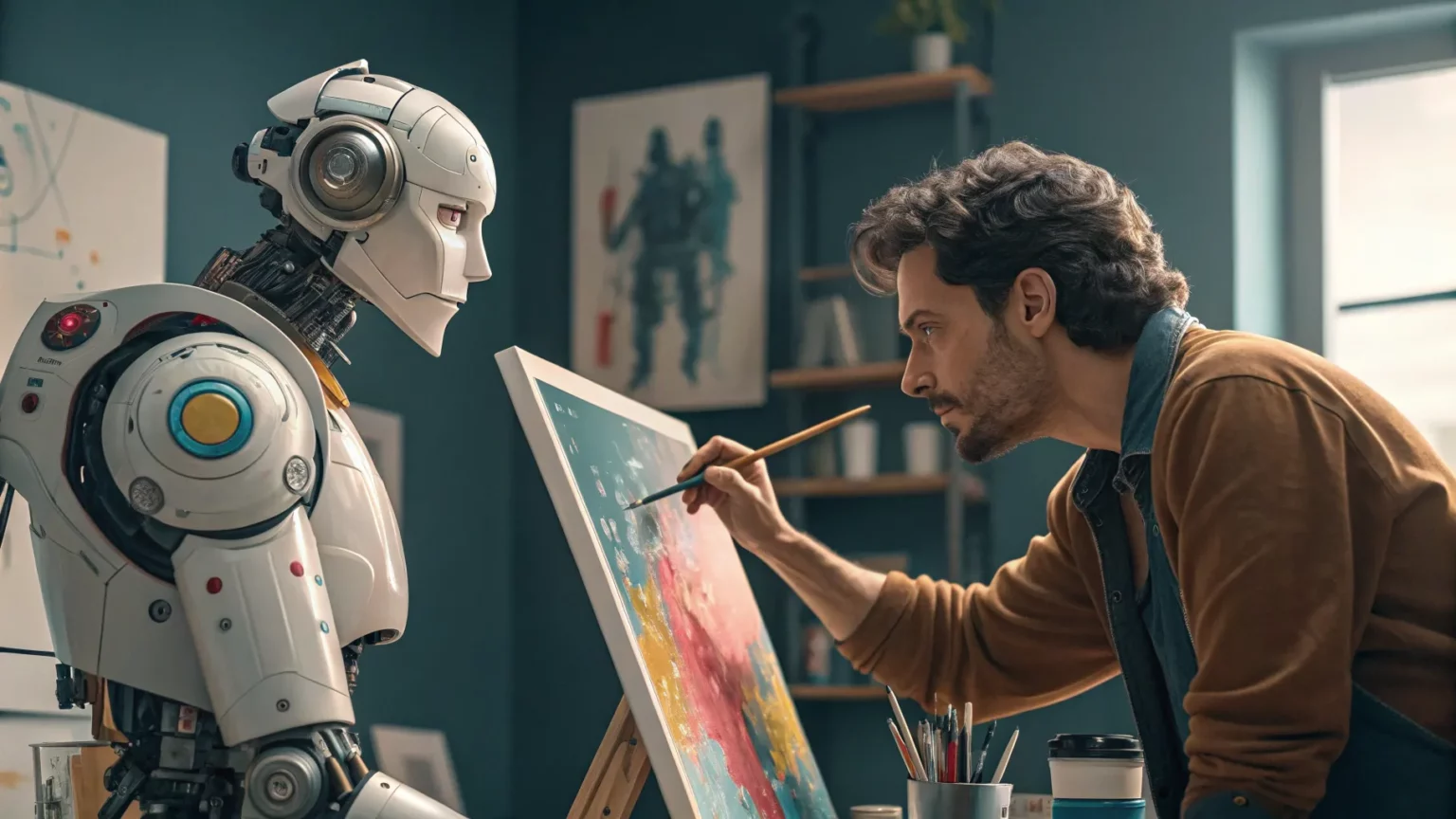
A recent study conducted by a researcher at the University of California, Berkeley has revealed that humans still maintain an edge over artificial intelligence when it comes to creative storytelling, though that advantage may be shrinking rapidly.
The comprehensive research involved hundreds of human participants who competed against various generative AI platforms in storytelling tasks. Results showed that human-written stories displayed superior creativity compared to those produced by AI systems.
However, the researcher noted a concerning trend: AI capabilities in creative domains are advancing at an accelerating pace, suggesting the creativity gap between humans and machines may close sooner than expected.
Study Methodology and Findings
The Berkeley study evaluated both human and AI-generated stories across multiple dimensions of creativity, including originality, narrative structure, emotional depth, and character development. Human participants represented diverse backgrounds, ages, and writing experience levels.
When assessed by independent evaluators, human-written stories consistently scored higher in unexpected plot developments, authentic emotional resonance, and unique narrative voices. AI-generated stories, while technically proficient, often lacked the distinctive personal touches and unconventional thinking that characterized human work.
“The human stories showed a depth of lived experience and emotional understanding that AI still struggles to replicate,” the Berkeley researcher explained. “Humans draw from personal memories, cultural contexts, and emotional intelligence in ways that current AI models cannot.”
The Closing Gap
Despite human superiority in the creative domain, the study highlighted the rapid advancement of AI capabilities. The newest generative AI models demonstrated significant improvements over their predecessors, particularly in areas once considered uniquely human:
- Narrative coherence and logical story progression
- Character consistency throughout longer texts
- Adaptation to different literary styles and genres
- Incorporation of subtle thematic elements
The research suggests that AI systems are quickly learning to mimic human creativity through analysis of vast text datasets and increasingly sophisticated language models. This acceleration raises questions about how long humans will maintain their creative advantage.


Implications for Creative Industries
The findings have significant implications for writers, artists, and creative professionals. While AI has not yet matched human creativity, its rapid improvement suggests potential disruption across creative fields.
Some experts view these developments with concern. “We’re seeing AI advance in areas we once thought were safely human domains,” noted a digital ethics professor familiar with the research. “The question isn’t if AI will match human creativity in some contexts, but when.”
Others see opportunity in human-AI collaboration. The Berkeley researcher pointed out that many study participants who later experimented with AI tools found they could enhance their creative process rather than replace it.
The study also examined how humans and AI approach creative problems differently. Humans often rely on intuition, emotional connections, and life experiences to craft stories, while AI systems analyze patterns from millions of existing texts to generate new content.
As generative AI continues to develop, the research suggests creative professionals may need to emphasize uniquely human elements in their work—personal experiences, cultural insights, and emotional authenticity—to maintain distinction from AI-generated content.
The Berkeley findings add to growing evidence that while artificial intelligence excels at pattern recognition and data processing, human creativity still maintains unique qualities. However, as AI systems continue their rapid evolution, researchers caution that the creativity gap may narrow significantly in coming years.