




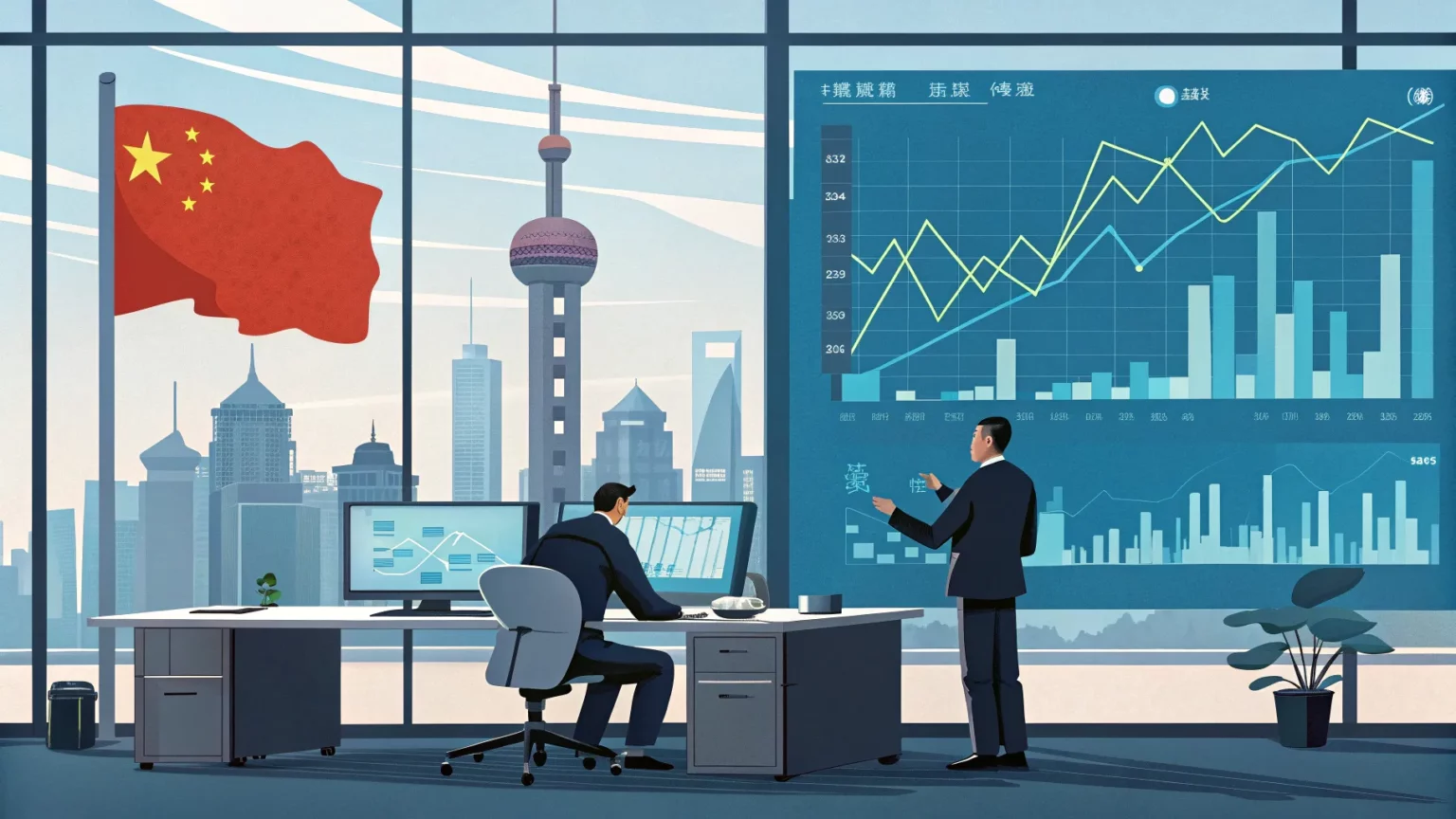
Global money managers are steering more capital into Chinese artificial intelligence firms, hunting for the next standout like DeepSeek and hedging against frothy valuations in the United States. The move comes as worries rise that a speculative bubble has formed in some Wall Street AI names, prompting investors to diversify across markets and models.
Recent fund flows and anecdotal deal activity point to fresh interest in early-stage and listed AI companies in mainland China and Hong Kong. The strategy blends opportunity with caution. Investors see a wide field of emerging developers, but they also face policy, disclosure, and market-structure risks that are unique to China.
“Global investors are increasing their wagers on Chinese artificial intelligence companies, betting on the next DeepSeek and seeking to diversify, with concerns growing about a speculative bubble in the sector on Wall Street.”
Background: From AI Mania To Measured Hedging
The AI trade surged in the U.S. over the past two years, led by chipmakers, cloud providers, and high-profile model developers. Soaring valuations rewarded scale and data access, but left many funds exposed to a narrow set of stocks. That concentration risk is now driving some to look abroad.
China’s AI sector offers a different mix. It includes large internet platforms, research-heavy startups, and state-linked labs. Some companies aim to serve domestic markets shaped by language and regulation. Others are trying to sell tools to manufacturers, automakers, and local governments seeking productivity gains.
The DeepSeek label has become a shorthand for China’s ability to produce competitive AI systems at speed and lower cost. That halo effect is drawing scouting trips, co-investments with regional funds, and a closer look at secondary offerings in Hong Kong and Shanghai.
Why Diversification Is Back In Focus
Portfolio managers cite three reasons for the shift.
- Valuations: Select Chinese AI names still trade below U.S. peers on sales and earnings multiples.
- Market breadth: A larger set of mid-cap candidates creates room for stock picking.
- Policy demand: Local pushes for automation support spending in enterprise software and industrial AI.
At the same time, U.S. markets face strained expectations. Any stumble in growth or supply chains can rattle share prices that already bake in strong adoption paths. The result is a classic hedge: add exposure where cycles differ, and where drivers include local subsidies, national cloud buildouts, and demand from domestic firms.
Risks: Policy, Disclosure, And Supply Chains
The turn to China is not a straight line. Export controls on advanced chips limit training options. Rules on content and data can add cost and delay. Accounting standards and transparency vary, especially among smaller issuers. Liquidity can be thin outside flagship names, raising volatility.


Investors also have to judge how quickly Chinese firms can commercialize research. Selling foundation models is one hurdle. Building repeatable revenue in services, from customer support bots to factory analytics, is another. Currency swings and geopolitical headlines layer on further uncertainty.
How The Bets Are Being Placed
Capital is flowing through multiple channels. Venture funds are backing seed and Series A rounds in model tooling, data labeling, and inference chips tailored for local supply. Crossover funds are tracking pre-IPO companies that target enterprise contracts. Public-market investors are rotating into platform firms with AI arms and into software vendors tied to industrial clients.
Some managers favor baskets of names tied to specific themes, such as healthcare imaging, autonomous systems for logistics, or small language models optimized for Mandarin and dialects. Others prefer broad exposure through Hong Kong indexes weighted to tech and telecom.
What A Bubble Looks Like—and What It Doesn’t
Fears of a bubble rise when price gains outpace earnings, when profit pools are narrow, and when capital crowds into a few symbols. The U.S. market has shown signs of that concentration. China’s market, by contrast, presents a patchwork. There are pockets of heat, but also many companies where expectations are still modest.
Analysts stress that earnings quality will decide winners. Sustainable demand in software and services, not headline-grabbing model benchmarks, will matter most. Cost discipline and clear go-to-market plans remain the yardsticks.
Outlook: A Two-Track AI Trade
The AI trade is splitting into two tracks. One is U.S.-led, driven by scale chips, hyperscale cloud, and global developer ecosystems. The other is China-led, focused on local languages, industrial use cases, and state-backed infrastructure. Capital is shifting to reflect that divide.
Investors will watch for signs that Chinese firms can turn research into durable cash flow and that policy supports remain steady. They will also track whether U.S. multiples cool from current levels.
For now, the search for “the next DeepSeek” is less about a single champion and more about building diversified exposure to different AI economies. The next phase will test which markets can convert pilot projects into repeatable revenue at scale.