



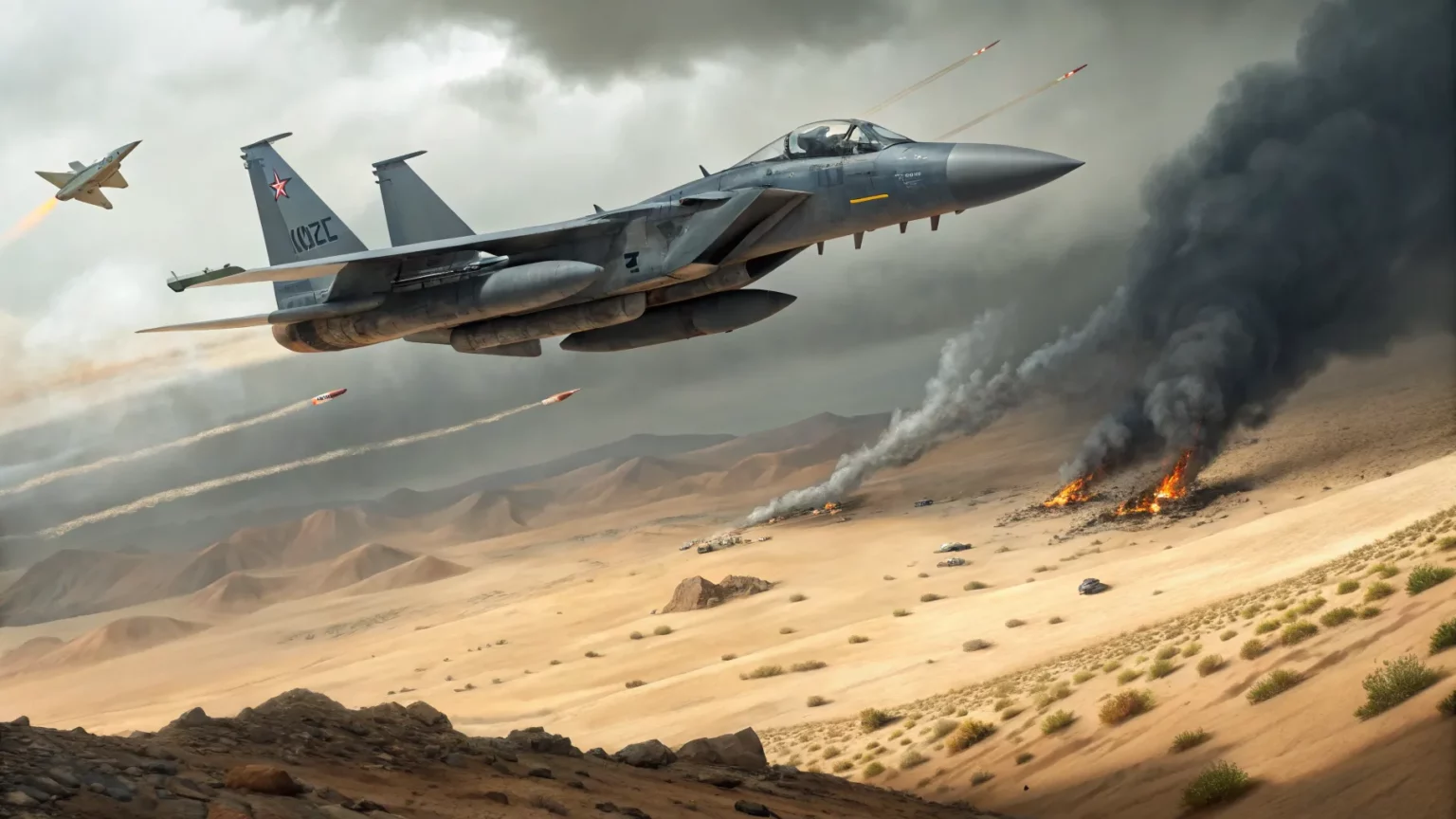
An unconfirmed claim on Friday said Iran shot down a U.S. F-15E Strike Eagle, a report that, if verified, would mark the first U.S. fighter lost to enemy fire in decades and raise the risk of a wider confrontation.
The brief account did not include the location of the incident, the status of the crew, or official confirmation from U.S. or Iranian authorities. The F-15E, a twin-seat, long-range strike fighter, often flies in contested airspace and carries advanced defenses, making any shootdown rare and politically charged.
What We Know So Far
“Iran shot down a F-15E Strike Eagle on Friday, the first time a U.S. fighter jet has been downed in in combat in decades.”
The statement above circulated without supporting details. As of publication, no government or military press office had issued a formal statement confirming the loss. Independent tracking groups and aviation monitors had also not provided verifiable evidence.
- Status: Unverified claim with no official confirmation.
- Key unknowns: Location, mission profile, cause, and crew condition.
- Potential significance: Would be the first confirmed combat shootdown of a U.S. fighter in many years.
Why This Would Matter
A confirmed shootdown of a U.S. fighter would carry military and diplomatic consequences. The F-15E is a core aircraft for deep strike and close air support. It carries jammers, radar warning receivers, and countermeasures meant to defeat modern surface-to-air missiles.
Iran maintains a layered air defense network. It includes Russian-made systems such as the S-300 and domestically produced platforms like the Bavar-373, alongside older radars and point-defense missiles. In recent years, Iran has shown it can detect and engage high-altitude targets. In 2019, Iranian forces shot down a U.S. RQ-4 Global Hawk drone over the Gulf of Oman, an incident that intensified U.S.-Iran tensions.
If an F-15E were brought down by Iranian air defenses, questions would follow about rules of engagement, electronic warfare performance, and the threat posed by long-range missiles in contested corridors.
A Look Back At Past Incidents
U.S. fighters have rarely been lost to enemy fire since the 1990s. During the Kosovo conflict in 1999, a U.S. F-16 was shot down by a Serbian missile battery. In the 1991 Gulf War, Iraqi defenses downed several U.S. aircraft. More recent U.S. fighter losses were due to accidents, not hostile fire, such as an F-15 that crashed in Libya in 2011 due to mechanical failure.
This record reflects advances in precision-guided weapons, standoff tactics, and suppression of enemy air defenses. It also highlights how unusual a modern shootdown would be, especially against a platform as capable as the F-15E.



Possible Scenarios and Risks
Without confirmed details, several scenarios are plausible. The aircraft could have suffered a mechanical failure, been targeted by a long-range missile battery, or been engaged by a short-range system during a low-altitude mission. Electronic warfare may have played a role on either side.
Any loss would prompt a review of mission planning, altitude profiles, and countermeasure tactics. U.S. forces often fly with escort jamming and use route planning to avoid known threat rings. A successful engagement by Iranian systems would lead analysts to reassess those threat rings and evaluate whether Iranian crews have improved training or integration.
Regional and Global Implications
A confirmed shootdown could harden positions in Washington and Tehran. It could also affect partners in the Gulf who rely on U.S. air power for deterrence. Insurance rates for commercial routes near contested areas might rise, and naval forces could adjust deployments to support search-and-rescue or deterrence patrols.
Markets sometimes react to sharp increases in regional risk. Energy prices can move if shipping lanes near the Strait of Hormuz face new hazards. Military planners would also weigh the chance of miscalculation if responses escalate.
What Experts Will Watch Next
Analysts will look for official statements, satellite imagery of wreckage, or video with verifiable geolocation. Aviation communities often track tail numbers and squadron movements that can confirm or refute claims. Key signals include:
- Military briefings identifying a missing aircraft or announcing a shootdown.
- Consistent imagery of debris matched to F-15E parts and markings.
- Credible reporting on crew recovery or search operations.
For now, the claim stands unverified. If confirmed, it would mark a rare and serious event with military and political weight. If disproven, it would serve as a reminder to treat wartime reports with care. Either way, the next 24 to 72 hours—when official statements and corroborating evidence usually emerge—will be decisive. Observers should watch for clear attribution of cause, the location of the incident, and the response from both governments.