


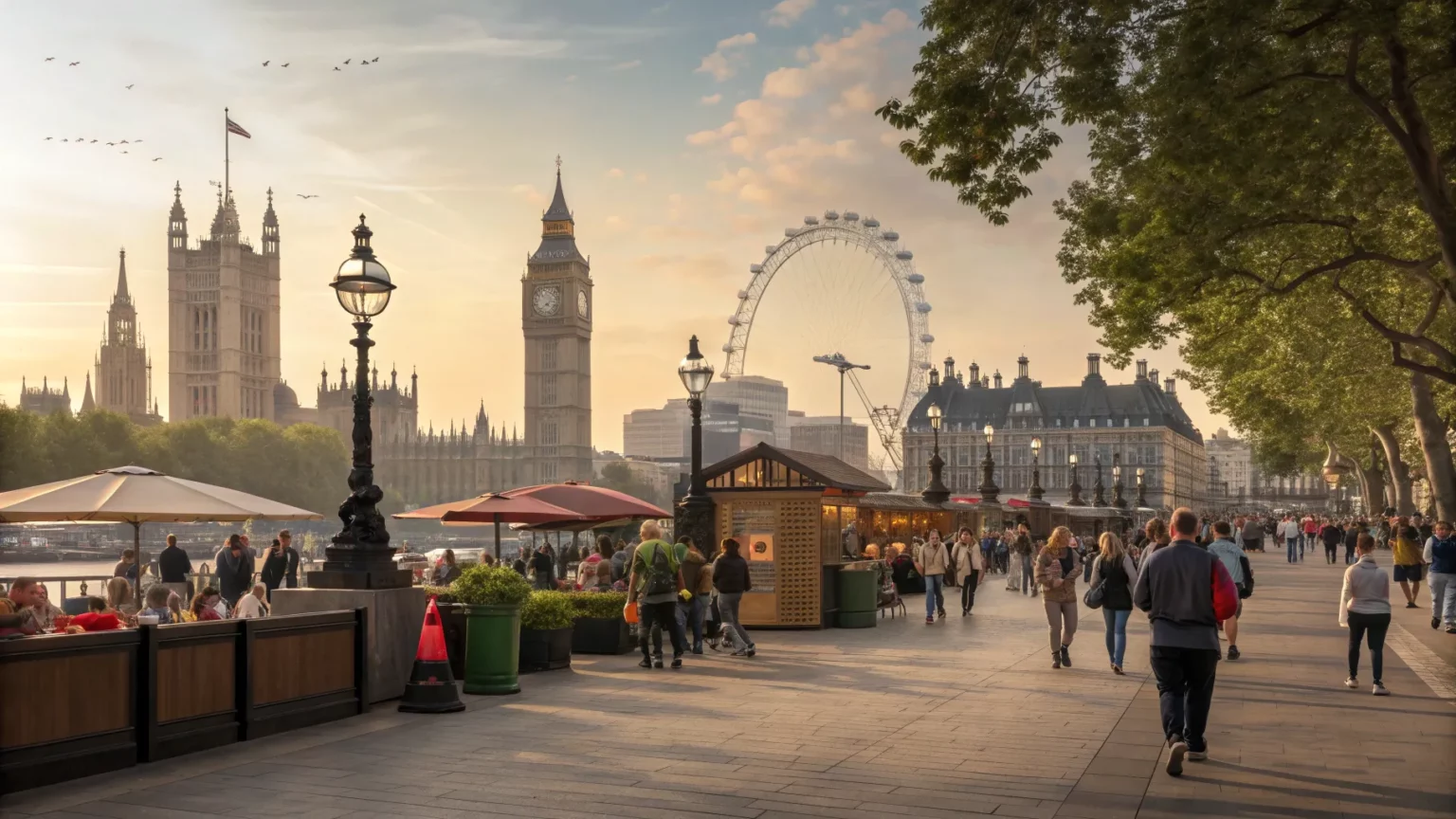
London is drawing travelers back with more than postcard views. From street music to steaming food stalls, the city is selling a full-body experience that feels urgent and current. As visitors return across seasons and neighborhoods, officials and businesses are racing to meet demand while keeping the city livable and welcoming.
“A visit to the U.K. capital offers a dazzling array of sensory experiences.”
The pitch works because it’s simple. See art, hear music, taste flavors from everywhere, and ride the Tube to it all. The city’s mix of heritage and novelty remains a powerful draw for first-timers and repeat visitors alike.
The Sights, Sounds, and Scents
Walk a single mile and the city changes twice. One block offers antique shops and quiet squares. The next is a rush of neon, buskers, and queues for a hit play.
Museums are still free for core collections, inviting long afternoons. Theatergoers stack cheaper midweek seats with last-minute tickets. And football chants carry from local pubs on match days, folding visitors into the ritual whether they know the lineup or not.
- Markets: steam, spice, and fresh bread at Borough, Broadway, and beyond.
- Parks: birdsong and bike bells through Hyde Park and along canal paths.
- Nightlife: small venues give new acts a shot, while big rooms pack out tours.
Food tells the city’s story fast. A single street can offer West African jollof, Punjabi chaat, and classic fish and chips. Coffee culture has sharpened, too, with independent roasters tucked into railway arches.
What’s Driving the Pull
Travel patterns shifted after the pandemic, and the city adjusted. Staggered opening hours stretched foot traffic beyond peak afternoons. Outdoor seating stuck around, turning many streets into open-air dining rooms during warmer months.
Events now double as citywide showcases. Art fairs spill into galleries, while sports tournaments pack fan zones and screening sites. The transport network, while creaky in spots, still links airports, train stations, and neighborhoods with a speed that helps short trips feel ambitious yet doable.
Tourism boards highlight easy entry for many visitors and abundant itineraries for short stays. Local councils promote lesser-known districts, steering people to waterfronts, warehouses-turned-studios, and redeveloped rail yards. The goal is simple: spread visitors out and extend stays by a day or two.


Strains Beneath the Shine
Success brings friction. Peak-season crowds pack popular bridges and museums, testing patience and transport. Rising costs hit visitors and residents, from hotel rates to pints. Small venues face tight margins as rents climb and energy bills swing.
Some neighborhoods worry about short-term lets squeezing housing. Locals also flag the pressure on transit during large events. City leaders respond with crowd management, timed entries for hot exhibits, and targeted enforcement on nuisance rentals.
There is a wider question, too: how to keep the city’s character while welcoming more people. Independent shops and long-running markets are part of the magic. Policies that protect them can make or break the mix that visitors come to find.
Signals to Watch
If the appetite for experiences keeps growing, bookings for smaller, guided activities should rise. Think food walks, studio tours, and river trips that hit several boroughs in one go. Night-time offerings may diversify further, pairing late museum hours with performances and pop-up dining.
Transport upgrades will matter. Reliability on key lines and smoother airport links can turn a tight weekend into a relaxed one. Digital passes that bundle transit and entry fees could reduce friction and spread travelers across venues.
Sustainability will shape choices as well. Operators tout lower-waste menus and local sourcing. Travelers respond to honest efforts that feel practical, not preachy.
The Bottom Line
The city’s pitch is clear and persuasive. Come for the icons, stay for the sensations that play out block by block. The formula works because it is flexible and deeply local.
The challenge is balance. Protect the everyday city while welcoming the world. If leaders, venues, and neighborhoods align on that goal, the draw should endure. Watch for smarter crowd tools, better transport links, and fresh late-night programs as early signals of how well the plan holds.