



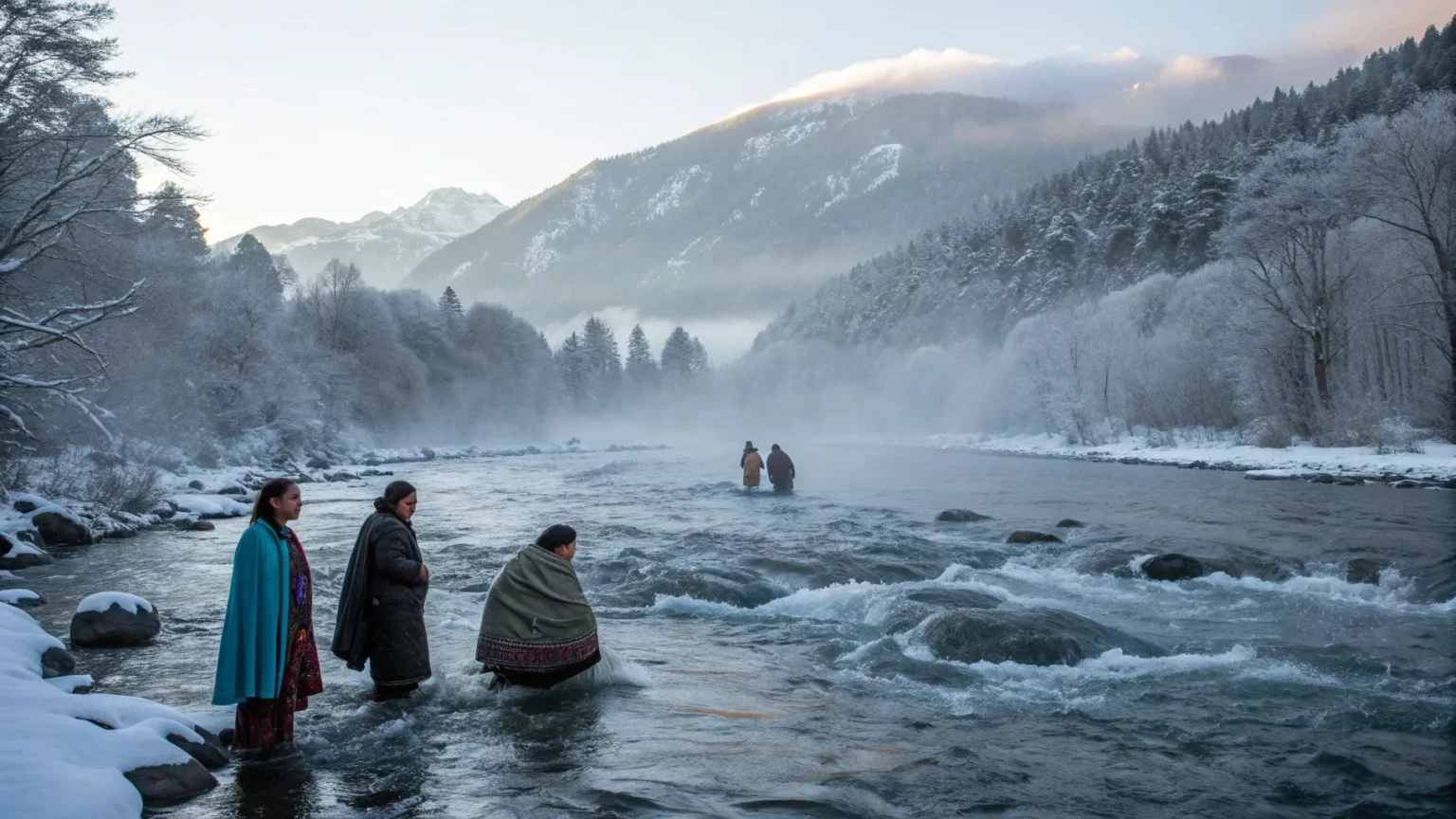
In the icy rush of Chile’s Pilmaiquen River, Mapuche families closed a multiday observance of We Tripantü, the winter solstice New Year that signals renewal and return to balance. The ritual unfolded in southern Chile as participants waded into the swift, cold water at dawn, honoring a cycle that guides planting, harvest, and community life.
The celebration, described by those present as one of the most sacred moments in the Mapuche calendar, drew people to the river’s edge during the shortest days of the year. It took place along the Pilmaiquen, a waterway long tied to spiritual practice, community identity, and—more recently—debate over how the river should be used.
A Sacred Season With Deep Roots
We Tripantü coincides with the southern winter solstice, a turning point when days begin to lengthen. For Mapuche communities, it marks a fresh start. Families gather, share food, and offer thanks for what nature provides. The dawn river immersion is a key act of cleansing and commitment to the year ahead.
Southern Chile’s rivers have carried these customs for generations. The Pilmaiquen, which cuts through forested valleys and farmland, is one such site. People travel from nearby towns and rural areas to join prayers, music, and rites that are taught by elders and passed on to children.
“A ceremonial dip in the frigid waters of the fast-flowing Pilmaiquen River in southern Chile was the culmination of the multiday celebration of We Tripantü, one of the most sacred holidays,” reported journalists Giovanna Dell’Orto and Rodrigo Abd.
A River at the Center of a Wider Debate
Even as the holiday brings people together, the river has become a focal point for competing priorities. Mapuche leaders have argued that sacred places deserve protection, and that cultural rights should guide decisions on land and water. Environmental groups have raised alarms about the health of river ecosystems.
Developers and policymakers say hydropower contributes to clean energy goals and supports the national grid. They point to Chile’s targets for cutting emissions and reducing reliance on fossil fuels. Officials argue that projects can include safeguards to limit harm to cultural sites and nature.
Community members respond that consultation must be real, not symbolic, and that some locations are too important to be altered. They stress that rivers are living relatives in their worldview, central to prayer, healing, and identity.
What the Ceremony Signals for the Year Ahead
The solstice rites highlight the resilience of Indigenous traditions across southern Chile and northern Patagonia. Elders emphasize language, song, and land stewardship as pillars of continuity. Younger participants speak about blending study, work, and cultural learning to keep practices strong.

Observers note a steady rise in visibility for We Tripantü across the country. Schools, museums, and municipalities now host public activities, while many Mapuche families prefer smaller, community-led observances on ancestral lands.
- We Tripantü aligns with the winter solstice in late June.
- Core practices include river immersion at dawn, communal meals, and prayers.
- Local debates focus on cultural rights, river health, and energy needs.
Balancing Cultural Rights and Energy Policy
Chile’s shift to renewable power is reshaping valleys from the far north to the rainy south. Hydropower remains a key piece of that shift. Yet it carries unique social and environmental costs when projects touch rivers with sacred significance.
Policy experts say the path forward likely rests on early, informed consultation; mapping of cultural heritage; and ongoing monitoring that communities can verify. Independent review of cumulative impacts—on fish, forests, and cultural sites—could steer projects away from high-risk zones.
Some local leaders argue that small-scale renewables near towns and farms can ease pressure on major rivers. Others want legal recognition of sacred areas and stronger protections in water law.
Voices From the Riverbank
Those who took part in the ceremony described it as both a personal and communal promise. The cold shock is part of the point. It is a reset button, a way to greet the returning light and leave behind what no longer serves.
Advocates for cultural rights say that protecting ceremonies like this protects knowledge that helps care for land and water. Energy advocates counter that climate goals also protect future generations and that design changes can reduce harm.
The shared goal, many say, should be a fair process that respects the people who have lived with these rivers the longest—and a plan that keeps lights on without dimming living traditions.
As the solstice sun rises a little earlier each day, the message from the Pilmaiquen is clear: renewal requires care. The ceremony ends, but the work begins. Watch for moves on cultural mapping, project siting, and real consultation in the months ahead. The next New Year will show whether the river’s promise—renewal with respect—can guide policy as powerfully as it guides prayer.