




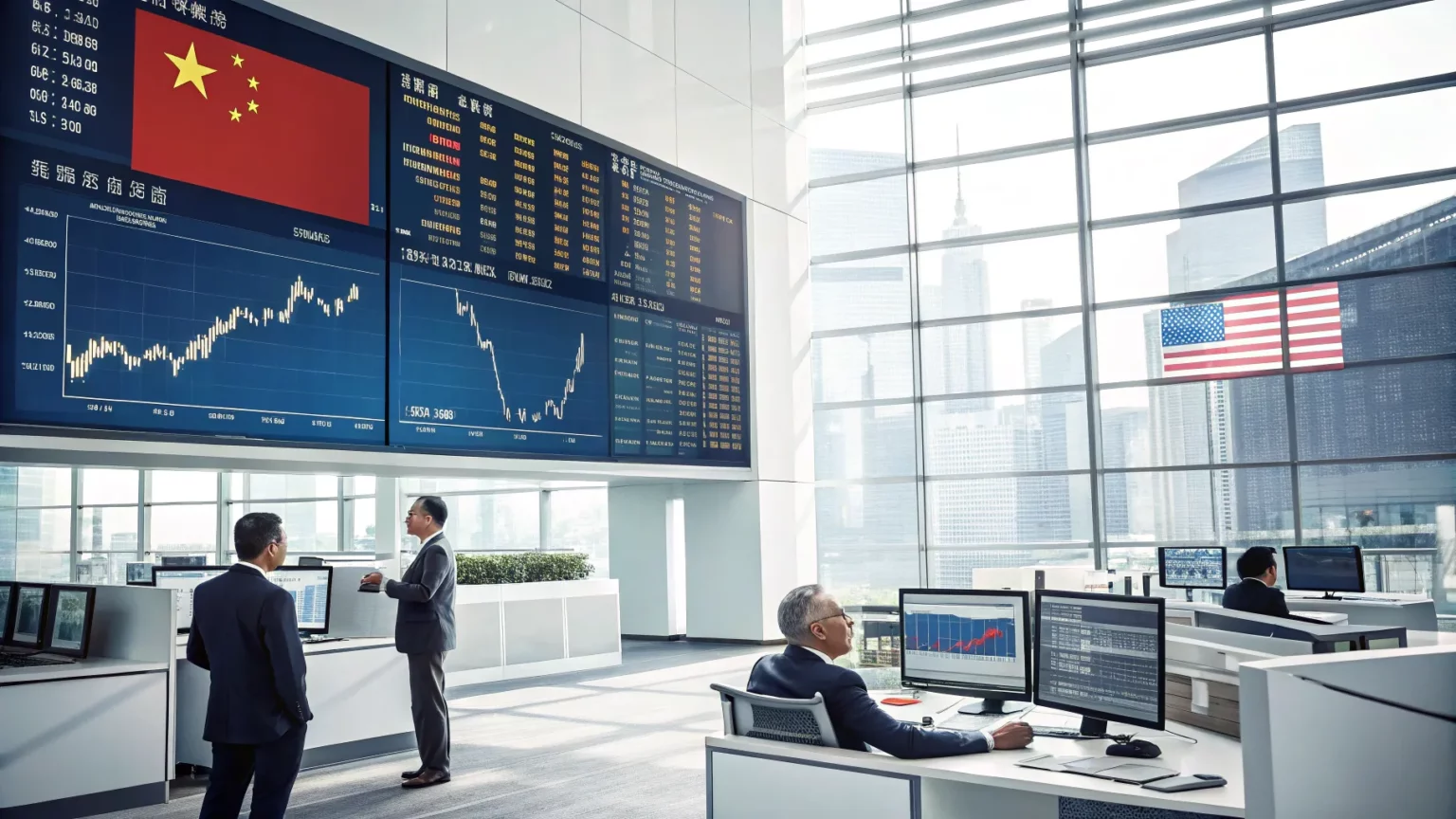
Financial markets opened the week on an upbeat note as investors welcomed reports that trade talks between the United States and China went well over the weekend. The shift came after weeks of tense rhetoric, including a threat from former President Donald Trump to levy a 100% tariff on Chinese exports and to cancel a planned meeting with Chinese President Xi Jinping. That meeting now appears set to occur this week, injecting fresh momentum into high-stakes negotiations that could influence global trade and investor sentiment.
Market Reaction Signals Relief
Market moves early in the week suggested investors expect a pause in escalation. Traders often respond quickly to signs of detente between the world’s two largest economies. A smoother tone can reduce worries over supply chain disruptions and price spikes.
In recent years, similar headlines have triggered gains in sectors tied to global growth. Technology, industrials, and consumer goods tend to be most sensitive to trade news. A softer trade stance can also support commodity prices and shipping firms.
“Financial markets kicked off the week by gleefully cheering the weekend’s headlines that trade talks between the United States and China went smoothly.”
From Threats to Talks
The latest optimism follows a sharp warning. Just weeks ago, Trump threatened to double down on tariffs in a move that would hit a wide slice of Chinese exports. The idea of a 100% tariff raised alarms among importers and retailers. It also raised the prospect of higher costs for U.S. consumers.
At the same time, there was uncertainty over whether a planned meeting with Xi would even happen. The suggestion that the meeting might be called off fueled concern over a breakdown in dialogue.
“Trump had threatened to impose a 100% tariff on Chinese exports and said he might call off a meeting with Chinese President Xi Jinping.”
That calculus appears to have changed. Reports now point to talks continuing at the highest level this week.
“Now, that meeting looks set to take place this week.”
What’s at Stake for Both Sides
For Washington, the goals often include stronger protections for intellectual property and stricter rules on technology transfers. U.S. officials also seek better market access for American firms in finance, agriculture, and digital services. Lower trade barriers and clearer rules could reduce uncertainty and support investment.
For Beijing, stable access to the U.S. market remains vital. Chinese leaders also seek predictability that allows manufacturers to plan production and manage costs. A calmer trade setting can support growth, local employment, and currency stability.



Both sides face pressure from domestic industries. U.S. companies want consistent rules and predictable tariffs. Chinese exporters want fewer surprises at ports and in regulatory checks. A face-to-face meeting signals a willingness to manage disputes rather than let them spiral.
Economic and Industry Impacts
Tariffs at the threatened level could have carried a heavy cost. A 100% levy can double the price of imported goods at the border. That burden typically passes through to wholesalers, then to retailers, and finally to households.
Sectors most exposed include electronics, machinery, apparel, furniture, and auto parts. Manufacturers dependent on specialized components would likely face delays and higher bills. Small and mid-sized firms, which have less room to absorb costs, would feel the strain first.
On the Chinese side, exporters could see thinner margins and weaker orders. Some companies might shift production or seek new buyers. But sudden pivots are expensive and slow. A steadier negotiation track reduces these risks.
What to Watch Next
The planned meeting sets the stage for concrete steps. Investors will look for signs of tariff pauses, new working groups, and timelines for follow-up sessions. Any mention of enforcement mechanisms will also matter. Clear checkpoints can help maintain trust.
- Whether both sides agree to freeze new tariffs.
- Clarity on tech export controls and data rules.
- Measures to protect intellectual property.
- Market access commitments in services and agriculture.
- Timelines for next negotiating rounds.
Risks and the Road Ahead
Optimism can fade if talks stall or if new conditions are introduced late in the process. Markets have reacted sharply in the past to tweets, statements, or surprise enforcement actions. Businesses will plan cautiously until firm agreements are published.
For now, the near-term risk of a tariff shock appears lower. The tone of the weekend reports offered a path to de-escalation. If that holds, it could support investment and hiring plans across both countries.
The week ahead may prove decisive. If the meeting occurs and yields a roadmap, markets could extend their gains. If expectations build and no progress emerges, volatility may return. The key takeaway is simple: dialogue is back on, and the economic stakes are high.