




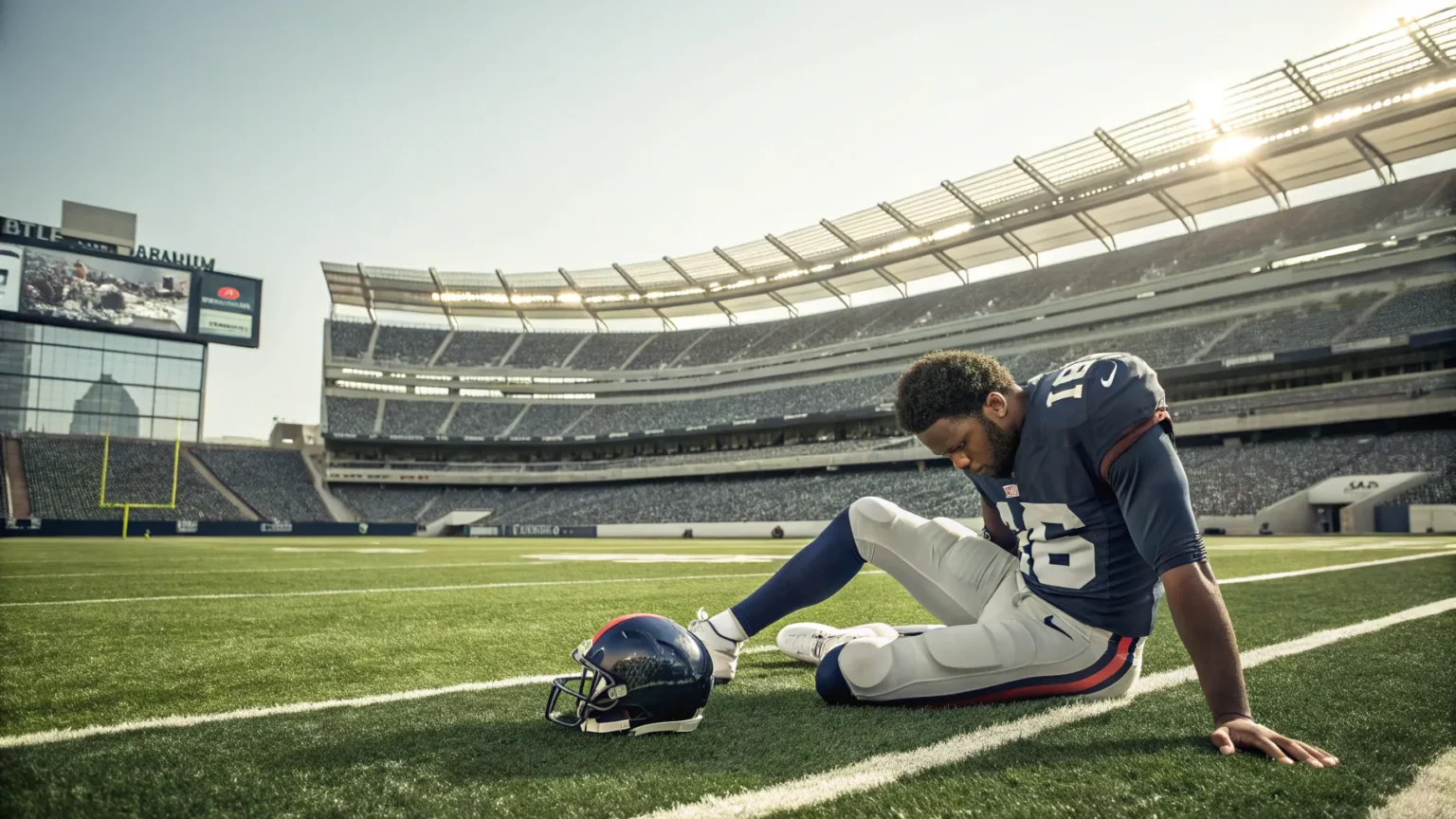
Concerns over player safety at MetLife Stadium are growing again after a string of serious leg injuries on its artificial playing surface. The stadium, home to the New York Giants and New York Jets, has been the site of multiple knee ligament and Achilles tears in recent seasons, reigniting calls for natural grass.
The latest debate centers on the rate and severity of non-contact leg injuries. Players, union leaders, and medical experts are questioning whether turf is putting athletes at higher risk during games in East Rutherford, New Jersey.
“Since 2020, more than a dozen players have sustained knee ligament or Achilles tears at MetLife, which uses artificial grass.”
Background: A Long-Running Turf Debate
MetLife’s surface has been under scrutiny for years. The stadium has used versions of synthetic turf since opening in 2010, with replacements and upgrades along the way. Despite those changes, concerns have persisted from some teams and players about traction, surface firmness, and how turf reacts underfoot in cooler weather.
The NFL Players Association has pressed for natural grass at every venue, arguing it is safer for lower-body joints. League officials have pointed to mixed annual data, noting that injury trends can vary by season and field type.
The world’s top soccer events insist on grass. MetLife is set to host matches for the 2026 men’s World Cup on a temporary natural surface, spotlighting the ongoing split between football and soccer standards.
High-Profile Injuries Fuel Outcry
Several prominent injuries at MetLife have amplified attention to the surface. While injuries can happen anywhere, the number and severity at this venue have made it a flashpoint in the league-wide turf debate.
- In 2020, multiple San Francisco 49ers players suffered serious knee injuries during a game at MetLife, prompting public complaints about the field conditions.
- In 2023, New York Jets quarterback Aaron Rodgers ruptured his Achilles on the stadium’s newer turf in the season opener, spurring fresh calls for grass.
Players have repeatedly voiced concerns about how turf “grabs” or changes foot release during cuts. Team medical staff often cite differences in rotational resistance and how cleats interact with synthetic fibers versus soil and sod.
What the Data Says—and What It Does Not
League and union reports have not produced a single answer. Some seasons show similar injury rates across surface types, while other analyses suggest higher non-contact lower-extremity injury rates on turf.


Experts warn that injury risk is complex. Footwear, weather, turf age, maintenance quality, and player workload all matter. A field that tests well in the lab can still perform differently on game day if seams shift or infill levels change.
Independent biomechanists have pointed to rotational torque as a key factor. When studs lock into a surface that does not shear as easily as grass, knees and ankles can take more force during sudden changes of direction.
Stadium and League Responses
MetLife’s operators have maintained that the current turf meets industry testing standards and the league’s certification process. After prior criticism, the venue installed a newer synthetic system intended to improve footing and reduce “grab.”
Team officials say they monitor the field and adjust maintenance routines, including grooming and infill management. The league tests fields during the season and before games, and can require fixes if a surface falls short.
Union leaders remain unconvinced. They argue that meeting lab standards is not enough if players continue to suffer similar injuries, and they have renewed calls for year-round grass at MetLife.
What to Watch Next
The World Cup will bring sod into the building, proving that a grass surface is workable at least for a limited time. The key question is whether a permanent or semi-permanent grass system can fit the stadium’s schedule and climate.
Cost, maintenance, and stadium design will shape that decision. A move to natural grass would require new infrastructure and careful management during back-to-back NFL dates and non-football events.
Players and fans will look for transparent injury reporting in the seasons ahead. If serious leg injuries continue at a similar rate, pressure for a surface change will likely intensify.
For now, the debate remains unresolved. The record of serious knee and Achilles injuries at MetLife has kept safety in the spotlight, and the coming years will show whether policy, engineering, or both will shift the field underfoot.