




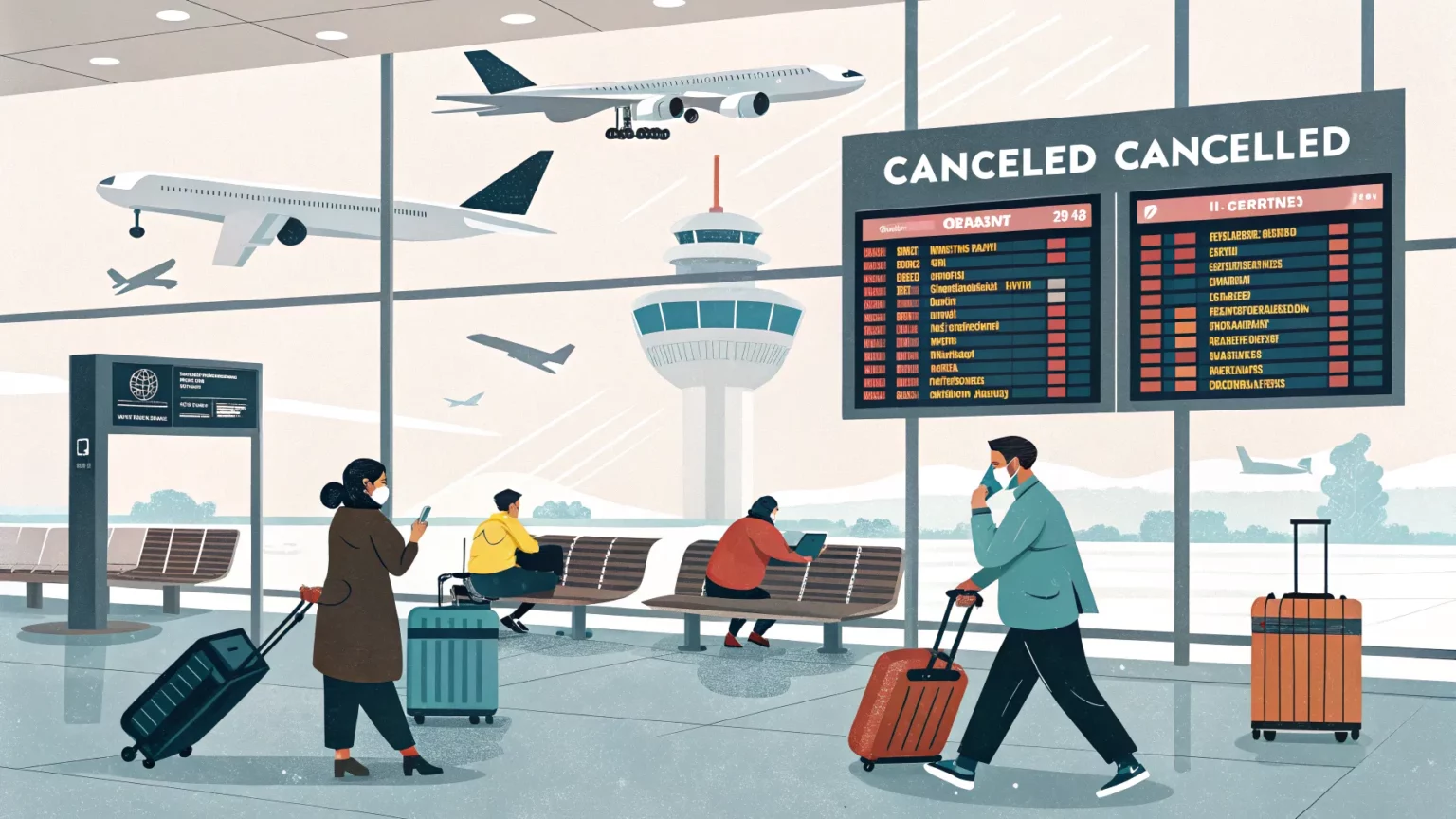
Global air travel was thrown into disarray as airlines canceled routes and diverted aircraft after new unrest in the Middle East. The disruptions followed joint U.S. and Israeli military action against Iran, prompting carriers to halt flights and leaving travelers stranded at airports from Europe to Asia. Operators cited safety risks and uncertain airspace conditions as reasons for the rapid pullback.
“Middle East unrest disrupts global air travel as airlines cancel flights worldwide, leaving passengers stranded at airports following joint U.S. and Israel military action against Iran.”
Airlines Respond With Widespread Cancellations
Carriers began cutting schedules within hours of the flare-up. Many avoided overflying parts of the Middle East, adding time and cost to long-haul trips. Others suspended service to key hubs until security assessments could be completed.
Decisions were guided by risk teams, insurance limits, and government notices to air missions, or NOTAMs. Some airlines adopted a wait-and-see approach for short-haul routes nearby. Long-haul routes that cross regional airspace faced broader changes.
Aviation analysts said the first wave of cancellations tends to be the most severe. Schedules may stabilize within days if threats ease. If tensions persist, rolling changes could continue for weeks.
Safety Protocols and Airspace Risks
International rules place flight safety above on-time performance. When conflict erupts, airlines evaluate air defense activity, missile reach, radar coverage, and the risk of misidentification. Past events shape those calls. The 2014 downing of Malaysia Airlines Flight 17 over eastern Ukraine remains a stark warning about flying near active conflict zones.
National aviation authorities and alliances share intelligence with carriers. Insurers can raise premiums, cut coverage, or bar operations in high-risk zones. That financial pressure often accelerates cancellations even when routes remain technically open.
Detours also have costs. Longer routings mean extra fuel, crew time, and maintenance. Cargo loads may be reduced to keep within performance limits on extended paths.
Impact on Passengers and Airports
Airports far from the Middle East reported crowded terminals as cancellations rippled across networks. Travelers faced missed connections, overnight stays, and last-minute rebookings. Some were re-routed through secondary hubs to avoid affected airspace.


- Priority was given to medical and vulnerable passengers when seats were scarce.
- Airlines issued travel waivers, allowing changes without fees on select routes.
- Stranded groups received meal vouchers and hotel placements where required by local rules.
Consumer advocates urged travelers to monitor airline apps and sign up for alerts. They also advised keeping receipts for reasonable expenses if delays stretch into days. Refund rights vary by jurisdiction and ticket type, making early contact with the carrier essential.
Economic and Industry Fallout
Extended cancellations can dent quarterly results for global carriers that rely on connecting traffic across Europe, the Gulf, and Asia. Freight forwarders may also feel the strain as high-value cargo is shifted, delayed, or sent by sea. Oil prices often react to Middle East tensions, raising jet fuel costs and pressuring margins.
Tourism boards in the region could face immediate declines in bookings. Business travel planners may postpone trips until routes are stable. If the disruption widens, aircraft and crews may be repositioned to stronger markets, reshaping summer schedules.
What Comes Next
The flight outlook depends on security assessments in the days ahead. Carriers will review intelligence and coordinate with regulators before restoring suspended services. Some routes may return with revised timings, added fuel stops, or new paths that avoid hot spots.
Travel experts suggest building extra time into itineraries and avoiding tight connections. Flexible tickets provide more options if plans change again. For now, patience and clear communication from airlines remain key to easing passenger strain.
The latest unrest shows how regional conflict can affect travelers worldwide in a matter of hours. Airlines will likely move step by step, balancing safety, cost, and demand. If tensions cool, schedules could recover quickly. If they do not, the industry faces a longer period of detours, higher costs, and uncertain demand.