




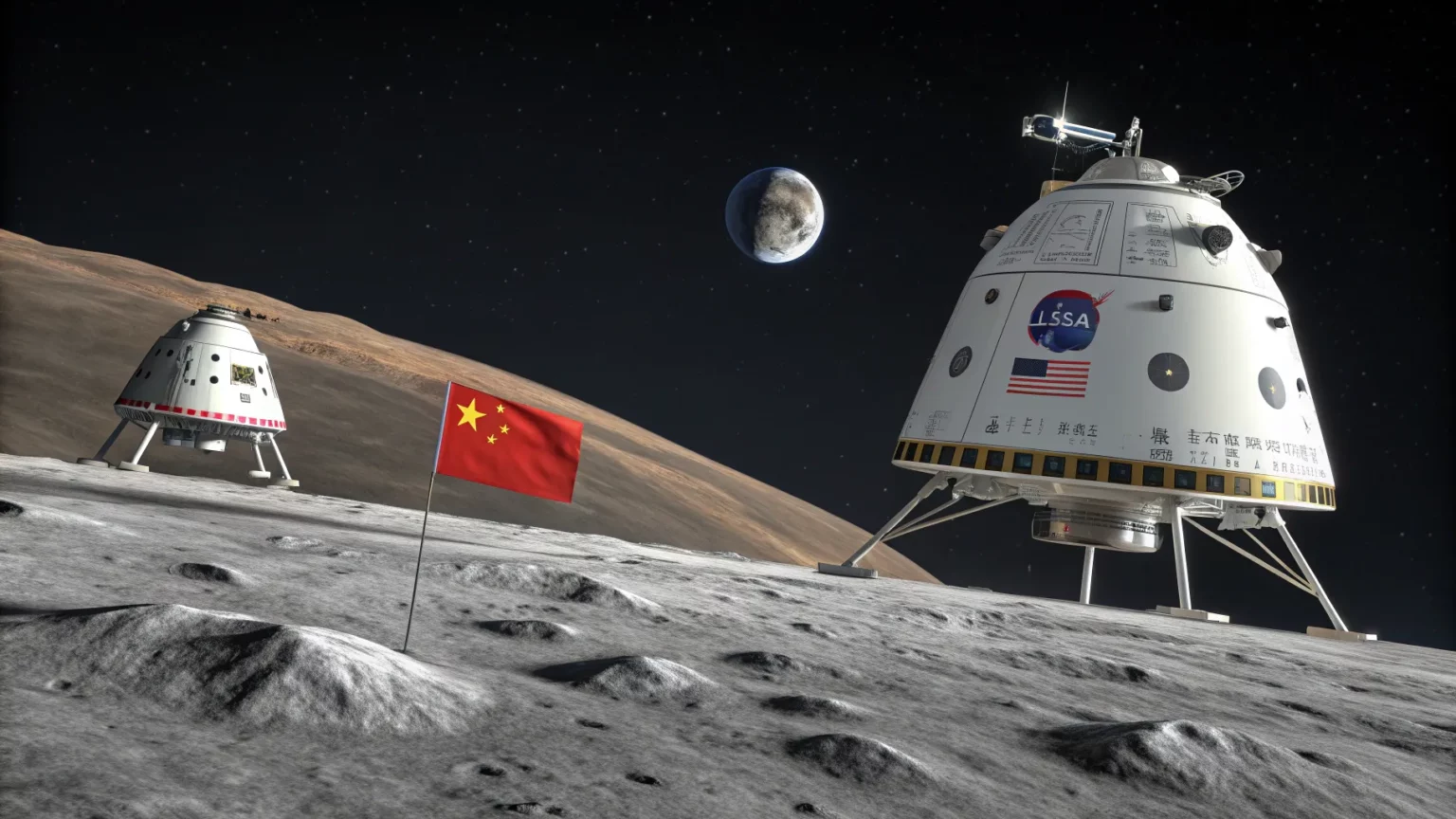
China’s plan to land astronauts on the moon by 2030 has sharpened a high-stakes countdown for the United States, which is relying on SpaceX to deliver a lunar lander in time. The schedule is tight, the technology is complex, and delays in both government and industry efforts have raised the chance that Beijing could plant its flag first this decade.
“China aims to put its astronauts on the moon by 2030. For NASA to get back there first, it needs SpaceX to quickly complete its Starship rocket — but it faces major hurdles.”
The core question is no longer whether humans will return to the lunar surface, but who will arrive first and on what timeline. The answer carries strategic, scientific, and political weight.
Why the Moon Race Is Back
NASA’s Artemis program is the United States’ first crewed lunar effort since Apollo. It plans to use the Space Launch System and Orion capsule to ferry astronauts to lunar orbit, then transfer crew to a commercial lander for touchdown. SpaceX won the initial contract to provide that lander using a version of its Starship vehicle.
China has announced a crewed mission by 2030, led by the China National Space Administration. It is developing a next-generation crew capsule, a lunar lander, and the Long March 10 rocket for the job. Chinese officials have also outlined plans for a joint research base near the lunar south pole with international partners.
NASA has already slipped key target dates. The agency moved its next crewed flight around the moon to 2025 and its first planned landing to no earlier than 2026. Those shifts give China more room to close the gap.
SpaceX’s Starship: Promise and Obstacles
Starship is central to NASA’s first lunar landing under Artemis. The system is designed to be fully reusable and to refuel in Earth orbit before heading to the moon. SpaceX has flown multiple high-altitude and orbital tests, advancing engine performance and reentry control.
But the work ahead is substantial. The version that will carry astronauts must prove precise orbital refueling, long-duration cryogenic propellant storage, and safe lunar descent and ascent. It also needs a life support system, landing legs, and a method for transferring astronauts from Orion in lunar orbit.
- Repeatable launches and landings of both stages
- On-orbit propellant transfer at large scale
- Human-rated systems for life support and safety
- Regulatory approvals and pad readiness
Each item carries technical and schedule risk. Any slip can cascade into Artemis launch dates.



China’s Steady Progress
China’s lunar program has moved step by step over the past 15 years. It soft-landed Chang’e-3 in 2013, delivered samples with Chang’e-5 in 2020, and landed on the far side twice, most recently in 2024. These missions built experience with guidance, navigation, and surface operations.
The crewed plan requires new hardware, but China’s track record with heavy rockets and lunar probes suggests a methodical approach. Public schedules are sparse, yet officials continue to signal confidence in the 2030 goal. If the Long March 10 and a new lander reach test flight on time, the mission could be within reach.
What NASA Must Juggle
NASA must synchronize three elements: SLS and Orion, a lunar lander, and the techniques to dock and transfer crew in lunar orbit. It also needs to align with contractors on testing milestones and meet safety standards for astronauts.
The agency added a second commercial lander provider for a later mission. That gives redundancy down the line, but the first attempts rely on SpaceX. Any delay in Starship’s refueling demos, or in crewed Starship testing, narrows the window to land before 2030.
Implications for Science and Strategy
A successful landing opens access to ice deposits near the lunar south pole, which can support long stays and fuel production. It can also drive technology for Mars missions and boost national prestige.
If China arrives first, it would claim a major spaceflight achievement and could shape norms for surface activities. If NASA lands earlier, it would confirm the public-private model for deep space work and strengthen U.S.-led partnerships.
What to Watch Next
Key signs will come from flight tests. For SpaceX, demonstrations of orbital refueling and a lunar-optimized Starship are the pivotal steps. For China, the debut of Long March 10 and integrated lander tests will signal readiness.
The race is not only about speed. Durability matters too. The program that can repeat landings, build infrastructure, and support crews safely will set the tempo for the 2030s.
The clock is ticking. With China’s goal set for 2030 and U.S. timelines tightening, the next two years of test flights will likely decide who returns humans to the moon first.