


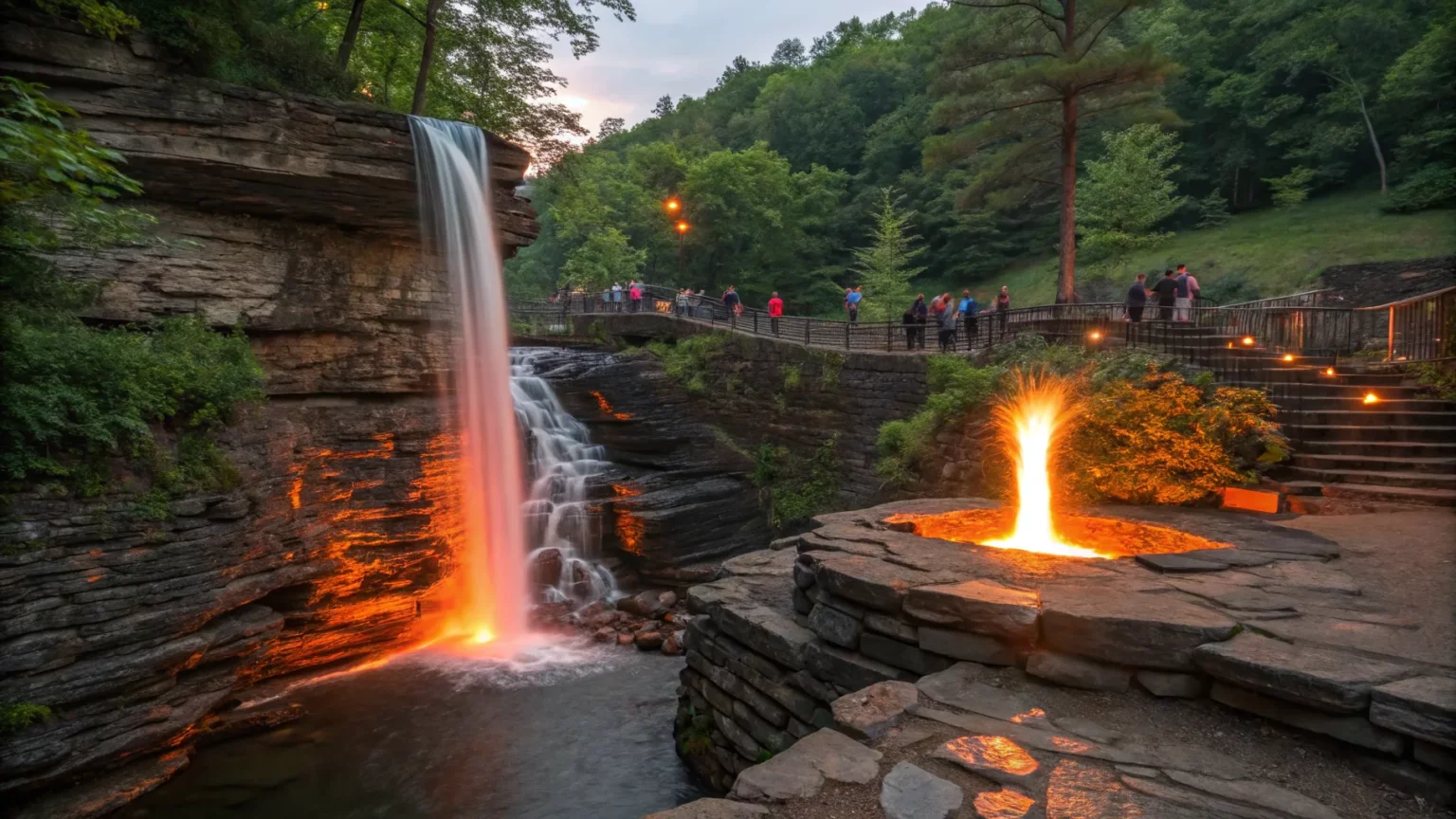
A small waterfall with a steady flame is drawing fresh attention for what lies beneath it. The feature, known as Eternal Flame Falls, sits atop shale rock that leaks natural gas. Visitors come to see a flame that can burn day and night, fed by gas seeping from the ground.
Scientists say the site offers a window into how ancient organic matter still shapes today’s terrain. Local officials also see it as a tourism draw, but with safety and environmental questions attached. The mix of geology, spectacle, and climate concerns gives the falls new relevance.
How the Flame Keeps Burning
The flame is not magic. It is chemistry and geology at work. Shale in the area holds organic material from long-ago plants and animals. Over time, heat and pressure help break that material down.
“Eternal Flame Falls sits on a bed of shale rocks rich in organic matter. As this matter breaks down, it produces highly flammable natural gas that escapes through cracks in the ground.”
As the gas rises, a small cavity behind the waterfall shelters the flame from wind and spray. Hikers or park staff relight it if heavy rain snuffs it. The natural gas acts as a constant fuel source.
Geology and History
Shale beds across parts of the Northeast formed in ancient seas. They are known for holding hydrocarbons such as methane. The falls sit over one such layer, where small fractures let gas seep slowly upward.
Eternal flames occur in a few places worldwide. Most are tied to similar seeps. This site is unusual because water and fire meet in the same scene. Geologists have studied the seep to learn how the gas moves and how the rock traps it.
- The flame burns in a small grotto behind the falls.
- The fuel is natural gas, mostly methane.
- The seep is steady, but the flame can go out in storms.
Tourism and Safety Questions
The falls bring hikers who want to see a fire behind a sheet of water. Local guides say foot traffic has grown with social media posts. Rangers warn visitors to stay on marked trails. The shale can be slick, and the terrain near the grotto is tight.
Fire officials advise against adding fuel or trying to enlarge the flame. Even small gas seeps can flare suddenly. The park’s rules aim to protect visitors and the site.



Environmental Impact
Methane leaks are a climate concern. Methane traps far more heat than carbon dioxide over a twenty-year period. Most emissions come from energy, agriculture, and waste. Natural seeps add a small share.
Scientists view the falls as a teaching tool. It shows how hydrocarbons move from rock to air in the natural world. Some researchers suggest monitoring seeps to track seasonal changes. That could add to data on background methane levels.
Local advocates say the site should be managed with care. They urge clear signs and limits on off-trail access. The goal is to prevent erosion and damage to the grotto.
What to Watch Next
Park managers are weighing new trail work to handle crowds. Better drainage and steps could reduce slips near the falls. Any changes would need to keep the seep and grotto intact.
Researchers may seek more samples of the gas. They could test how the seep rate shifts after heavy rain or drought. That might show how water and pressure affect the flow.
For now, the flame continues to draw hikers and curious onlookers. It offers a rare meeting of fire, water, and stone. It also invites a closer look at what lies underfoot.
The site blends public interest with science. It could guide how parks manage similar features. Visitors can expect more signs, better trails, and steady attention to safety and stewardship.