




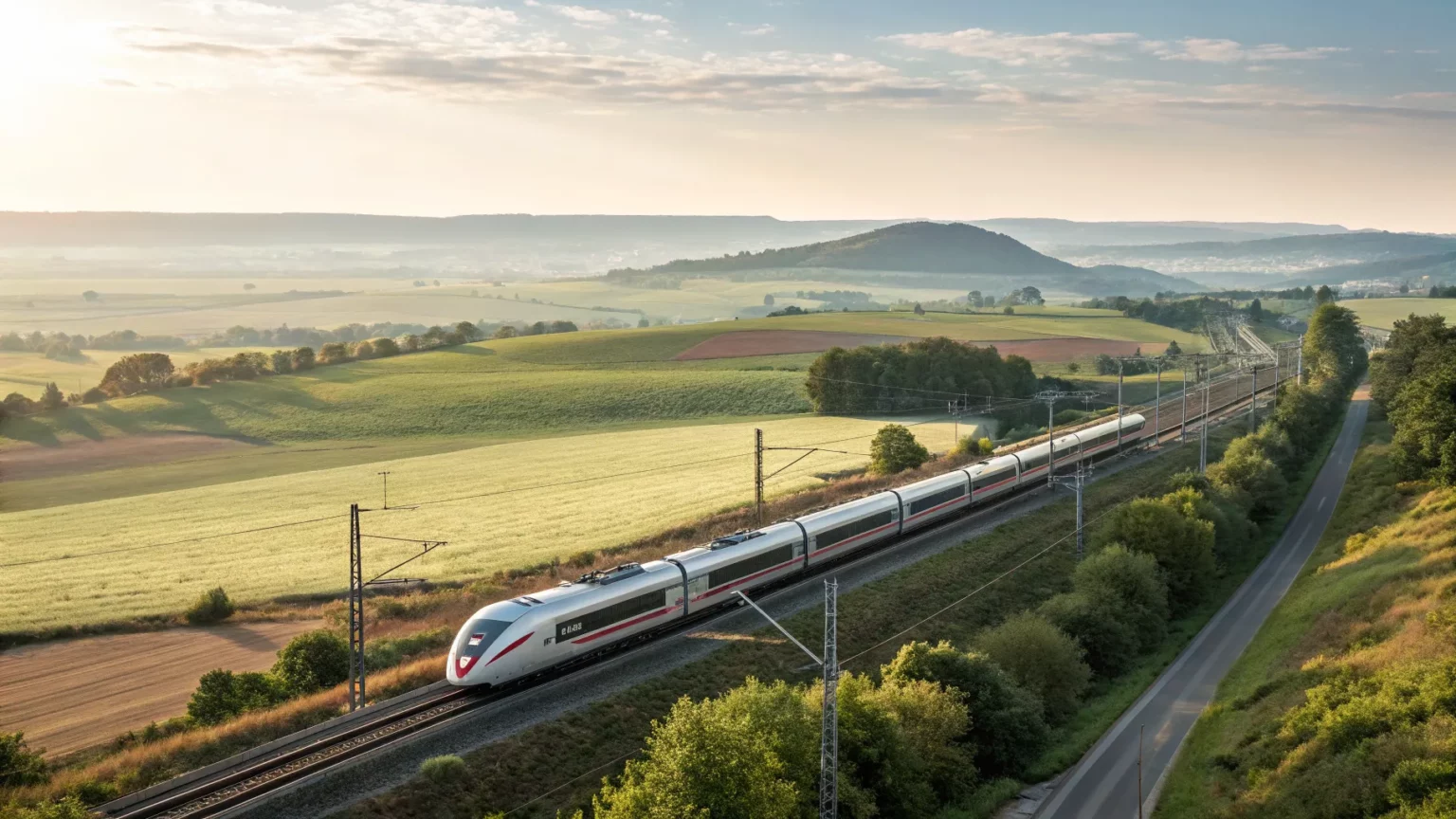
Germany’s national rail giant may soon face fresh competition, signaling a possible shift in how passengers move across the country and how fares are set. A hint of change came in a short but pointed line:
“Deutsche Bahn could soon have a rival.”
The prospect of a new player entering Germany’s passenger rail market adds urgency to debates over pricing, punctuality, and rail investment. Any newcomer would operate on routes where demand is strong, most likely linking major cities such as Berlin, Hamburg, Munich, Cologne, and Frankfurt.
Why Competition Is Back on Track
German rail has been formally open to competitors for years, following European Union rules that allow companies to run commercial services on the same tracks. While Deutsche Bahn remains dominant, private and foreign operators already run select long-distance and night services. FlixTrain runs on a handful of corridors, and Austria’s ÖBB Nightjet competes for overnight travelers.
Progress has been gradual. Running trains requires access to limited track slots, rolling stock, maintenance depots, staff, and time to build brand recognition. Germany’s network is also under strain from construction and maintenance, which can reduce available capacity for both incumbents and newcomers.
In 2024, the government merged DB’s infrastructure units into a single company, DB InfraGO, with a public-interest mandate to manage tracks and stations. The move aims to improve performance and transparency, and it may influence how access is granted and priced for all operators.
What a New Entrant Would Need
A challenger would likely target profitable high-demand routes with fast, frequent service. Experience from other European markets shows competition tends to focus on city pairs where rail can beat cars and planes on travel time and cost.
- Access to reliable trainsets and maintenance capacity.
- Track paths on busy corridors during peak times.
- Attractive fares and a clear brand promise on punctuality.
- Digital ticketing with simple refund policies.
Companies that succeeded in Italy, Spain, and France often launched with aggressive pricing and modern trains. They also used clear timetables and strong marketing to win customers from the incumbent.
Passenger Gains—and Trade-Offs
Consumer groups have long argued that more choice can push down prices and improve service. New operators can introduce flexible fares and extras such as better Wi-Fi, quieter cars, or family compartments. Even limited competition can pressure the dominant player to improve punctuality and customer support.



But there are trade-offs. On a busy network, adding trains can crowd timetables, raising the risk of knock-on delays. Union leaders warn that fragmented operations can complicate staffing and training standards. Regional officials also worry that newcomers might only serve the most profitable routes, leaving less attractive links dependent on public subsidy.
Routes to Watch
Market watchers point to a few likely starting points. Berlin–Hamburg is fast and high-demand. Cologne–Frankfurt has premium business travel. Munich connects to both north–south and east–west flows. Any rival would try to secure slots where travel times compete well with short-haul flights.
Cross-border services could also expand. Trains linking Germany with Austria, the Netherlands, the Czech Republic, or France give operators multiple revenue sources and spread fixed costs over longer routes.
The Infrastructure Question
Germany is in the middle of major network works. A planned “general refurbishment” of key corridors aims to raise reliability over the next few years. During construction, capacity is tight. That makes careful slot allocation essential and can slow the pace of market entry.
Analysts say open, predictable access rules are key. If track slots and station access are priced fairly and planned transparently, new services are more likely to launch and survive beyond the first year.
What It Means for Deutsche Bahn
For the incumbent, a credible challenger would be a wake-up call. Price strategies could shift, loyalty programs could be refreshed, and service standards—such as on-board staffing and cleaning—could tighten. The company has been investing in new trains and digital tools, but on-time performance remains under scrutiny.
History suggests that even small pockets of competition can lead to faster innovation, clearer communication during disruptions, and more flexible ticketing. The gains, however, depend on steady infrastructure improvements and fair rules for all operators.
The message that “Deutsche Bahn could soon have a rival” sets the stage for a test of Germany’s open rail model. The next steps will hinge on track access, the pace of construction work, and a newcomer’s ability to secure trains and crews. Travelers should watch for pilot routes, introductory fares, and timetable filings in the months ahead. If a new operator breaks through, passengers could see lower prices and better service on key corridors—provided the network can handle the traffic.