




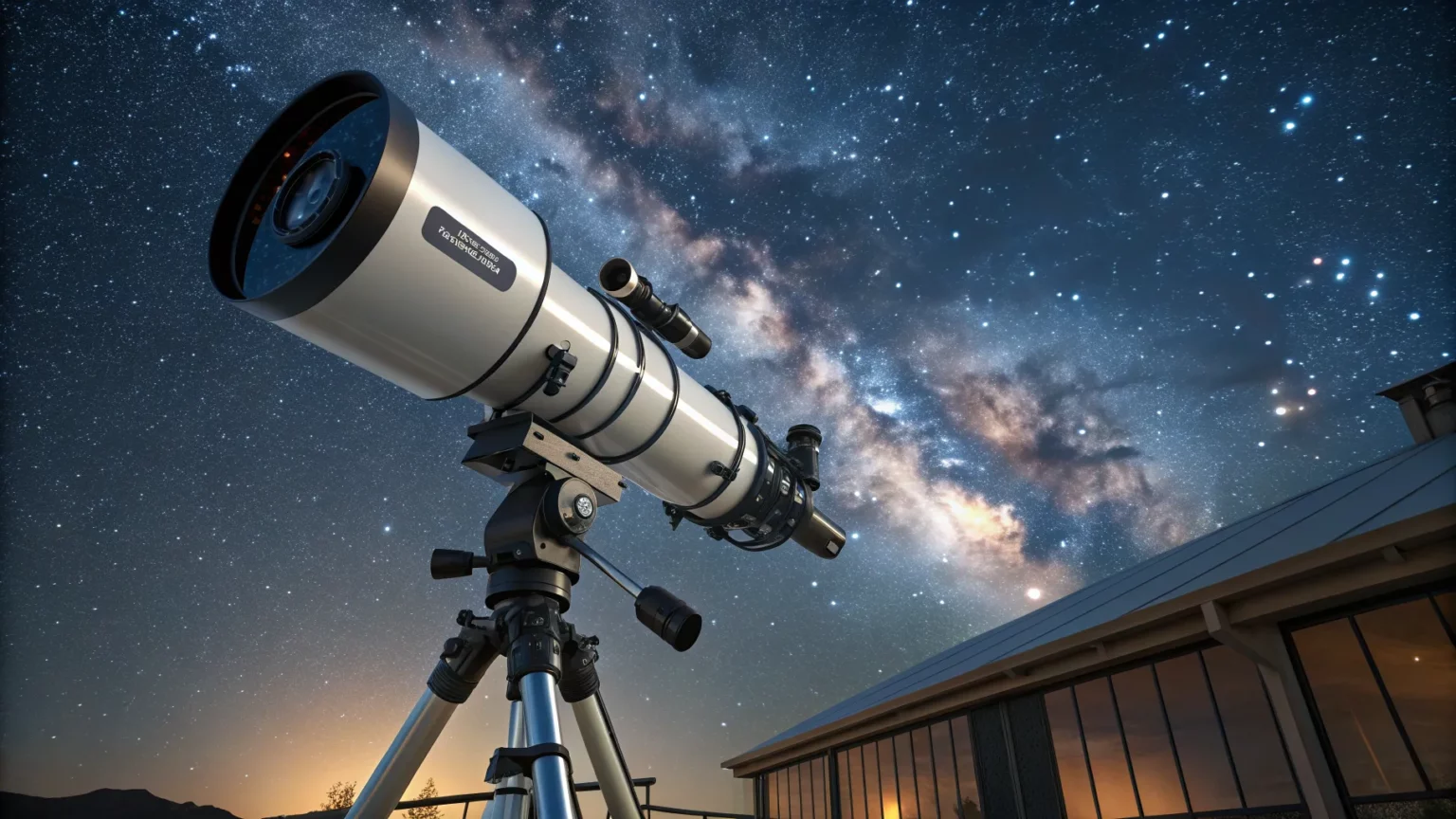
A groundbreaking telescope equipped with the world’s largest digital camera is now ready to begin its mission of tackling some of astronomy’s most profound questions. This advanced observatory represents a significant leap forward in humanity’s ability to observe and understand cosmic phenomena.
The telescope, which features unprecedented imaging capabilities, will enable astronomers to capture detailed views of distant celestial objects and events with clarity never before possible. Its massive digital camera stands as the largest ever created for astronomical research, providing scientists with an extraordinary tool to collect and analyze light from across the cosmos.
Unprecedented Observational Power
The scale of this digital camera exceeds anything previously deployed in space observation. Its exceptional resolution and field of view will allow researchers to monitor vast regions of the night sky simultaneously, dramatically increasing the efficiency of astronomical surveys.
This technological achievement comes after years of development and collaboration between multiple research institutions and engineering teams. The camera’s sensors can detect extremely faint light sources, making it possible to observe objects billions of light-years away from Earth.
Astronomers expect the telescope to collect data that will fill current gaps in our understanding of the universe’s structure and evolution. Its ability to capture both wide-field and detailed images positions it as a versatile tool for various types of astronomical research.
Targeting Cosmic Mysteries
The telescope has been specifically designed to address several major questions that have long puzzled scientists, including:
- The nature and distribution of dark matter throughout the universe
- The properties of dark energy and its role in cosmic expansion
- The formation and evolution of galaxies across cosmic time
- The detection and characterization of transient events like supernovae
“This telescope will help us see the universe in ways we never could before,” said a senior astronomer associated with the project. “The combination of its wide field of view and sensitivity to faint objects makes it uniquely suited for mapping the cosmos and tracking changes over time.”
Data Processing Challenges
The enormous amount of data generated by the telescope presents both opportunities and challenges. The camera is expected to produce several terabytes of information nightly, requiring advanced computing systems to process, store, and analyze the observations.



Research teams have developed specialized algorithms and data management systems to handle this unprecedented flow of astronomical information. These systems will help identify patterns and anomalies that might otherwise remain hidden in the vast dataset.
The telescope’s observations will be made available to the broader scientific community, allowing researchers worldwide to access and study the collected data. This open approach aims to maximize the scientific return on the significant investment in this advanced observatory.
As the telescope begins its operational phase, astronomers anticipate a new era of discovery that could fundamentally change our understanding of the universe. Its unique capabilities promise to reveal previously unseen cosmic phenomena and provide fresh insights into the fundamental laws of physics.