




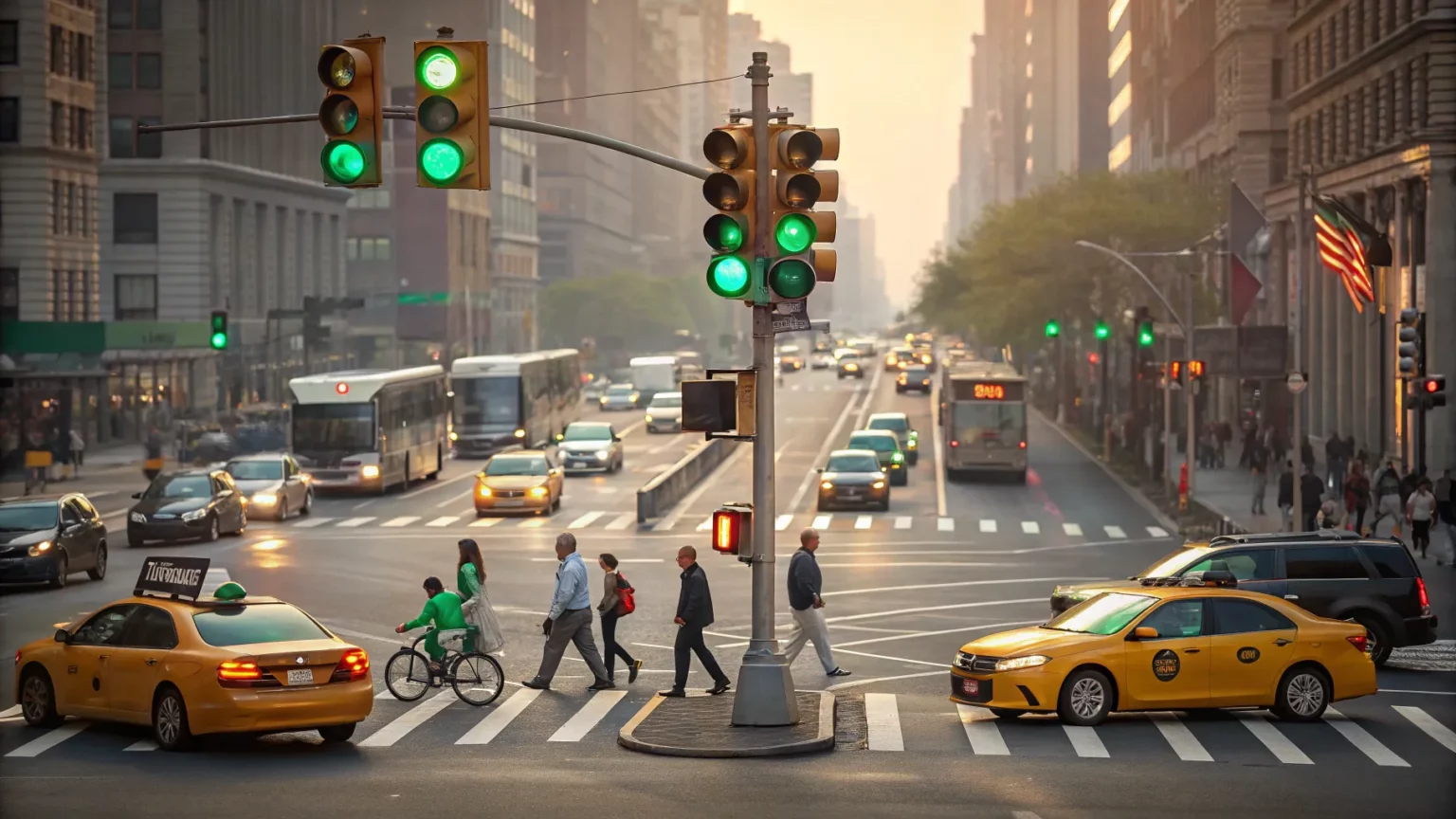
A new concept called HumanLight proposes using traffic signals to reward shared trips, aiming to cut congestion and emissions in crowded cities. The idea surfaced this week as transportation planners and technologists weighed fresh tools to move more people with fewer cars. The approach would adjust signal timing to favor vehicles with multiple passengers and could link with mobility apps for verification.
At its core is a simple pitch answered by a complex system: make greener choices faster and more reliable. If adopted, HumanLight could roll out as a pilot in dense corridors where delays and pollution are highest. Supporters say it nudges behavior without adding new lanes or major hardware.
How HumanLight Would Work
Concept materials describe a signal controller that recognizes vehicle occupancy or confirms rideshare status through opt-in apps. A carpool could receive a slightly longer green or a shorter wait. The benefit would be small per light but meaningful across a commute.
Developers also suggest linking rewards to local programs. Riders could earn credits for transit, bikeshare, or parking discounts. Cities could tune incentives to meet local goals, such as improving bus speeds or air quality.
“HumanLight traffic signal technology incentivizes ridesharing.”
That single line captures the intent: use existing street infrastructure to shift travel choices toward higher occupancy.
Why Cities Are Interested
Congestion costs urban economies time and money. Personal vehicles remain a major source of greenhouse gases and local air pollutants. Transit agencies face budget pressure and uneven ridership recovery. Planners look for low-cost tools that move more people without large construction timelines.
Signal timing is one of the fastest levers cities control. Green waves for buses and freight exist in many places. Extending similar treatment to carpools is a logical, if debated, next step.
Potential Benefits and Trade-Offs
Supporters argue the approach works like HOV lanes, but on streets without space for new lanes. Small gains at multiple intersections could add up to minutes saved for shared rides.



Critics worry about fairness. Giving priority to app-verified trips might exclude residents without smartphones or data plans. There are also privacy questions if occupancy is detected by cameras or sensors.
- Equity: ensure access for riders without smartphones.
- Privacy: limit and anonymize any sensor data.
- Enforcement: prevent gaming the system with fake riders.
- Coordination: align with bus priority so transit is not slowed.
Road safety is another factor. Any change to signal timing must protect pedestrians and cyclists. Cities would need rigorous testing to avoid unintended risks at crossings.
What a Pilot Could Show
A pilot would likely start with a corridor that already has adaptive signals. Officials could measure travel time, intersection delay, and mode shift. Surveys could gauge whether drivers switched to carpools because of the incentives.
Transit impacts would be critical. Bus-only priority should remain intact or improve under any design. Agencies could bundle bus lanes, signal priority, and rideshare incentives, building a more reliable corridor for high-capacity modes.
Technology and Policy Hurdles
Occupancy detection remains a technical challenge. Options range from thermal sensors to in-vehicle attestations through encrypted phone signals. Each comes with accuracy and privacy trade-offs.
Legal frameworks may need updates. Cities would have to define what counts as ridesharing, set data retention limits, and publish clear rules for audits. Procurement rules could slow deployment unless standards are shared across vendors.
Costs, Funding, and Timelines
Upgrades to controllers and sensors would add to capital costs, though far less than road widening. Operations staff would need training. Some funding could come from congestion mitigation grants or climate programs.
If approved, a modest pilot could launch within a year on a handful of intersections. Broader expansion would depend on results, public feedback, and budget.
Broader Impacts and Outlook
HumanLight aligns with a larger shift toward managing streets for people, not just vehicles. It follows earlier moves like signal priority for buses and safer designs for walkers and cyclists. If it works, the biggest gains could come from integration with employer carpools, school rides, and vanpools.
Skeptics will watch for real-world mode shift rather than marginal time savings. The concept will rise or fall on whether it persuades drivers to share trips consistently.
For now, the promise is clear: make shared rides predictably faster than driving alone, without major construction. The next step is a transparent pilot with clear metrics, strong privacy protections, and a focus on equity. If cities see measurable time savings and cleaner air, HumanLight could become a new tool for clearing clogged streets.