



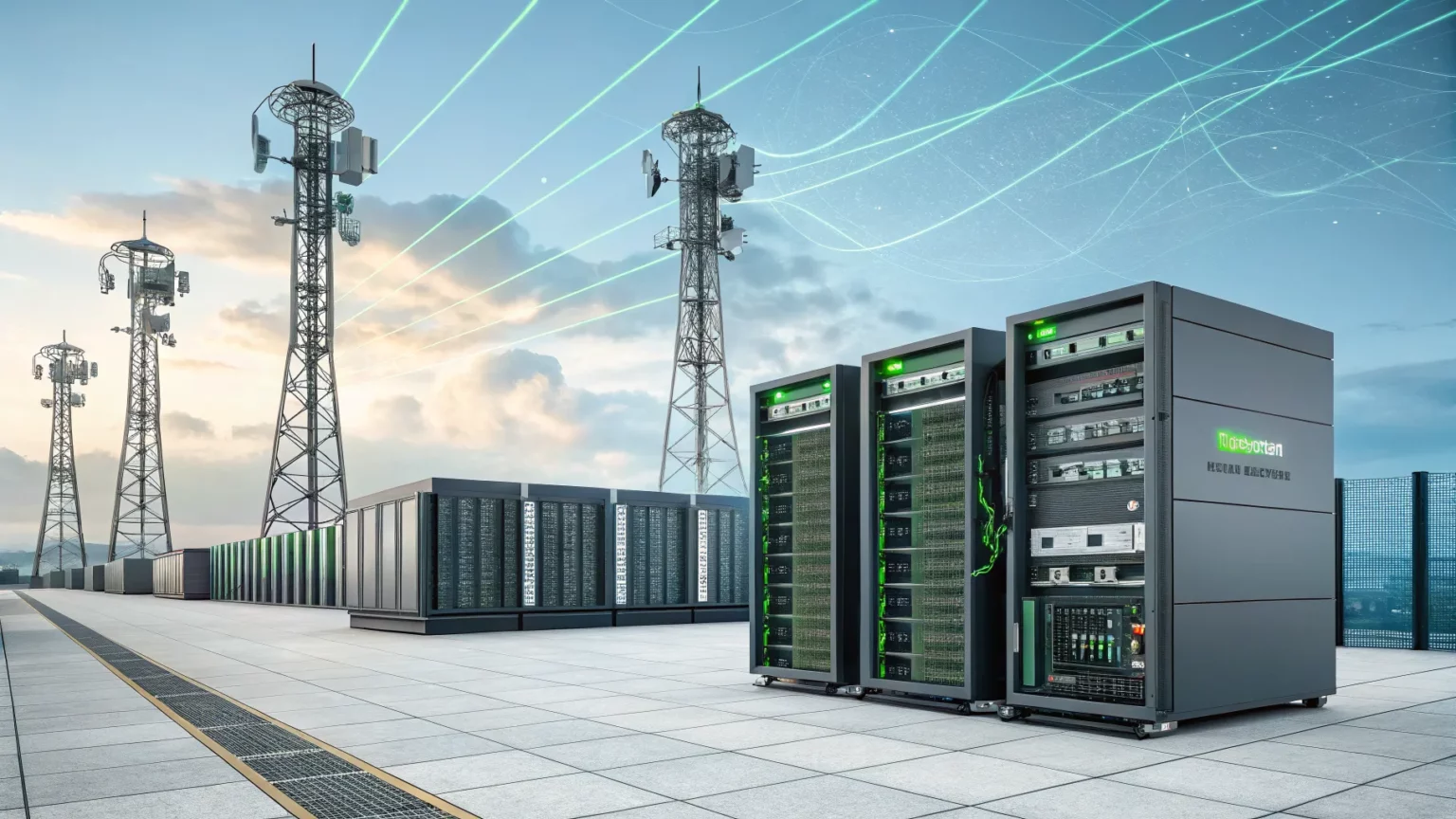
NVIDIA and Marvell Technology are joining forces to connect Marvell’s hardware and networking know-how to NVIDIA’s AI factory model and the broader AI-RAN push. The move signals a tighter link between data center AI buildouts and next-generation radio networks, with implications for carriers and cloud providers planning to scale.
The companies did not share financial terms or a timeline. But they set a clear intent to coordinate on systems that blend AI computing with radio access networks used in 5G and future 6G. The partnership arrives as telecom operators look for ways to cut energy use, improve coverage, and run more software-defined functions on common hardware.
What the Companies Said
NVIDIA and Marvell Technology have formed a partnership designed to link Marvell into the NVIDIA AI factory and the wider AI-RAN ecosystem.
The short statement points to two focus areas. First is the “AI factory,” NVIDIA’s term for large-scale data centers that train and serve AI models. Second is AI-RAN, where AI workloads help plan, optimize, and run radio networks. Pairing the two could let operators use common infrastructure to support both network and AI services.
Why It Matters for Networks and Data Centers
Telecom networks are moving from fixed-function hardware to software running on general-purpose compute. AI is entering that stack to improve tasks like beamforming, scheduling, interference control, and energy management. NVIDIA has pushed GPU-accelerated RAN software and has rallied partners around AI-RAN trials. Marvell brings custom silicon, switching, optical DSPs, and 5G baseband expertise used by network vendors and cloud builders.
If the partnership aligns product roadmaps, operators could buy systems that handle AI inference and RAN workloads in the same racks. That could lower costs and speed deployment. It may also help vendors design fronthaul and backhaul links that match the high bandwidth and low latency needs of both AI clusters and radio sites.
Background: AI Factories Meet RAN Modernization
“AI factory” describes a data center designed to train and serve large models at scale. It relies on accelerated compute, fast storage, and high-speed networking. NVIDIA has promoted this model with GPUs, DPUs, and software stacks that tie clusters into a single pool.
RAN modernization, including Open RAN and virtualized RAN, shifts radio functions from dedicated appliances to standardized servers and accelerators. AI-RAN extends that by inserting AI into the control loop. Trials have shown gains in spectral efficiency and power savings, though results vary by network and traffic mix.
Potential Benefits and Risks
- Performance: Coordinated silicon and software could improve throughput for both AI and RAN tasks.
- Cost and Power: Shared infrastructure may cut capex and energy per bit or per inference.
- Interoperability: Joint testing can smooth integration with carrier-grade timing and fronthaul standards.
- Supply Chain: Tighter links could ease qualification but raise questions about vendor lock-in.
Carriers often demand open interfaces and multi-vendor support. The success of this partnership may hinge on how well it fits with standards from groups focused on RAN splits, fronthaul, and management APIs.



Industry Context and Competition
Chipmakers are racing to supply both AI data centers and telecom networks. NVIDIA leads in accelerated compute. Marvell competes in custom compute, networking switches, and merchant silicon used in clouds and base stations. Broadcom, Intel, AMD, and specialized accelerator startups are also targeting the same budgets.
The AI-RAN concept attracted interest at major industry events, with operators testing AI in planning and real-time control. Some vendors argue that dedicated accelerators will be more power-efficient at the edge. Others back GPUs for flexibility and faster feature updates. The partnership will test whether co-design can meet power, latency, and reliability targets at cell sites and central units.
What to Watch Next
Key signs of progress will include reference architectures, lab results on power and throughput, and early deployments. Carriers will look for proof that shared infrastructure can hit strict timing and availability needs. Network vendors will weigh how easily the combined stack plugs into existing radios and management tools.
If joint systems pass those tests, buyers could gain more options for scaling AI services alongside mobile networks. If not, the market may remain split between purpose-built RAN gear and AI clusters built for the cloud.
The announcement points to a tighter link between data center AI and advanced radio networks. The next phase is execution: product details, partner support, and measured results. Those steps will show whether this alliance can help operators cut costs, raise performance, and bring AI closer to the edge.