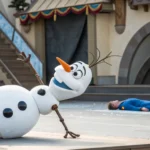



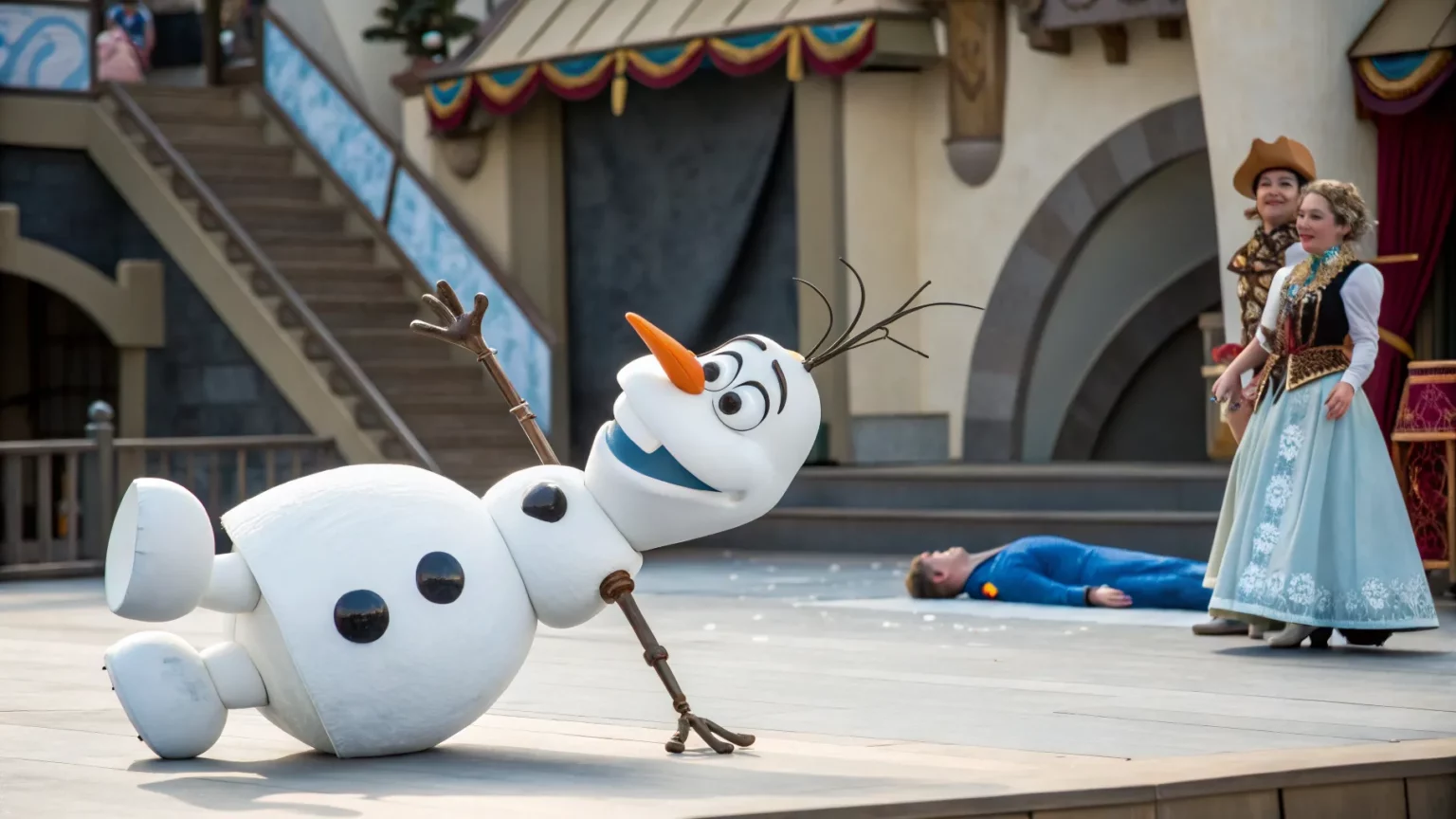
A viral clip from Disneyland Paris shows an Olaf animatronic stiffen mid-performance and tip onto the stage, turning a cheerful moment into an awkward slide. The incident comes just after Disney introduced the character as a “brand-new innovation,” raising fresh questions about reliability and guest safety at one of the world’s busiest resorts.
The fall happened during a park show in France, where the high-tech figure appeared to lock up before collapsing. No injuries were reported in the footage, but the stumble sparked quick debate online about how far theme parks should push new robotics in live settings.
A New Robot Meets Old Expectations
Disney has relied on animatronics for decades, starting with early figures in the 1960s. These characters power classic attractions and newer stage shows, blending mechanical movement with audio and lighting. Guests expect them to work every time, even as the tech grows more complex.
In recent years, Disney’s R&D teams have teased mobile, expressive characters designed to move with more freedom. That promise carries risk. Finer movements and denser electronics can mean more points of failure, especially in shows that run multiple times a day in changing light, heat, and humidity.
Disney described the Olaf unit as a “brand-new innovation.”
That pitch set a high bar. The viral video made the bar look slippery.
What The Video Shows
The clip captures a standard show beat—music up, character center stage—until Olaf stops. The figure’s limbs hold steady as if a switch flipped. Moments later, the body tilts and falls forward. Cast members appear ready to manage the moment while the show keeps moving.
Park entertainment teams train for hiccups like this. Most sets include safety zones and quick shutoffs that limit motion as soon as a system falters. Those procedures seem to have kicked in fast.
Why These Glitches Happen
Animatronics run on motors, sensors, and control software that must sync on cue. A missed sensor read, a jammed joint, or a protective shutdown can freeze a figure to avoid more damage. In stage settings, gravity does the rest.



New figures often face a “burn-in” period where issues surface and get fixed. Long days, repeated cycles, and set changes reveal weak points that test labs can miss. The trick is catching those flaws before guests pull out phones.
Guest Trust And The Show Must Go On
Theme parks sell dependability. A single clip can dent that trust even if the fix is minor. Fans who adore Olaf want charm, not pratfalls. At the same time, many viewers shrugged it off as a meme-worthy blip. The larger question is how frequent these slips are and how fast the teams respond.
- Is the issue mechanical, electrical, or software-based?
- How quickly can maintenance teams adjust or swap parts?
- Will show schedules change while a fix rolls out?
Those answers will shape whether this remains a one-off mishap or a running joke every time the music starts.
What It Means For The Industry
Rival parks also chase lifelike figures, and each stumble adds caution. Companies may build in more fail-safe poses, gentler movement at risky beats, or backup choreography to skip problem cues. Expect more behind-the-scenes monitoring as well, including predictive checks on motors and joints before curtains rise.
Guests care less about the tech and more about the magic. When a character clicks, smiles, and waves on time, no one thinks about torque or software states. When it faceplants, everyone does.
Next Steps And What To Watch
Disney has not offered a detailed breakdown of the fall, but rapid fixes are standard practice after high-visibility glitches. Engineers will review logs, inspect joints, and adjust show cues. If the unit returns swiftly and performs cleanly, the buzz fades. If repeats follow, expect longer maintenance windows or a temporary swap to a simpler figure in that set piece.
For now, Olaf’s brief ice-out is a reminder that even the cutest snowman can hit the deck. The magic is in how fast he stands back up—and whether guests notice the difference.