



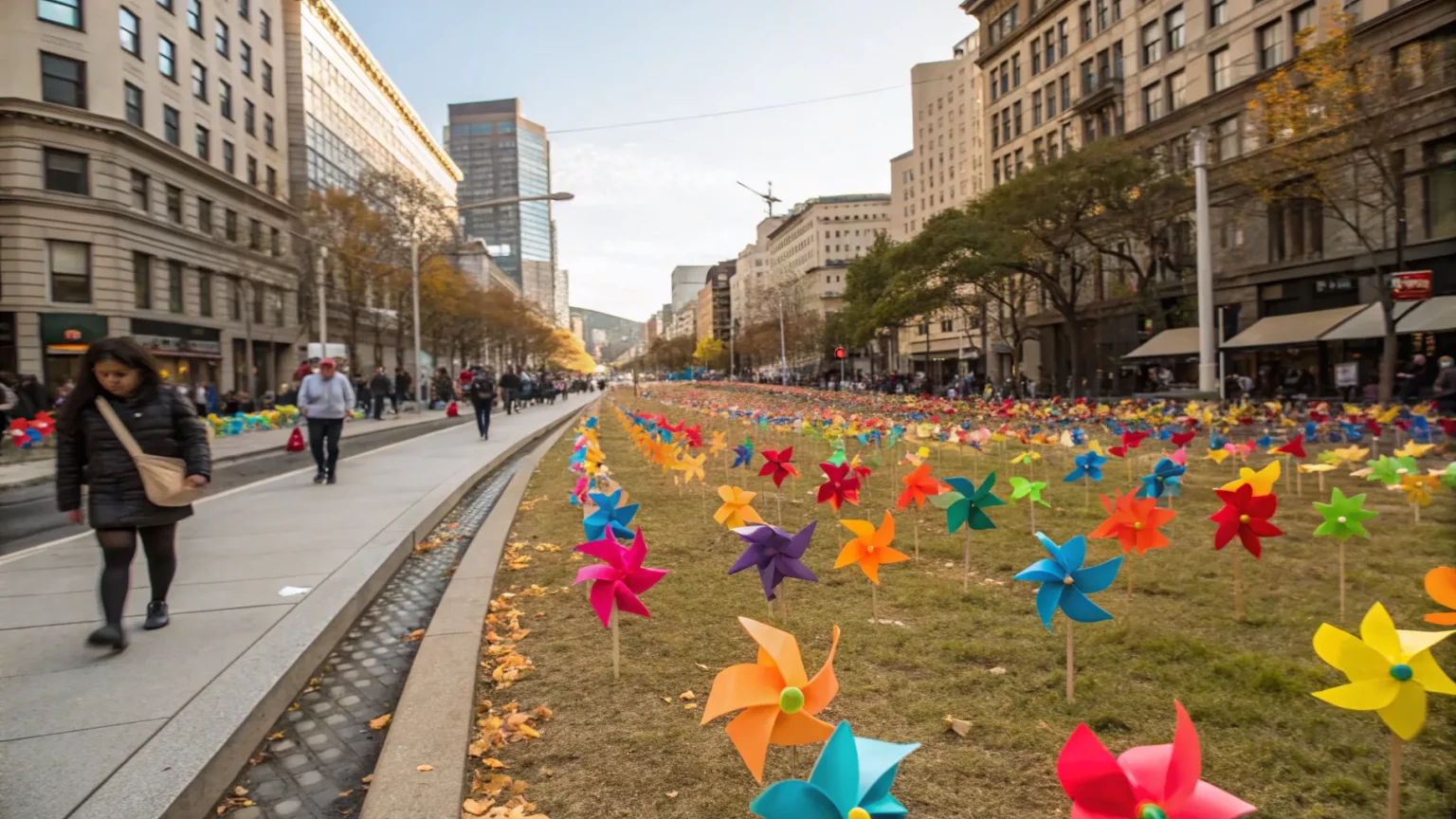
Thousands of bright pinwheels have appeared across downtown this week, turning sidewalks, plazas, and parks into a field of color. The pop-up display began Monday across key corridors and is scheduled to run through the weekend, drawing residents and visitors who stop to watch the twirling patterns in the fall breeze. Organizers say the goal is simple: use a familiar toy to start serious conversations about community well-being and public space.
City staff approved permits for the temporary installation after weeks of planning with local arts groups and advocacy organizations. Volunteers placed pinwheels in clusters near transit stops, schools, and civic buildings to maximize foot traffic. The effort comes as officials seek new ways to bring people back to the urban core after a slow summer for retail and events.
A Simple Image With Multiple Meanings
Pinwheels have long served as a symbol in public campaigns, from child welfare to mental health to clean energy education. By design, they invite interaction. People touch them, take photos, and share them online. Organizers are leaning on that behavior to spread messages about neighborhood safety, youth services, and the need for greener streets.
One volunteer described the scene succinctly:
“Spinning pinwheels everywhere you look.”
That effect, planners say, is intentional. Clusters are dense enough to catch the eye but spaced to keep walkways open. Temporary signage points to local hotlines, youth programs, and after-school activities. In several parks, docents hand out flyers about energy-saving tips and free community events through the end of the year.
How the Project Came Together
The display grew out of a small pilot in a neighborhood plaza last spring. After strong turnout, the team expanded the concept downtown. Merchants offered to host stands at storefronts, and school groups helped assemble kits. City crews coordinated placement to avoid utility covers and tree roots.
Organizers said they aimed for materials that are light, safe, and easy to recycle. Many pinwheels use paper blades with water-based ink and wooden stems. Cleanup is scheduled for Sunday evening, with a plan to reuse intact units at school fairs.
- Installation began before sunrise to limit sidewalk closures.
- Staging sites were set up near transit hubs to move kits quickly.
- Volunteers received brief safety training and maps for placement.
Community Response and Debate
Reactions have ranged from delight to concern. Families linger for photos. Office workers stop to watch the wind lift the colors. Street vendors report higher midday traffic near clusters. A few residents, though, question the cost and the use of plastic parts in some sets.

Organizers said the project was funded through small grants and private donations, with a focus on low-cost materials. Environmental groups asked for assurances that nothing would end up in storm drains. Crews now sweep each corridor twice a day and collect any broken pieces.
Civic boosters argue that even short-lived art can have lasting value if it drives people to shared spaces. Skeptics ask for data that links such displays to measurable gains, such as retail sales or program enrollments. City officials say they will review pedestrian counts, social media metrics, and merchant feedback next week.
What the Pinwheels Are Trying to Say
Beyond the visuals, organizers point to the messages printed on nearby placards. They outline local priorities: safer routes for kids, support for youth activities, and cleaner air. Advocates say the pinwheels double as a prompt for talking with children about safety at home and online.
Educators involved in the effort are using the pinwheels for quick lessons on wind and motion. A few classes built small measuring wheels to estimate gusts and compare readings across locations. The team plans to publish a short activity guide for teachers later this month.
Looking Ahead
The installation is temporary, but its backers want a lasting impact. They are weighing future displays in branch corridors and schoolyards, potentially pairing pinwheels with planters or shade sails. A fall survey will ask residents what worked and what should change.
For now, the spinning shapes have given downtown a lift at a quiet moment on the calendar. If turnout stays strong, the city may make the display an annual fixture, tied to a week of service projects and a street fair. The bigger test will be whether the conversations sparked on the sidewalk lead to new volunteers, better-funded youth programs, and cleaner, safer streets.
As the weekend approaches, the pinwheels keep twirling, drawing passersby into brief pauses and shared smiles. The organizers’ bet is clear: a simple, moving object can pull a crowd—and point it to something that matters.