




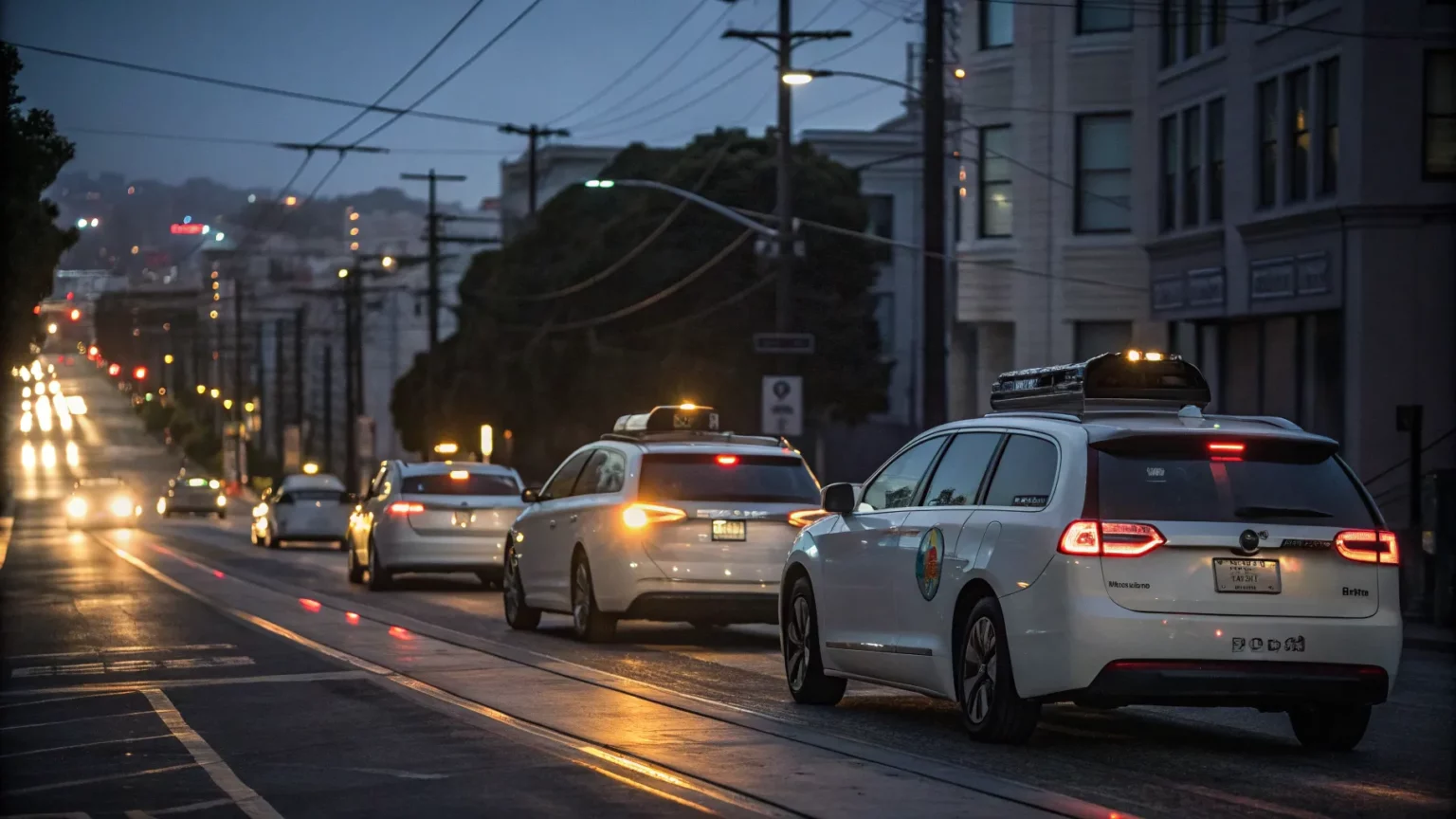
As rolling power outages hit San Francisco on Saturday, several Waymo robotaxis appeared to stop in traffic across multiple neighborhoods, according to widely shared videos. The brief disruptions added to ongoing questions about how driverless services behave during citywide infrastructure failures and what that means for riders and other road users.
The incidents surfaced across social platforms as neighborhoods reported dark traffic lights and shuttered businesses. The exact number of affected vehicles was unclear. No injuries were reported in the shared clips.
“As power outages spread Saturday, videos shared on social media appeared to show multiple Waymo vehicles stalled in traffic in different parts of San Francisco.”
What Happened
Short video clips showed Waymo vehicles stopped with hazards on or inching forward in slow-moving lanes. Some cars appeared to pause in intersections where traffic lights were out. Other vehicles queued behind them, causing brief backups.
The company’s vehicles rely on onboard sensors and maps for driving. They also connect to remote support teams over cellular networks when the system needs guidance. During power failures, cell coverage can degrade as backup power at towers runs down. That can slow remote assistance.
Outages also darken traffic signals. That can force any driver, human or automated, to proceed with extra caution. It can lead to multi-direction backup when cross traffic and pedestrians are unsure of right of way.
Why Outages Matter For Robotaxis
Waymo’s self-driving system is built to handle many edge cases. But citywide events can stack multiple challenges at once. A dark signal, congested lanes, blocked intersections, and spotty connectivity can combine to slow decision-making.
Robotaxis can legally stop and wait when they encounter unclear situations. That is safer than proceeding in doubt. Yet a cluster of stopped vehicles can feel like a blockage to other drivers. It can also add pressure in busy corridors.
- Dark signals increase uncertainty for all drivers.
- Connectivity issues can delay remote support.
- Congestion makes cautious stopping last longer.
Background And Scrutiny
Waymo has expanded paid service in San Francisco over the past year while operating larger fleets in Phoenix and other markets. State and city officials have pressed all autonomous operators to improve response plans for emergency scenes, street closures, and mass events.

Public skepticism has grown after high-profile incidents across the industry. In 2023, a rival operator paused service in California after a serious crash and regulatory action. Since then, agencies have demanded clearer incident reporting and better coordination with first responders.
Saturday’s outages present a different stress test. They are not about a single crash. They test whether fleets can keep traffic flowing when signals go dark and networks strain.
What Riders And Drivers Experienced
For riders inside driverless cars, the main impact was delay. Vehicles appeared to pause and then proceed slowly. Some passengers likely faced trip cancellations if cars could not navigate around blocked intersections.
Human drivers nearby faced short-lived lane blockages. Videos showed bystanders guiding traffic at a few intersections. That is common during outages. It is not unique to robotaxis, but autonomous cars can be more cautious when rules are unclear.
Industry And City Implications
These clips will likely fuel calls for clearer operating rules during outages. City officials may seek protocols for staging vehicles away from dark signals or deploying human support crews faster.
For operators, the lesson is redundancy. That includes more resilient connectivity, better fallback behavior at four-way stops, and faster rerouting algorithms when a corridor is jammed.
It also raises communication questions. Riders and the public want quick, plain updates when fleets slow down. Clear notices can reduce confusion and frustration during citywide strain.
What To Watch Next
Key questions in the days ahead include whether the company adjusts routing near dark signals and how it coordinates with traffic control teams. Technical updates could focus on smoother handling of unpowered intersections and graceful pull-over behavior when connectivity drops.
Officials will examine how many vehicles stopped, where they clustered, and how long disruptions lasted. They will look for patterns that suggest changes to permitted operating zones during outages.
The broader test for the sector is reliability under stress. Robotaxis must show they can keep people safe and keep cities moving when power, signals, and networks falter.
Saturday’s disruptions appeared brief but visible. They offer a reminder that driverless operations are not only a software challenge. They are a city systems challenge. The next step is turning those lessons into steadier service the next time the lights go out.