

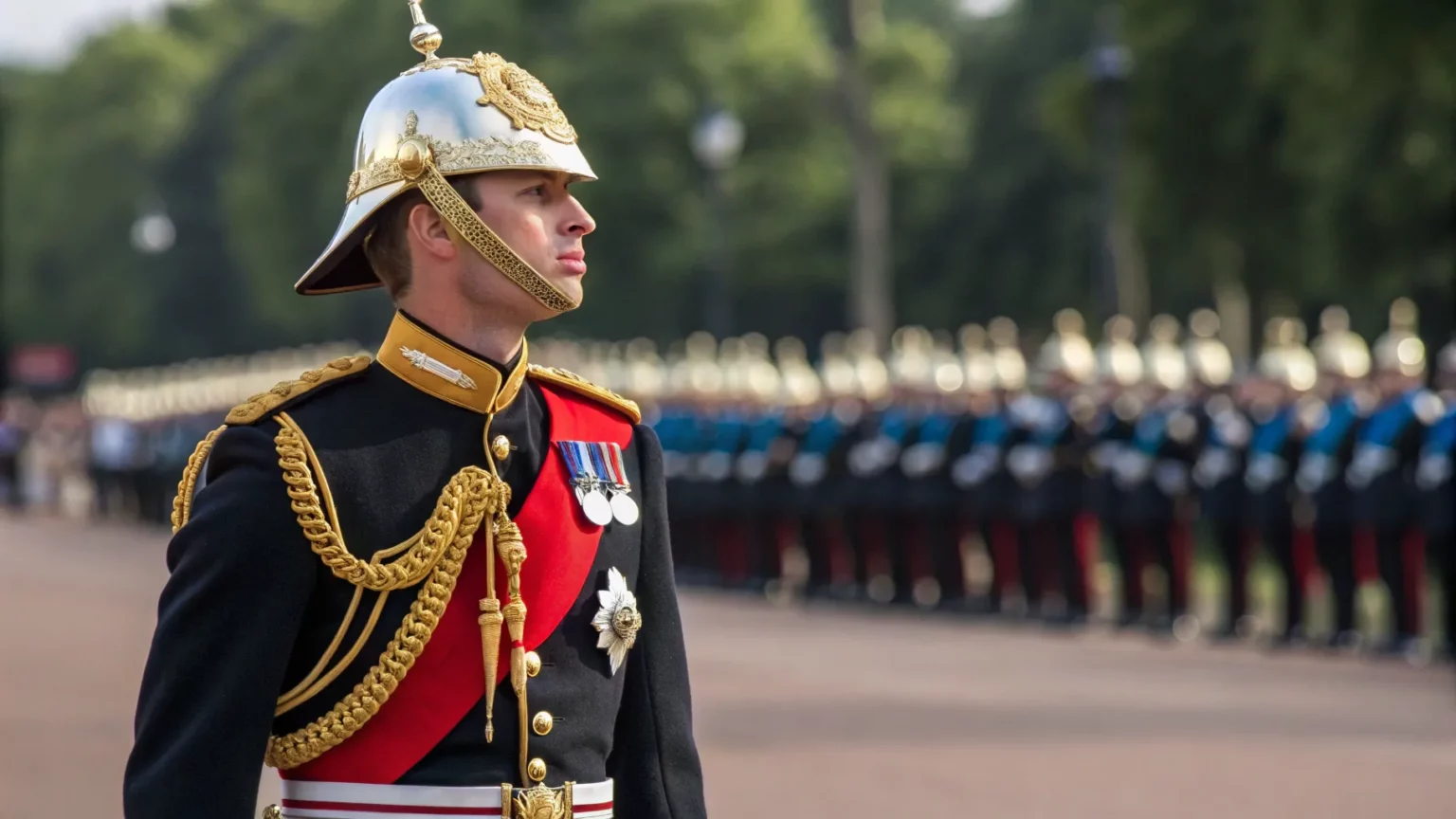
After nearly a year of officer training, Prince William was commissioned into the Household Cavalry’s Blues and Royals as a second lieutenant in December 2006. The move placed the future king on the same early-career path as many British Army officers and tied the monarchy closer to front-line service traditions at a time of active deployments for the United Kingdom.
“After graduating from the Commissioning Course at Sandhurst, William was set to join the Household Cavalry’s Blues and Royals as a second lieutenant in December 2006.”
From Cadet to Officer
Sandhurst’s Commissioning Course is known for its demanding mix of fieldcraft, leadership, and ethics. For William, the training offered a route to serve in uniform on merit alongside peers, rather than as a ceremonial figure. His commissioning date came amid overseas operations for British forces, adding weight to the symbolism of his choice.
The Blues and Royals are one of two regiments in the Household Cavalry. They combine ceremonial duties with armored reconnaissance, a dual role that exposes young officers to both tradition and modern combat practice. As a second lieutenant, William joined at the entry officer rank, expected to lead soldiers, master tactics, and learn fast under pressure.
Why the Blues and Royals
The regiment’s mix of pageantry and active service has long appealed to royals who wish to serve with credibility. It also comes with a steep learning curve. Officers must switch between state occasions and field training, often in the same week. For a public figure, that blend helps ground the role in visible service rather than symbolism alone.
- Dual role: ceremonial duties and reconnaissance.
- Entry rank: second lieutenant with platoon-level leadership.
- Training focus: tactics, navigation, and command under stress.
A Military Path With Limits
William’s commissioning drew immediate comparisons with his brother, Prince Harry, who served in Afghanistan with the same regiment. William, however, faced tighter security constraints given his position in the line of succession. That tension—service versus risk—shaped the next steps in his career.
Instead of combat deployment, William completed attachments across the armed services. He later shifted to aviation, first with the Royal Air Force as a search-and-rescue pilot and then as a civilian air ambulance pilot. Those roles kept him on duty rosters, night shifts, and emergency callouts, making his service tangible to the public.
What It Meant for the Monarchy
A royal officer commission signals continuity. It ties the Crown to shared national institutions and speaks to a culture of service that stretches back generations. For many Britons, seeing William start as a junior officer—learning the same drills and facing the same inspections—helped humanize a future monarch.
The timing also mattered. In the mid-2000s, the British Army was under strain from overseas operations. Having a high-profile officer join a front-line regiment brought attention to the work and sacrifices of younger soldiers and their families.



Looking Ahead: Training as a Throughline
The skills learned at Sandhurst—decision-making under pressure, clear communication, and responsibility for others—echo through William’s later public work. Whether chairing mental health initiatives or representing the country abroad, the leadership model is familiar: listen, decide, and stand by the team.
Analysts say that early contact with military life often shapes a public figure’s style. The emphasis on mission, brevity, and accountability tends to carry over. In William’s case, that has shown up in his focus on emergency services, veteran support, and early childhood programs, where planning and measurable outcomes matter.
What to Watch
As national service and defense spending return to political debate, William’s commissioning remains a reference point for the monarchy’s link to the armed forces. Future appearances at military events will likely draw on that commissioning story, reinforcing a message of practical service rather than ceremony alone.
For the Army, the 2006 commission still signals respect for the training pipeline. It reminds new officer cadets that the path begins the same way for everyone: with a course, a commission, and a first salute.
Prince William’s start in the Blues and Royals set a clear tone. It grounded his public role in service, gave him a leader’s toolkit early, and shaped the choices that followed. The next chapter for the Prince of Wales will keep drawing from that training—steady hands, short briefings, and the long view.