




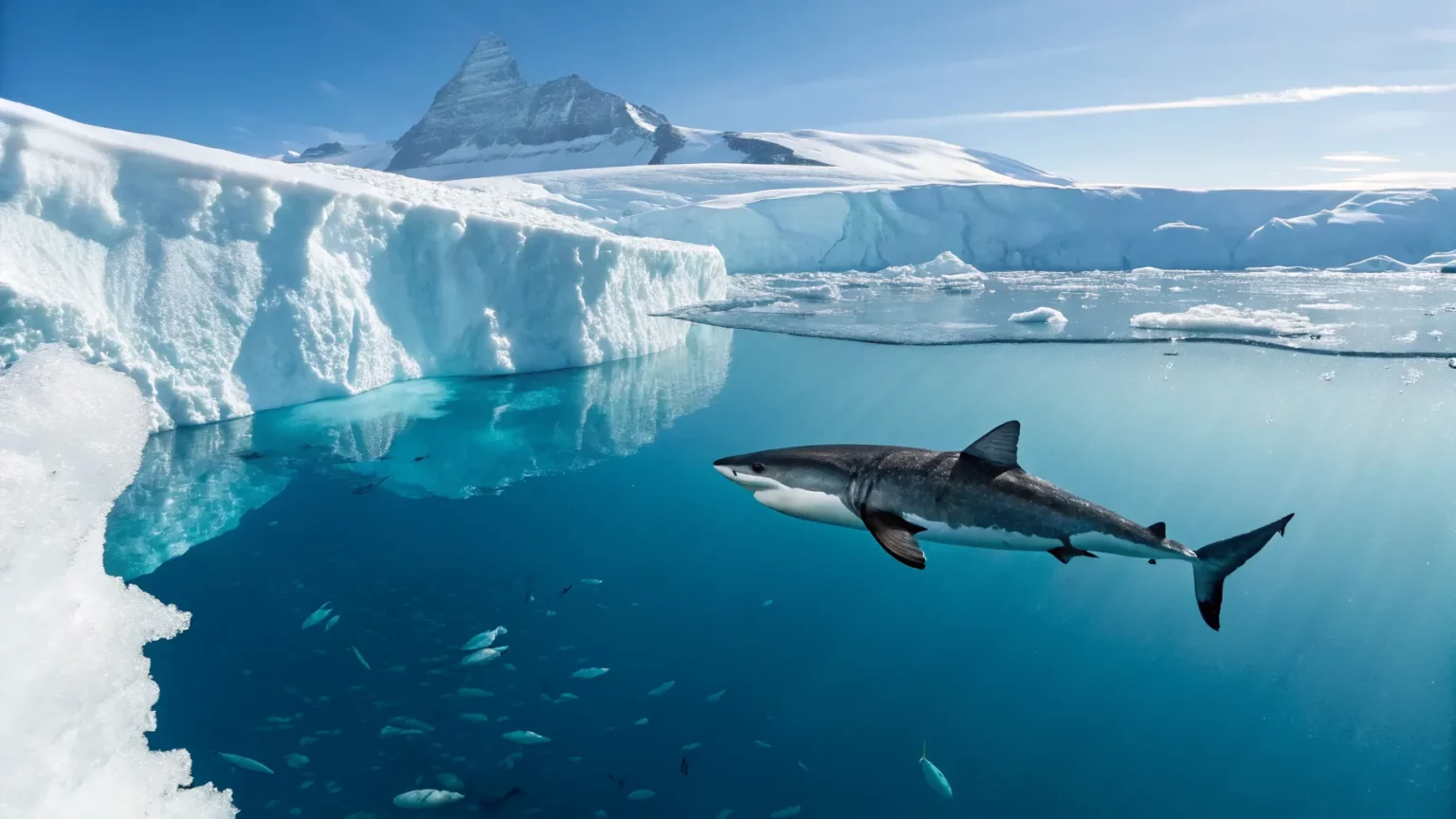
A marine researcher says a shark has finally shown up on camera in the Antarctic Ocean, a place long considered too cold for these predators. Alan Jamieson, a deep-sea scientist, reported new video evidence that he says documents the first recorded shark in these icy waters. The claim arrives as scientists reassess what can live in Antarctica’s extreme cold.
For years, biologists believed sharks steered clear of the Southern Ocean’s near-freezing temperatures. That view shifted last year when a sleeper shark was reported, shaking a long-held assumption. Jamieson’s video, if confirmed, would mark a direct, visual record from the Antarctic Ocean itself and could reshape research plans across the region.
Challenging an Old Assumption
Experts once argued that sharks lacked the physiology to thrive so far south. Cold water slows metabolism and can disrupt vital functions. Many species prefer warmer seas where prey is plentiful and growth is faster.
Yet some sharks are cold specialists. Sleeper sharks, including relatives found in the Arctic, are built for deep, dark, frigid water. That background helps explain why last year’s sleeper shark report sparked debate about what else might lurk under Antarctic ice.
“He has video evidence of the first recorded shark in the Antarctic Ocean,” Jamieson said, framing the find as a clear, documented sighting.
He also noted the scientific mood swing:
“Many experts had thought sharks didn’t exist in the frigid waters of Antarctica before a sleeper shark was recorded last year.”
What the Footage Could Mean
Video confirmation matters. Visual records help nail down species, behavior, and habitat. They also reduce doubts that can trail sonar pings or scattered bycatch reports.
If reviewers validate the footage, researchers could redraw maps of shark ranges in the Southern Ocean. That change would ripple through food-web models and climate studies that use predators as indicators of ocean health.
- Ecology: A shark presence suggests a steady prey base and stable deep-sea conditions.
- Climate signals: Warming currents or shifting ice could be opening new corridors.
- Policy: Fishing rules and protected zones may need updates with predators on the scene.
How Scientists Will Vet the Claim
Jamieson’s next step is peer review. Specialists will examine the video’s clarity, the location data, and the identification of the animal. Lighting, depth, and camera angle can make species ID tricky, even for experts.



Independent verification is key. Another team will try to match distinctive features, such as body shape, fin position, and swimming style. If it is a sleeper shark, that would align with last year’s report. If not, the find could be even bigger, hinting at more diversity in Antarctic waters than expected.
Why Sharks Might Be There
Two forces could explain the sighting. First, deep-sea species are adapted to stable, cold conditions and may have always been present at depth, just rarely seen. Second, ocean changes may be shifting prey and oxygen levels, pulling predators into new zones.
Neither idea rules out the other. Scientists will watch temperature and oxygen data alongside future sightings to see which pattern holds.
What Comes Next
Expect follow-up surveys in the same area using baited cameras and environmental DNA sampling. More data could turn one video into a trend, or it might prove an outlier that deepens the mystery.
For now, the find adds energy to Antarctic research. It nudges teams to look deeper and record longer. It also hints that even at the end of the Earth, familiar predators may be cruising under the ice, hidden in plain sight.
Jamieson’s claim will either open a new chapter in Southern Ocean science or fuel a sharper debate. Either way, the next few expeditions will be must-watch. If the video stands up, expect updated species lists, fresh conservation talks, and a lot more cameras pointed at the cold, dark blue.