




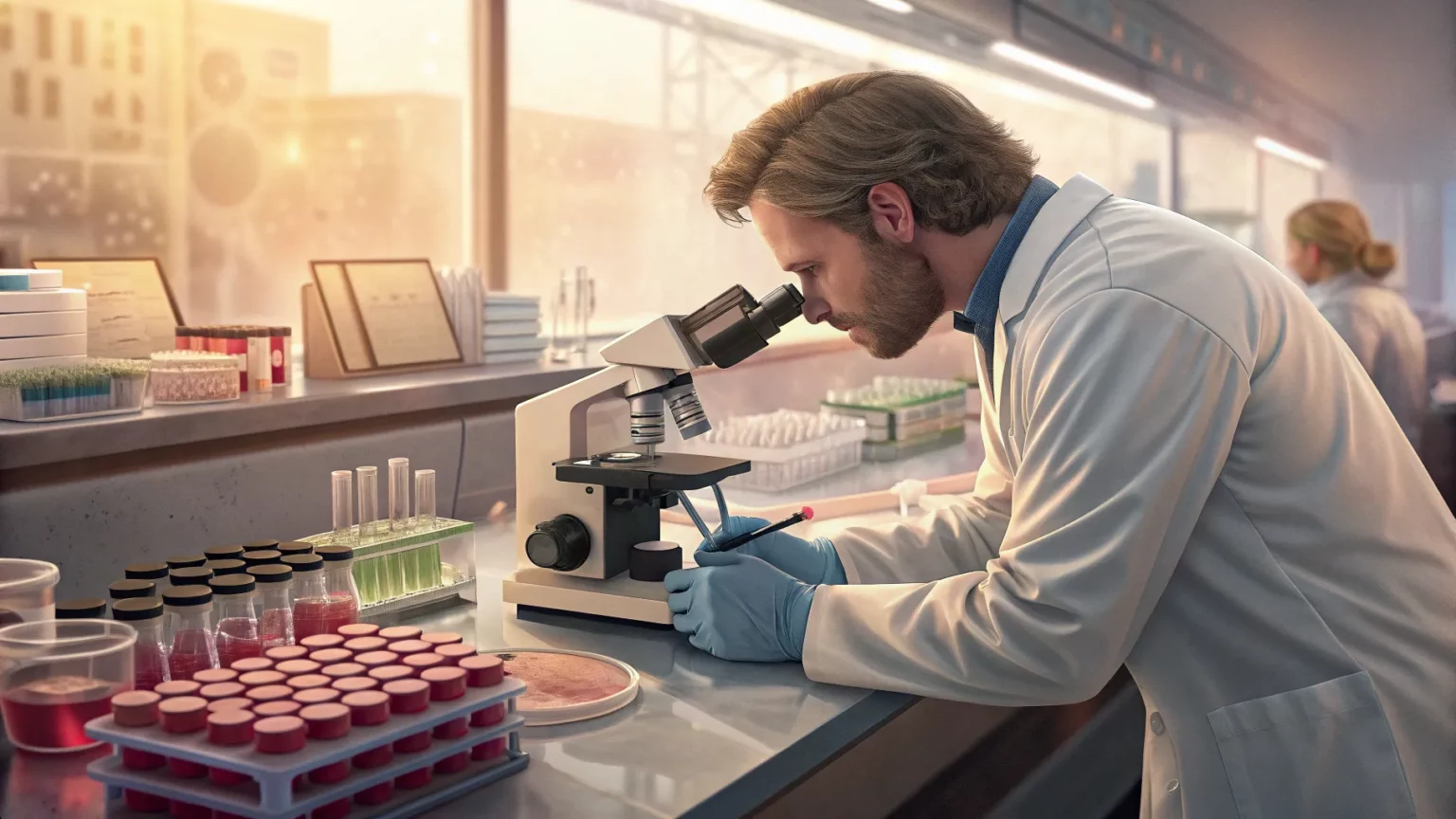
A researcher named Loebel is rebuilding the material that surrounds cells to study how “cell memory” steers disease. The work, carried out in the lab, aims to map how past signals shape future cell behavior and, in turn, drive illness. The goal is to pinpoint early changes that tip healthy tissue into disease, and to guide new treatments.
Rebuilding the World Around Cells
Cells sit in a mesh of proteins and sugars known as the extracellular matrix. It gives structure, but it also sends signals. Its stiffness, pattern, and chemistry can change how cells move, grow, and communicate. By recreating this matrix, scientists can test how single factors influence cells without the noise of the body.
Loebel’s approach focuses on tuning the matrix in controlled ways. Substrates can be softened or stiffened. Adhesion sites can be added or removed. Chemical cues can be timed. This allows careful tests of cause and effect.
“Recreating the material that surrounds cells, Loebel aims to better understand cell memory and its role in disease development.”
Why Cell Memory Matters
Cell memory describes how a cell “remembers” past cues and keeps responding long after the cue is gone. This can be mechanical, like prior exposure to a stiff surface. It can also be biochemical, such as a burst of inflammation that rewires gene activity.
Researchers have linked these memories to chronic illness. A cell primed by past stress may overreact later, even in normal conditions. That can lock tissues into disease states.
- Fibrosis: scar-forming cells may remember stiffness and keep laying down tissue.
- Cancer: tumor cells may carry memories that aid invasion and drug resistance.
- Osteoarthritis: joint cells may recall injury and maintain harmful activity.
Inside the Lab-Made Matrix
Modern biomaterials enable fine control. Hydrogels can mimic soft tissues. Patterned surfaces can guide cell shape. Time-controlled chemistries can switch cues on and off. By layering these tools, teams can replay the “history” a cell might see in the body.
The readouts include gene expression, protein signals, and cell forces. If a short pulse of stiffness causes weeks of change, that points to a durable memory. If removing a cue resets the cell, that suggests a reversible state.
Promise and Limits
The approach could expose early warning signs that are hard to see in patients. It may also reveal weak points where drugs can erase harmful memories or prevent them from forming.


Yet, lab models are still models. Tissues contain many cell types, blood flow, and immune signals. Some clinicians argue that results must be tested in more complex systems before guiding care. Bioethicists also urge care in translating cell models to people, to avoid overpromising.
Supporters note that controlled materials fill a key gap between simple cell tests and animal studies. Skeptics stress the need for shared standards and reproducible methods across labs.
What Success Could Look Like
Health systems want ways to catch disease earlier and tailor treatment. If scientists can measure cell memory, they could predict who is at risk of scarring after injury or who may resist a drug. Drug makers could screen candidates that reset harmful memories without blocking normal repair.
Engineers also see use in tissue repair. A scaffold that guides cells away from a scarring path could improve healing after surgery or heart attack.
The Road Ahead
Next steps include testing across more cell types and disease models. Teams are building matrices that change over time, better matching how tissues evolve in the body. Sharing data and protocols will help others repeat findings and speed progress.
Loebel’s work highlights a clear idea: the past matters for cells. If that past can be recreated and measured, it may be possible to change the future course of disease.